My name is Farhan Ahsan,I am web enthusiast, writer and blogger. I always strive to be passionate about my work.
I started my work at the beginning of 2007 by engaging myself with detail reading and exchanging information with others. Since then things and times have changed, but one thing remains the same and that is my passion for helping and educating people, building a successful blog and delivering quality content to the readers. The particular interests that brought me in the world of blogging are gardening, wildlife, nature, farming and livestock.
Raising chickens in backyard is always inspiring as they are adorable, lovely and at the same time returns back to you eggs and meat for what you feed them. Most people are raising backyard chickens as a hobby, pet or ornamental purposes, since they are living being so have some needs or requirements you have to full such as providing feed, water, nest box, roost, chicken coop etc. As these chickens are very pretty and adorable; every owner like to provide or build the best chicken coop for chickens that looks beautiful as well as comfortable for chickens. Some people buy ready made coop but some like to build their own chicken coop in any shape or design which looks beautiful and attractive.
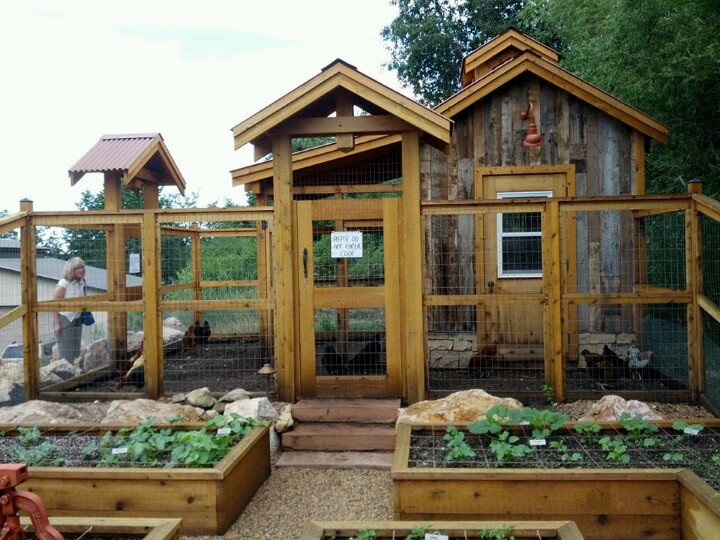
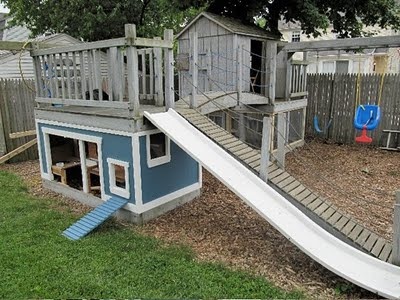
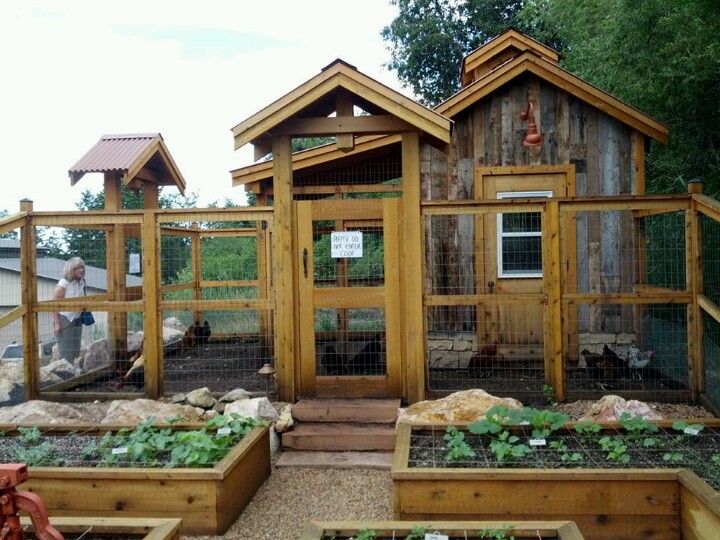
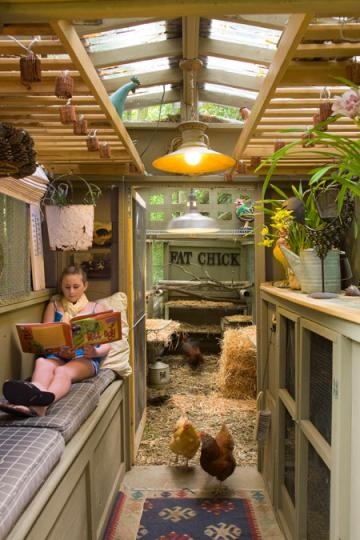
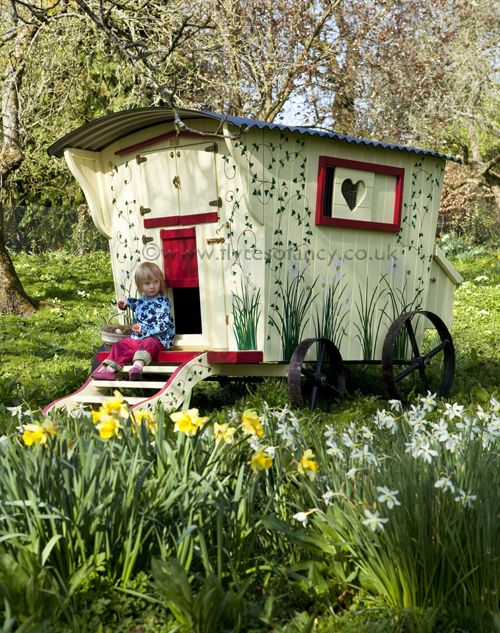
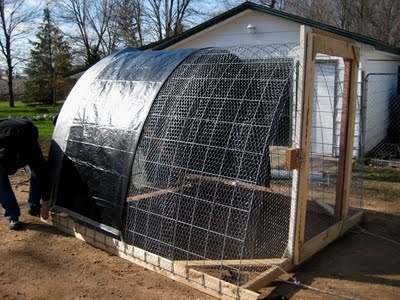
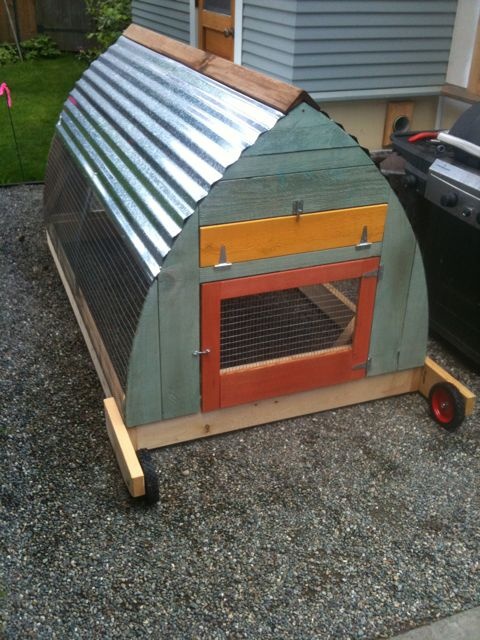
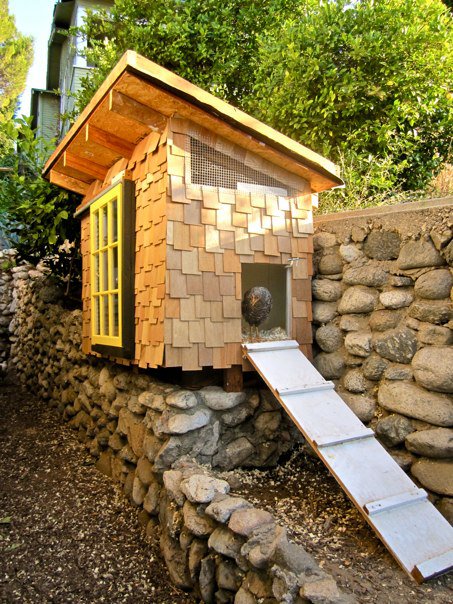
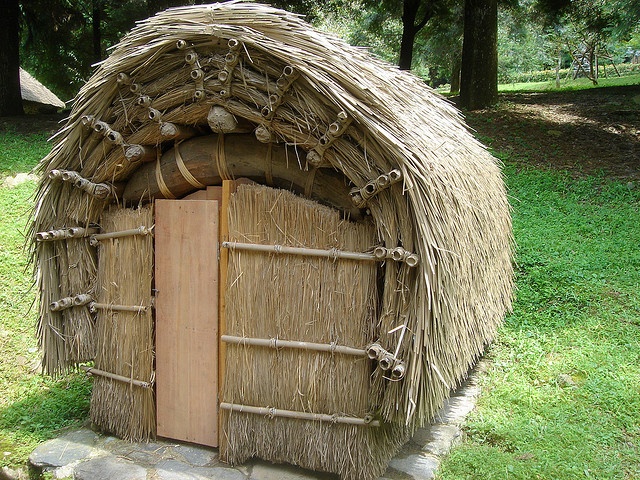
Here are some excellent, good looking, and attractive chicken coop designs ideas which show how much people love their birds.
1-Dream House Chicken Coop Idea
Source:facebook
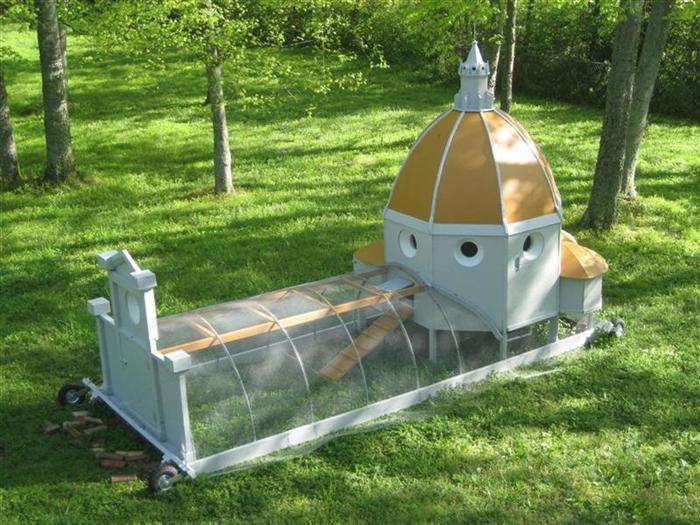
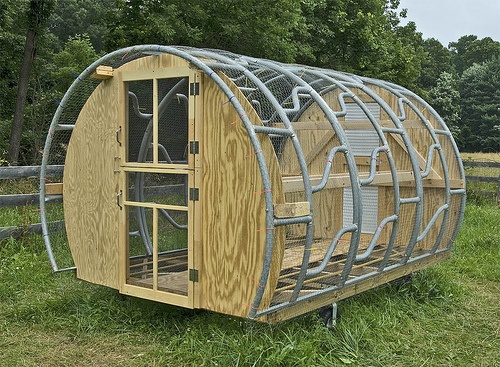
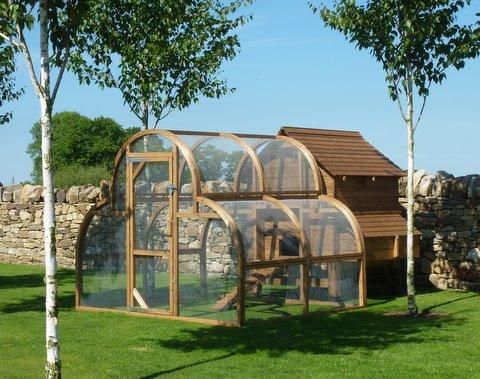
2-World’s Greatest Chicken Tractor
It is a small tractor chicken coop, enough for 3 or 4 chickens. It is has been made with great passion, as its owner’s says
“challenge became a passion. A coop became a cathedral“
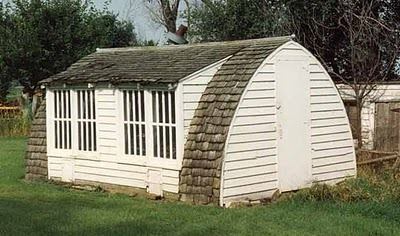
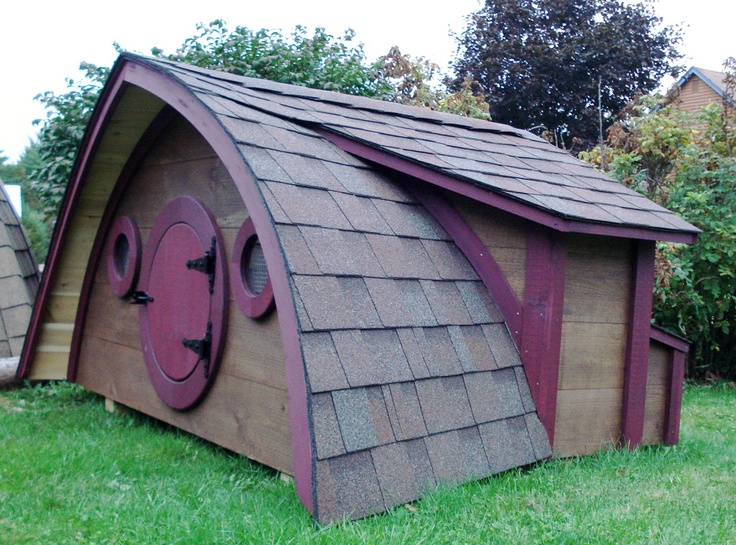
Wolf proof coop! No wolf will be blowing this down! It’s made from solid material, will not affect by rain, storm or allow predators to break or tear it..
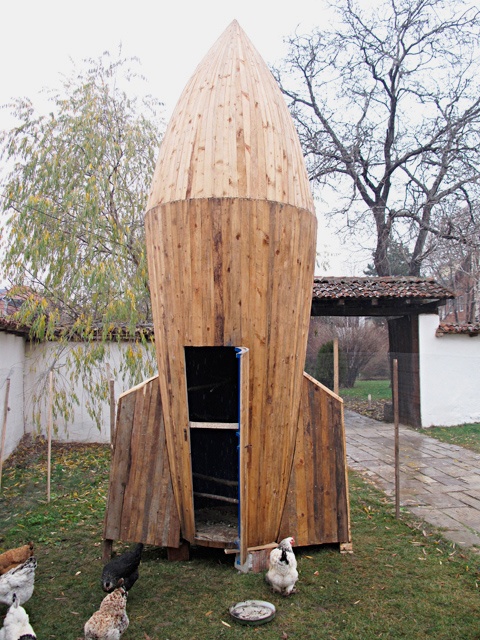
7-Creative Chicken Coop Design
This is awsome coop design idea. You can see how much the owner spend on it.
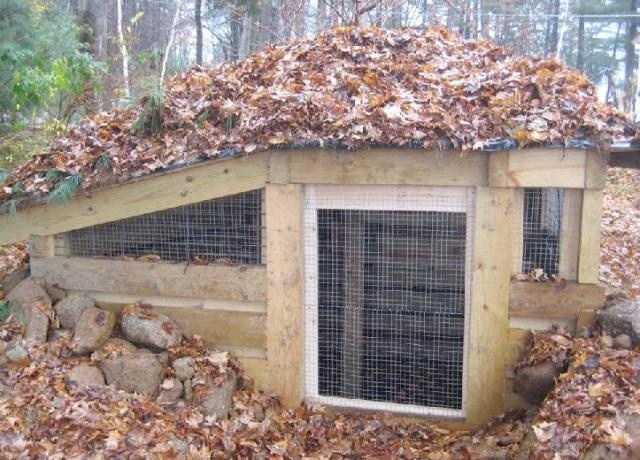
Underground Chicken Coop idea – Not sure it would work in our back yard but I’d love something like this if I lived in the country. Would work great to help balance temperature
There are limitless and infinite reasons for backyard chickens. In addition to making coop arrangements, you also need to consider the type of chicken breeds that will be most suited for you. Today, there are nearly 60 different chicken breeds that are distributed all over the planet. Moreover, the same applies to their variants that have been produced by using the different techniques and procedures of genetic engineering. For your ease, I have also included chicken breeds with pictures.
It is quite corroborated that your decision about selecting the backyard chicken breeds should be based on what you want to have out of them. There are numerous facets because of which people love to buy chicken breeds for themselves. Below I would be sharing with you all about the 4 dominant types of chicken breeds which are going to be helpful whether you plan to keep a chicken breeds for eggs or just some broiler chicken breeds . It is imperative for you to be clear in your head about the prime motive or purpose for keeping the chicken breeds. Without any further ado, here are the 4 basic types of chicken breeds.
The egg laying chicken breeds can be linked to the Mediterranean class of chickens which lived hundreds of years back. In other words, these egg laying chicken breeds trace their ancestral origins to these specific classes of breeds. Moreover, these chicken breeds are selected in lines to their genetic makeup which makes them the most optimal for the purpose of egg production. At the same time, they have small bodies due to which they are undesirable for meat production purposes. It is also due to the size of their bodies that they are able to direct all the nutriments towards the egg production, which is another reason for their increased egg production. In addition, these breeds are also classified in terms of the color of their eggs. There are those which produce white shelled eggs and the ones which lay brown colored eggs. Now here, the White Leghorns are believed to be the most prolific layers for the white eggs. The Black and White Minorcas and the Anconas also lay white colour eggs.
Meat Production Breeds
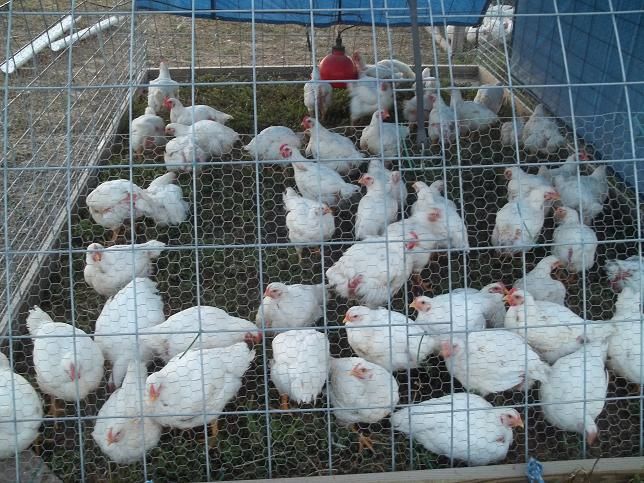
The meat chicken breeds are in reality cannot be termed as pure chicken breeds after all. It is due to their hybrid nature, all because they are produced from the combination of different breeds. At the times of pairing the breeds, the genetic engineers and poultry producers prefer to obtain certain meat characteristics. Some of these breeds grow much faster in comparison to others and also come to have a larger body size. For the sake of meat production, there is no other chicken breed that can match the fast and multifaceted growth of the Cornish Cross (Including the White Cornish and Plymouth Rock). Moreover, the breeds are named after the breeding company that processed them or paired them like Peterson, Hubbard or The Arbor Acres. The prime weakness of these breeds is that they are not capable to lay some large number of eggs in comparison to the other different breeds of chicken.
Dual Purpose Breeds
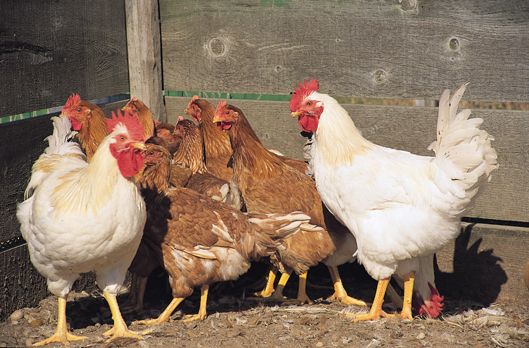
The dual purpose chicken breeds include a number of American and English breeds include the Plymouth Rock, Sussex, Wyandottes, New Hampshire etc. In addition to giving a reasonable number of eggs, they are also optimal in terms of their meatiness. Although their meat production capacity is quite low in comparison to the commercial hybrid breeds, still they happen to much better for egg production.
Cold Weather Breeds
For the areas that are marked for their extremely cold weather, there are certain chicken breeds which should be preferred over all others. Moreover, it is also better to utilize a standard size chicken than the bantam chicken breeds. The breeds that do quite well in the cold weathers include Plymouth Rock, Sussex, Rhode Island Reds and some others. At the same time, you can also consult with a number of local sources and farmers in order to have a better idea about the breeds. Choosing a chicken breed can become a tough job, especially for those who happen to be rookies or novices in the domain of poultry breeding.
Since ages people have been raising various kinds of poultry birds in their backyards. True that, those are attached to this kind of work aim to expand their collections for fun; it’s indeed enslaving hobby. I have seen a live example in my family; my father is fond of keeping backyard birds. We have turkey, guinea fowl and lots of chickens there, but my father has special love and attention towards the chickens. Often he loves introducing new hens to a flock. With time he has learned a lot about the bird behavior and now he easily gets through the task of introducing the newer friends. Many of you must not know that the older flocks are not very much friendly, and they have adjusting issues with new friends.
If you continue to go through the excerpt, you would have a better idea how to deal with the issues and the harsh behavior of the older flock,there is some concepts which need to be understand
Pecking order in the chicken - something you must know:
Poultry birds have some sort of their own developed psychic; if you talk about chicken only, they behave at their best when in smaller groups; in other words, they seem comfortable with a few friends and prefer squeezed social circle. Pecking order – if you are a backyard bird raiser, you must have an idea about this cliché – pecking order is not a scientificterm, it basically means that the flock must have an order, or you can say a hierarchy. This would help all the hens know their standing and position; so, if you are looking towards to introduce a few more fellows in the already existing order, indeed you would face trouble, however, if you re-establish the order, you can overcome the issue easily.
Further, an established pecking order does not require any changes because the chicken at the highest level would be definitely stronger than the others. Even the maturity level would be different than the rest, so none of the bottom level chicken ever thinks of challenging the robust one. So, whenever introducing newer friends in the flock, think that you are somehow or the other destroying the family bonding; so in order to avoid the chaos, re-establishment of the pecking order would be the best tip.
Territory:
Another issue that requires immediate attention when mixing new chickens to a flock is territory; the older chickens which are now quite happy with their old members seriously doesn’t want any younger flock in their established kingdom. The sense of invasion makes them angry and they retaliate. So what can be done here is; you must establish two territories. For example, within your farm, you must carefully draw two territories and keep newer away from the older ones. They would look at each other daily and within a week or so their acceptance level towards each other would establish. This tip seriously works best.
Bulling:
How can you keep a small dog with a ferocious big one? Similarly, you cannot keep a big robust rooster (above one year) with a premature growing cockerel (male bird less than one year). The maturity level between the new inductees and the older flock must be more or less the same. This issue is quite sensitive and you must keep in mind the age group and the sex of the birds too. At the same time make sure those who are getting bullied still get their required food, water and proper space.
Other than the mentioned valuable options, quick tips that would help you in mingling the newer flocks with older ones include;
1- Introduce pairs:
First of all make sure the new chickens that you are adding to the flock are good friends. For this, you can keep them together for a week or so; once their bonding is good enough, you can introduce them to the new group of friends – by doing this, you will simply avoid the major threat that new inductees would feel lonely as even if the older flock is not accepting, they would be friend with each other.
2- Introduce new pairs at night:
Many times it’s more practical to introduce new pairs during the night when the older flock is sleeping. Experience says this, the older chickens barely pay attention to such entries and hassles are on minimum scale.
3- Expand the space:
If you would be entering new hens without expanding the farm space, then the fights between the birds would be nothing new. If the number of chickens would be more than space and food containers, then there would be a complete mess in the farm.
4-Divide run:
Use a roll of wire to separate their run area for a while to allow the new flock to establish their area. Your established flock will get use of their smell and sound.
5-New space:
If possible introduce them in a new place for both of them. This will discourage old flock making their territory claim.
6-Food and water adequacy:
Ensure your new flock is given sufficient food and water before introducing with old flock, they may temporarily leave their eating habit and may get be bullied so make sure there is adequate food and water there.
7- Different age groups must be kept separately:
There is no point off mingling a baby hen with the older aunties. Trust me; this would lead to severe fights and bullying. Make sure you properly differentiate between the age groups of chickens.
8- Never let the weak suffer:
Chickens have the habit of playing pretty rude – they always attack on the newer weaker fellows. So, in you are making the mistake of merging weaker with bigger ones, you will end up creating a fight between the flocks.
9- Create distractions:
New chickens can be introduced by making the older chicks busy; I have seen my uncle doing this. He used to hang some fresh pieces of lettuce inside the chicken coop; but they used to be far away from the birds reach. The older chickens will get busy with the distractions and that’s the point where you can add newer fellows.
10- Play the game to add and subtract:
What you can do is take out a few older chickens from the farm and then add newer ones. By doing this you would easily get away with the problem of chickens acceptance towards each other. For example, if you are removing two roosters then add one new rooster. This would help females in getting attached to him.
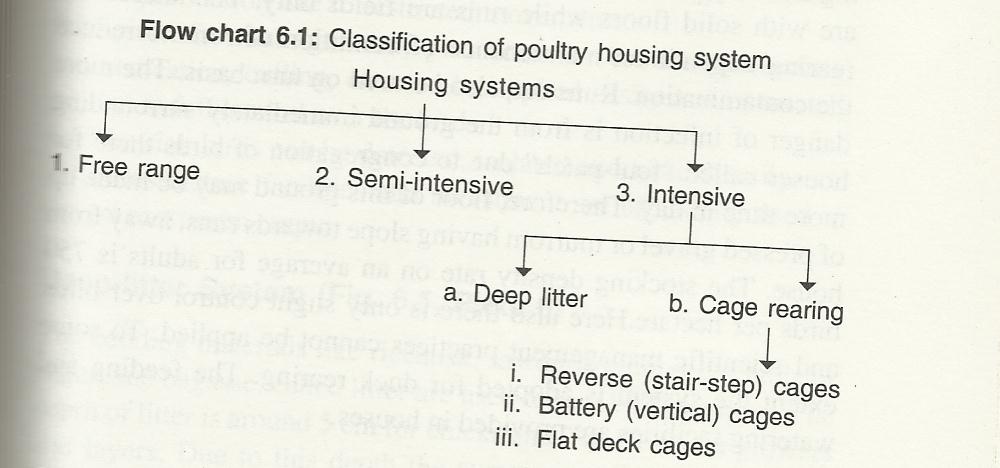
The system of poultry housing to be adopted depends on category tage), type of birds,climatic conditions, capacity to invest and strength of birds. Sometimes combination of two or more systems is also followed depending on need and convenience of operations for fanning. Broadly, the classification or types of poultry housing systems is given in Flow chart
FREE RANGE
Rearing of poultry by letting them loose on ground (field) called as range in limited area(fenced) is known as free range system. The system is adopted only when adequate land isavailable to ensure desired stocking density by avoiding crowding. It A range should provide shelter, greens. feed, water shade, room , for exercise and saftey. But foraging is the major source of feeding for birds. Shelter is usually provided by temporary roofing supported by ordinary poles. The fields are generally used on rotational basis after harvesting of crops by moving of birds from field to fielJ depending on cropping programme. All types and categories of birds can be reared in this system. The average stocking density of adult birds in this system is 250 birds per hectare. The scientific management practices cannot be followed because there is no control over the birds. The system is not practiced in India for commercial rearing but used for backward poultry keeping in villages for country hens.
SEMI-INTENSIVE
As the name indicates birds are half-way reared in houses and half-way on ground or range, i.e. birds are confined to houses in night or as per need they are also given access to runs. The houses are with solid floors while runs are fields only. The success of rearing depends on maintenance of condition of runs to reduce the contamination. Runs can also be used on turn basis. The more danger of infection is from the ground immediately surrounding houses called “foul-patch” due to congregation of birds there for more time in day. Therefore, floor of this ground may be made up of pressed gravel or murrom having slope towards runs, away from house. The stocking density rate on an average for adults is 750 birds per hectare.Here also there is only slight control over birds and scientific management practices cannot be applied. To some extent the system is adopted for duck rearing. The feeding and watering facilities are provided in houses.
INTENSIVE SYSTEM
Birds are totally confined to houses either on ground/floor or on wire-netting floor in cages. While invention of this system, initially it was thought that birds developed leg weakness due to this rearing but later on it was detected that leg problems were due to deficiency of vitamin D, B,, etc. or mineral deficiency like manganese and it was not the fault of system. It is the most efficient, convenient an
Cage Rearing
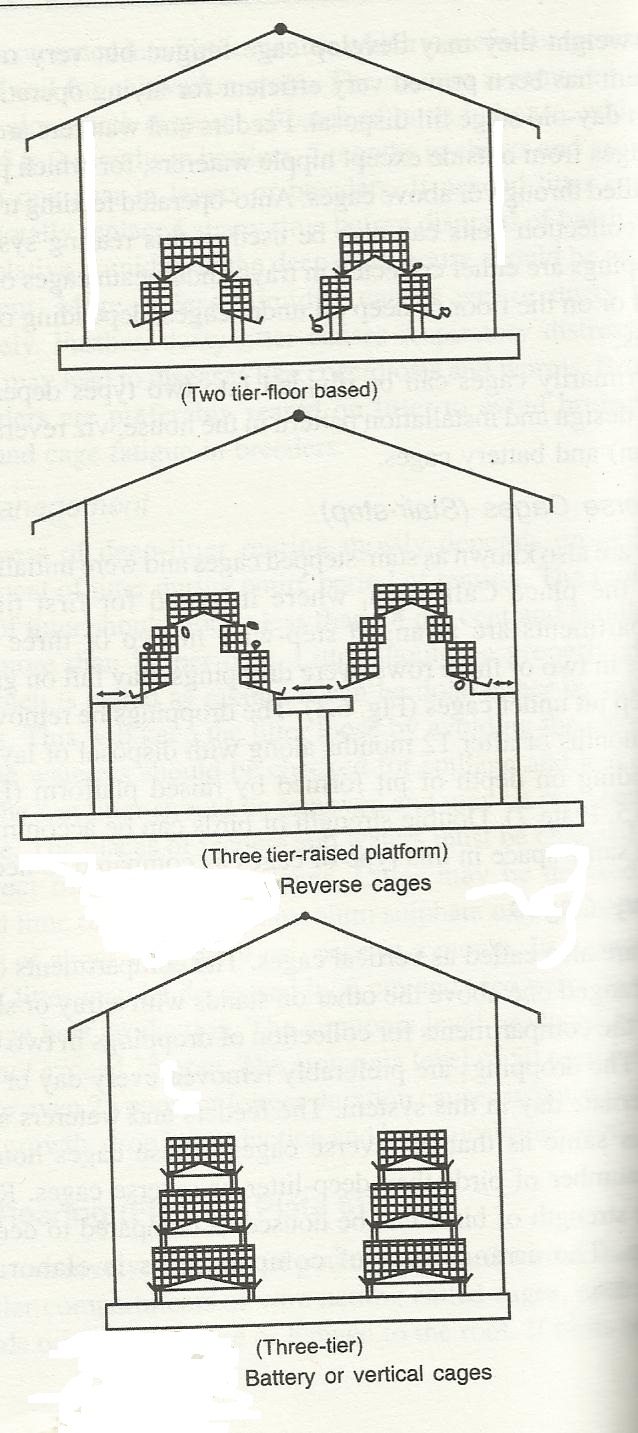
This system involves rearing of poultry on raised wire netting floor in smaller compartments of wire netting called cages, either fitted on stands on floor of house or hanged to the roof. If birds become overweight they may develop cage fatigue but very rarely. The system has been proved very efficient for laying operations, right from day-old stage till disposal. Feeders and waterers are attached to cages from outside except nipple waterers, for which pipeline is installed through or above cages. Auto-operated feeding trollies and egg collection belts can also be used in this rearing system. The droppings are either collected in trays underneath cages or on belts for it or on the floor or deep pit under cages, depending on type of cages. Primarily cages can be divided into two types depending on their design and installation pattern in the house, viz reverse (Calif-ornian) and battery cages.
Reverse Cages (Stair-step)
They are also known as stair-stepped cages and were initially named after the place California, where invented for first time. The commpartments are arranged step-wise in two or three tiers on stands in two or three rows, were droppings may fall on ground or deep pit under cages . The droppings be removed once 6 months or after 12 months along with disposal of layer batch pending on depth of pit formed by raised platform . Double strength of birds can be accommo-dated the same space in this type of cages as compared to deep-litter.
battery Cages
they are also called as vertical cages. The compartments of cages e arranged one above the other on stands with a tray or shit belts un der the compartments for collection of droppings in two or three rows. The droppings are preferably removed every day or at least alternate day in this system. The feeders and waterers arrange-nt is same as that of reverse cages. These cages house still more number of birds than deep-litter or reverse cages. Roughly tripplc strength of birds can be housed as compared to deep-litter system. The arrangement of compartments is elaborated in the figure
Flat Deck Cages
This is the single tier cage system popularly used for rearing chicks upto 8 weeks, for easy handling of them in morden methods of poultry production and management. Each cage is usually 1 m (100 cm) square block fitted on stand. Length-wise each block is divided into two compartments by a partition in middle at 50 cm of width housing, 20 chicks in each compartment or 40 chicks in a block. They are provided with trough waterers initially attached on width sides and from around 4th week waterers on both the sides length-wise are used. Nipple, arid pipeline, length-wise can also be installed through cages. Feeders to cages are attached from outside on both the sides length-wise . Because the quantity of droppings is less due to smaller size of birds, droppings can easily be stocked for 2 months and removed along with shifting of chicks to grower houses at 8 weeks of age. Generally four rows of cages are installed in 8.5 m wide house with 5 service passages. The length of house can be taken as per need..
Advantages of Cage Rearing
1. Space and land required is lowest than any other type of rearing. About 20,000 to 25,000 birds can be reared per hectare. ‘ Therefore, the cost of overall housing is reduced to a great extent.
. Birds are under complete control. Even birds can be housed individually which is sometimes followed for breeders.
3. Accurate records of individual bird can be maintained which is helpful in efficient breeding programme.
4. Scientific management practices in respect of feeding, watering. breeding, health care, etc. can be adopted easily.
5. Egg eating is largely prevented and most clean egg productior. is obtained.
6. The birds do not congregate at the time of feeding and fee: consumption is still reduced due to further restricted movements as compared to deep-litter.
7. The major litter horned diseases like coccidiosis and worms are eliminated or incidence is reduced to large extent.
8. The cost of litter and litter management problems are totally eliminated.
9. Day to day operations like watering, feeding, egg collection, medication, vaccination, culling, debeaking, etc. are easy and create minimum stress of birds.
10. The breakage of eggs is reduced to minimum possible level of 0.5 to 1 per cent which increases profit of margin.
Floor Space Requirements on Deep-litter and Cages
Floor requirements vary according to species, type, age, size of birds and system of housing. The floor space requirements for chicken as per category are given in the Table
Incubating and hatching chicken eggs from domesticated individuals is one of the most famous processes when it comes to commercial and large scale farming. A number of accessories and kits are used for achieving the process, which is in a number of ways pretty complex. The accessories to be used vary according to the number of chickens and eggs to be hatched. If you plan to do the hatching in the home based settings, then the some large investments and purchases may not be required. Till now, a number of refinements in egg incubation have been done by the specialists and scientists who have done years and years of research. However, the fundamental techniques of incubation never seem to change. Below are the various kits and incubator accessories used for the process which are also mentioned in a guide to egg hatching accessories/machines.
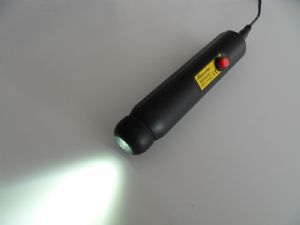
EGG CANDLER & SCALES
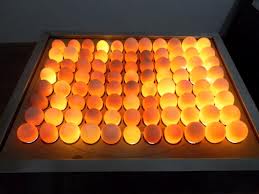
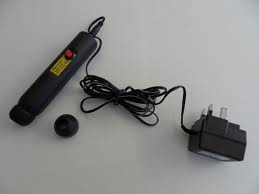
These scales are used in order to test and review the weight of the eggs. For those who have some experience in the farming business, the importance of these scales and devices can never be denied, as the weight of the egg is also a determinant of the price. Candling eggs alongside weighing is very crucial for the success of the farming business. Candling mechanisms enable you to have some idea about the development of the egg and the various stages it passes through before finally changing to the chick, which is the last step in egg maturation and development.
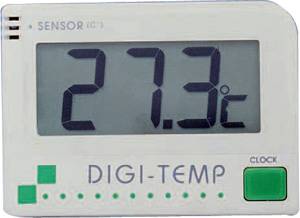
Thermometers And Hygrometers
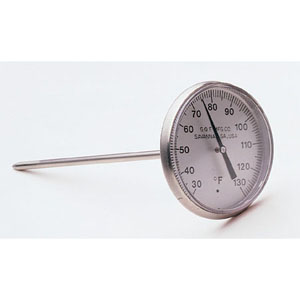
Taking regular measurements and readings about the egg temperature is of great importance in the hatching process. Some of these best devices are also able to record and measure any changes in the overall humidity and temperature changes that might be seen from time to time. The temperatures are displayed in Celsius and in Fahrenheit, both of which are the standards. So, getting a more accurate reading is something which you should keep in mind when purchasing these devices.
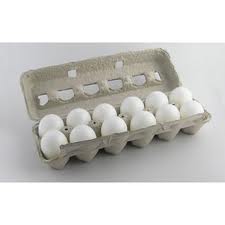
Egg Boxes and Egg Trays
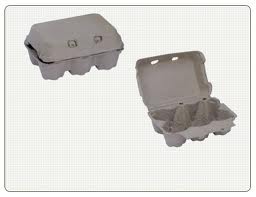
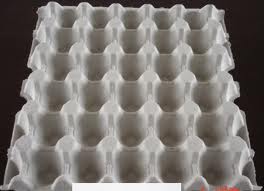
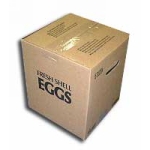
When the eggs are fully prepared and ready for being sent to the markets, then you should look for the personalized boxes and trays in which they would be kept and stored. Using personalized trays is necessary for pointing out the consumers and other buyers about the types of eggs. In short, egg packaging and manufacturing is dependent on the use of these boxes and trays.
Incubator Inserts and Cradles
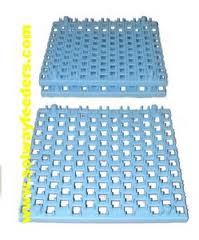
The type and form of incubator inserts and cradles to be used depend on the egg capacity. The larger inserts are more suitable for the bigger sized incubators. Furthermore, the larger inserts are also much stronger and durable in comparison to the smaller ones. These inserts are suitable for the chicken eggs no matter what the size of the eggs might be. The same also holds true for the cradles which are also an essential component in egg hatching.
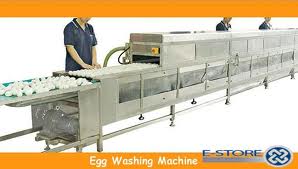
Egg Washing
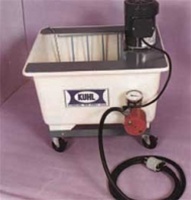
Farms and hatching houses all around the world make use of a number of egg washing procedures. Typically, more than 30 % of the eggs are dirty when they are collected. A number of abrasives are used in comparison to the usage of water which is much more typical. Loofas are also used when it comes to the cleaning of the eggs. Most of these procedures are most suited for the small scale eggs, but when it comes to the commercial modes, then it is better off to make use of the immersion washers and devices. But here an important thing to note is that a number of old and low quality washers are also available in the market, so try not to buy these cheap washers.
Plastic Nest Eggs and Egg Incubator Spares
In order to keep the hens broody, the plastic eggs would always prove to be of much use. They also come in handy for the indication of the best nesting sites. In addition to this, a number of egg incubator spares are also useful for the hatching process which is to say the least pretty complex. The kits might include fans, ventilators, motors and other modulators necessary for the air control.
Heat Control and Egg Washing Spares
For the purpose of egg washing, a number of variant egg washers are used including the Rotamaid and supawash sparers all of which are very effective for the washing process. The same degree of preferences and importance should also be given to the heat control mechanisms and temperature adjustments, all of which are dependent on the use of the heat control spares and devices.
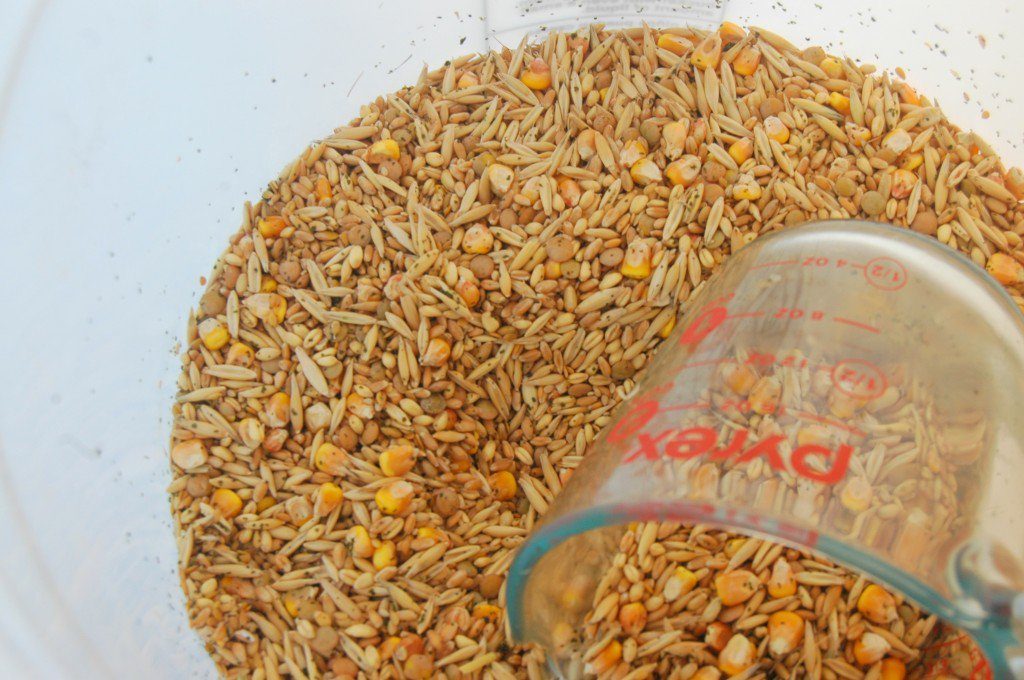
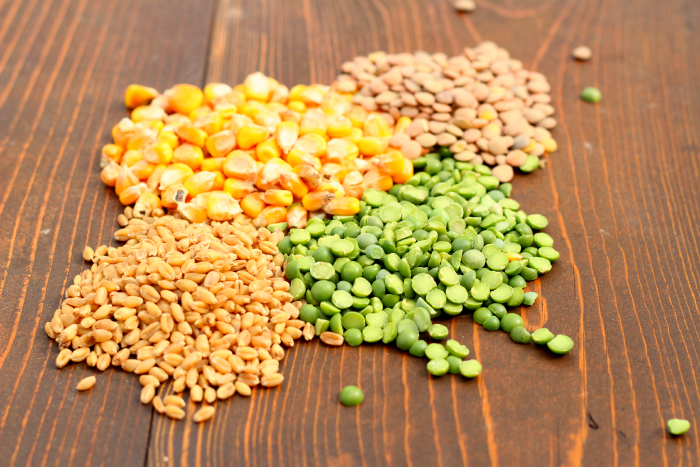
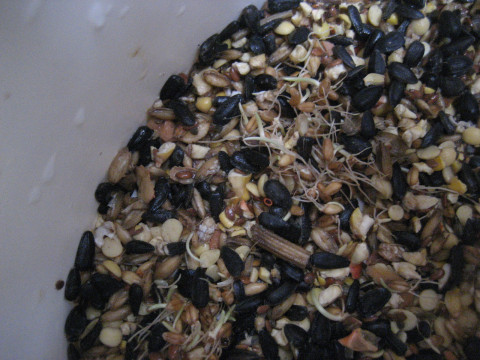
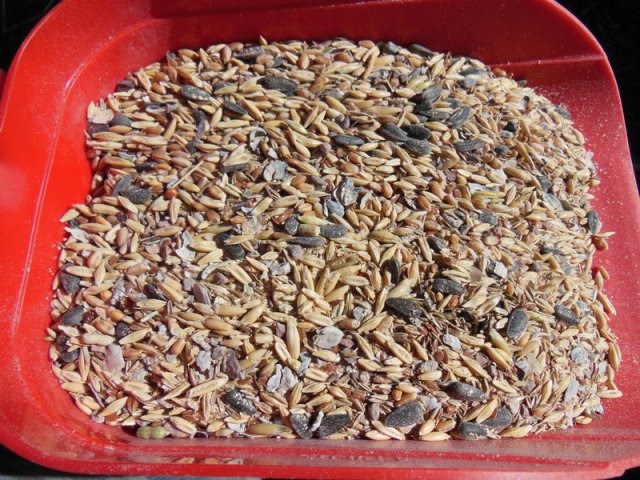
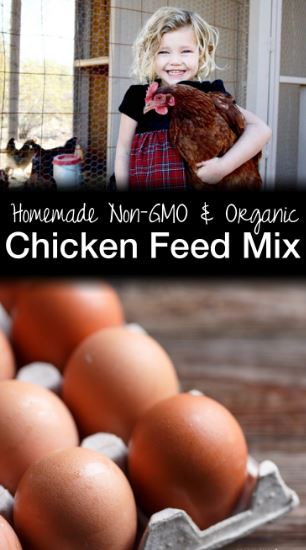
If you have chickens at some point your thoughts should turn to homemade chicken feed. Chickens are healthiest and happiest when allowed to free-range and forage for worms, bugs and greens. You will have to supplement their foraging however, especially in the winter months. You do not have to resort to a bought feed, however. These ‘junk food’ pellets can be substituted with whole grain, organic, non-GMO feeds. Here are 12 homemade chicken feed recipes to give your birds an organic diet that will benefit them and you:
1- Whole Grain 17% Protein Chicken Feed Formula
This chicken feed by gardenbetty will fill a ten pound feeder. In addition, chickens are provided with free choice oyster shells and grit. These are essential to chickens, who need not only the protein but also calcium from the oyster shells and grit to aid digestion. Another healthy recipe for feeding chickens can be found at:
2- Organic Chicken Feed To Source From Health Food Shops Or Order Online
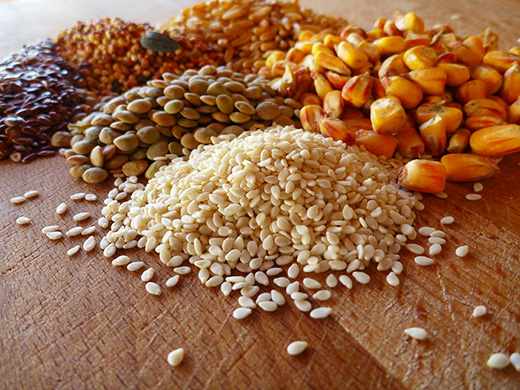
In a feed recipe like this one by home.howstuffworks.com that uses a combination of hard grains and seeds, the aim is to choose so that the overall balance of proteins is correct for your chickens. You can source grains from health food shops or buy them online. Growing chicken feed may be out of your reach but it is often possible to source grains easily.
Chicks need plenty of protein to grow. Fish meal in this recipe boosts the protein intake for baby chicks. Chicks will also need grains to be ground at first and will need a balance of nutrients tailored to them. Find one chick starter feed recipe at Whole Fed Homestead.
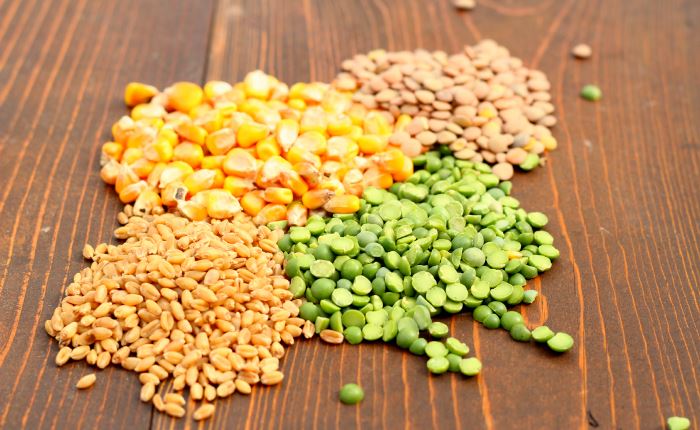
Some grain mix formulas like this one by theprairiehomestead require you to mill your own grains but not all grain mix formulae have to be milled. The mix at the website below is an example of a flexible formula that does not require home milling equipment. If you want an organic, non-GMO mix then you will have to try to source organic corn and wheat in your local area.
Many chicken owners are realizing the importance of moving to a soy and corn free chicken food like this one by wellfedhomestead. Soy contains potent phytoestrogens that are passed to eggs, most soy is also GM, contains damaging chemicals and may cause long term health problems. Corn is like chicken chocolate, with low nutritional benefit and also, much of it is not organic and chemicals can pass into the food chain. To get some of the ingredients cheaper, you could ask around for leftover grains from local mills.
The recipe on the following site is for laying hens and is provided in addition to kitchen scraps and oyster shells. Chicken owners will need to consider whether hens are kept as layers or for meat when choosing a feed recipe. Making your own chicken feed like this one by thefieldandtable allows you to control the process.
9- Another Soy and Corn Free Feed For Healthier Chickens
There are a number of different recipes that conscientious and ethical chicken keepers can use for their homemade feed like this one by peacefulvalleyfarm. Here is another alternative to commercial chicken food, with all its unhealthy and potentially damaging ingredients:
One of the great things about concocting your own feed mix like this one by marystilwell.wordpress is that you can alter it depending on the season. Some owners choose to alter the chicken feed throughout the year, changing the balance of ingredients to help chickens cope with warm weather in the summer and cold weather in the winter.
11- Another Homemade Chicken Feed Recipe
The key to creating a successful mix is to educate yourself about the nutritional requirements of your birds and how they can be met. A number of different recipes can be found on forums like backyardchickens.com.
12- Twenty Five Pound Organic and Non-GMO Chicken Feed
It is a good idea to try to bulk buy ingredients and make up a larger mix in one go as this will usually work out cheaper than trying to make up small batches more frequently. You can find one homemade feed mix like this one by gnowfglins for a 25 pound amount here.
Develop your own, organic, non-GMO chicken feed and you will have healthier chickens and healthier eggs to eat. By taking control of what goes into chicken feed, you will also be making sure that you do not contribute to global environmental problems and will be taking one more step towards a sustainable and ethical future.
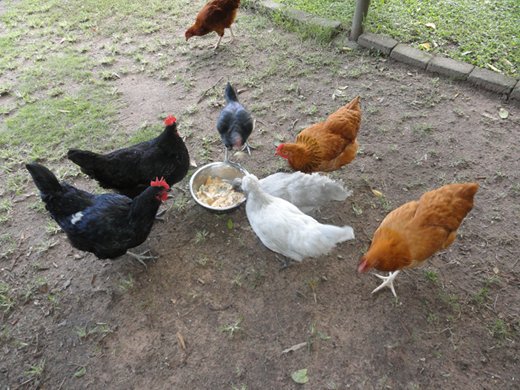
If you have backyard friends in your house, you must be knowing how carefully they are brought up. From their living to health, habits to the house, everything needs to be perfect, especially if you are dealing with chickens. They are very moody and tend to get irritated if not treated the way they want to be. Other than all the stuff, taking care of chicken’s diet is the utmost priority of the everywhere backyard raiser. However, you can always have some treats for chickens occasionally. The treat for chicken would help in avoiding the boredom of having the same food for the little fluffy fellows.
If you fail to allure the chickens with treats, they might get into the habit of feather pecking, which is certainly dangerous for the bird’s health. However, treat would be only 2 to 4 percent of the actual diet; it only makes around quarter cup feed for one chicken and that even for the week.
You must be thinking what to feed chickens as treat? Health, safety and freshness would be your utmost concern. The excerpt guides you about best 10 treats that your birds would enjoy to the fullest:
1: Lush green veggies:
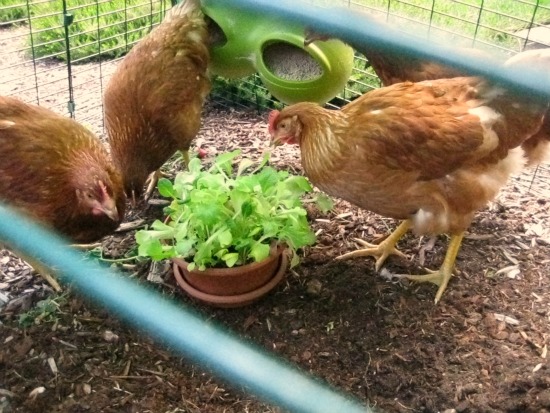
You can serve the chickens with lettuce, cabbage and other soft leafy green veggies. However, make sure you do not give them anything cold. It is ideal feed to hens.
2: Solid vegetables:
You do not have to shop for special or new vegetables for them – simply serve the leftover dinner’s vegetables in the morning to chickens. They would love it. However, do not over-do any of the items. Cauliflower, Brussels, cabbage and onions should be given in limited quantities.
3: Garden and Lawn weeds:
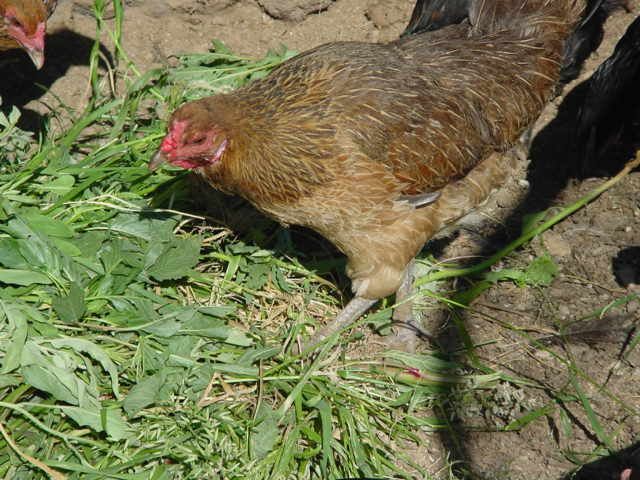
Weeds have higher nutritional value, but make sure the ones you present to the chickens do not have any elements of pesticides. Wash the weed properly before serving it to the chickens. Make sure you consult the chicken veterinarian before that – never serve such a weed, which is unfamiliar to you. The most common weeds are chickweed, crabgrass, dandelions and thistles.
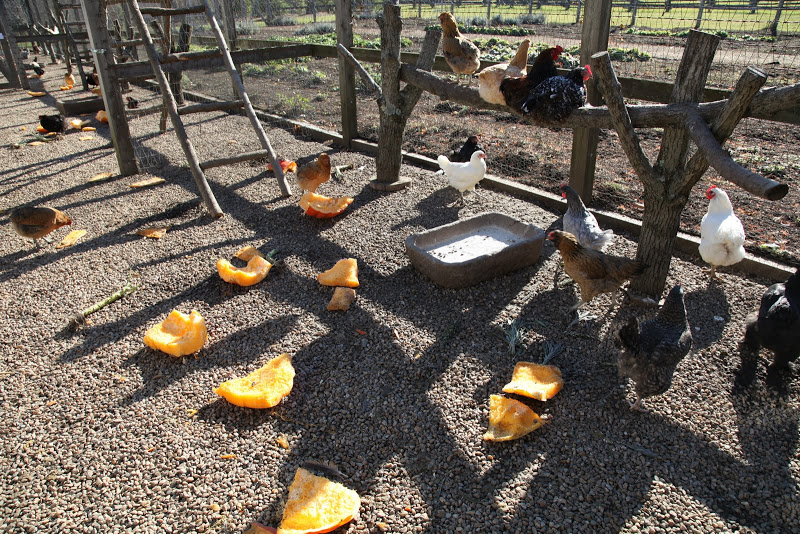
4: Squash and pumpkins:
Chickens have a special love for the jack-o-lantern from the Halloween – jokes apart, pumpkins have great nutritional value for chickens. Worming chickens with pumpkin is also a great practice.
5: Fruits:
For wormy chickens, fresh fruits are a great treat. Make sure when you serve the chickens with fruits, they are washed and seedless. The fruits with seeds may cause chickens loose motions or other stomachaches. Look for soft fruits and give preference to sweeter ones; citrus fruits may not be liked much.
6: Meat:
If you plan to provide chicken with meat or bone scraps, make sure they are well cooked. It is ideal to have some meat on the bones so that they can pick it and have fun. Do not leave the bones in the coop for more than 24 hours – chickens may develop some infection by having them around.
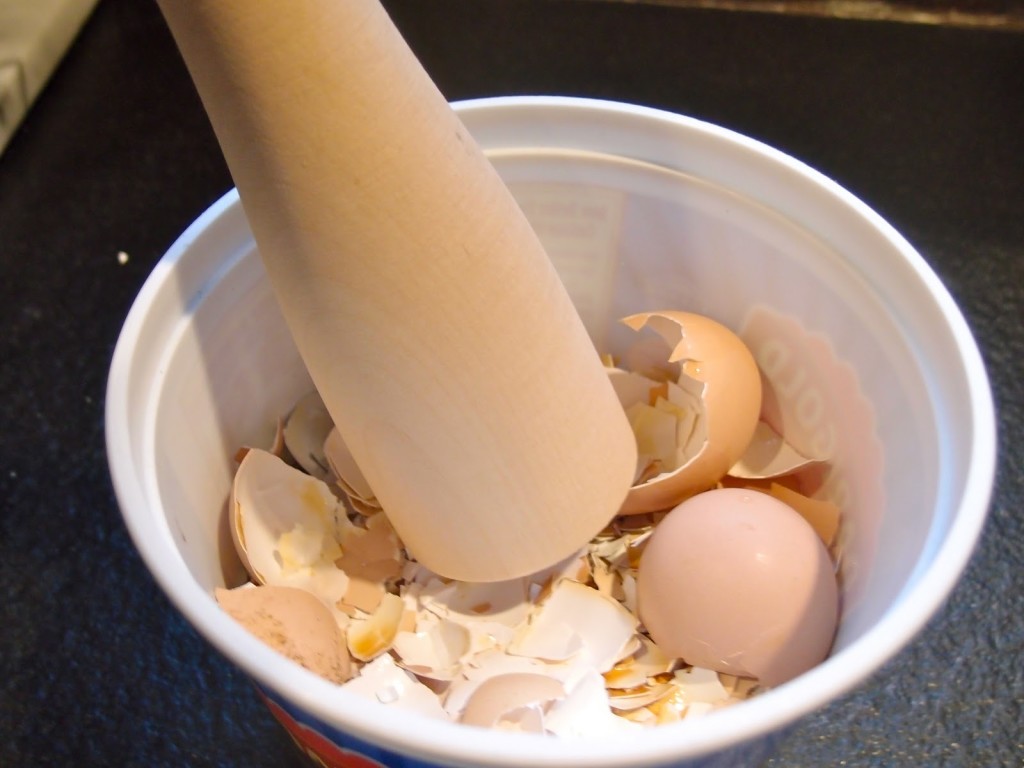
7: Eggs and shells:
It is time to make the most of cracked and old eggs. Simply give them back to the chickens in cooked form – make sure it is crushed well, so that you do not intrigue the chickens having their own eggs when you are not around.
8: Dairy and milk products:
Who said chickens stay away from the dairy products? They love cheese, sour milk and the simplest milk too. They would even have it if you mix some other liquid mixture in it. However, make sure you consult chicken veterinarian before doing it. It may otherwise cause a decrease in egg production.
9: Starch products
Now you must not be worrying about what chickens can eat – everything is crystal clear. You must serve pasta, rice and spaghetti in properly cooked manner. You can even serve the leftovers of the last night – even some sauce mixed dish would be fine for chickens.
10: Potatoes:
Never ever, feed your chickens with raw potatoes – not even the peels. The roots may be poisonous, so make sure you remove them as well. Simply put the potatoes and the peels into boiling water for 10 minutes and then serve them to the chickens when cool on temperature.
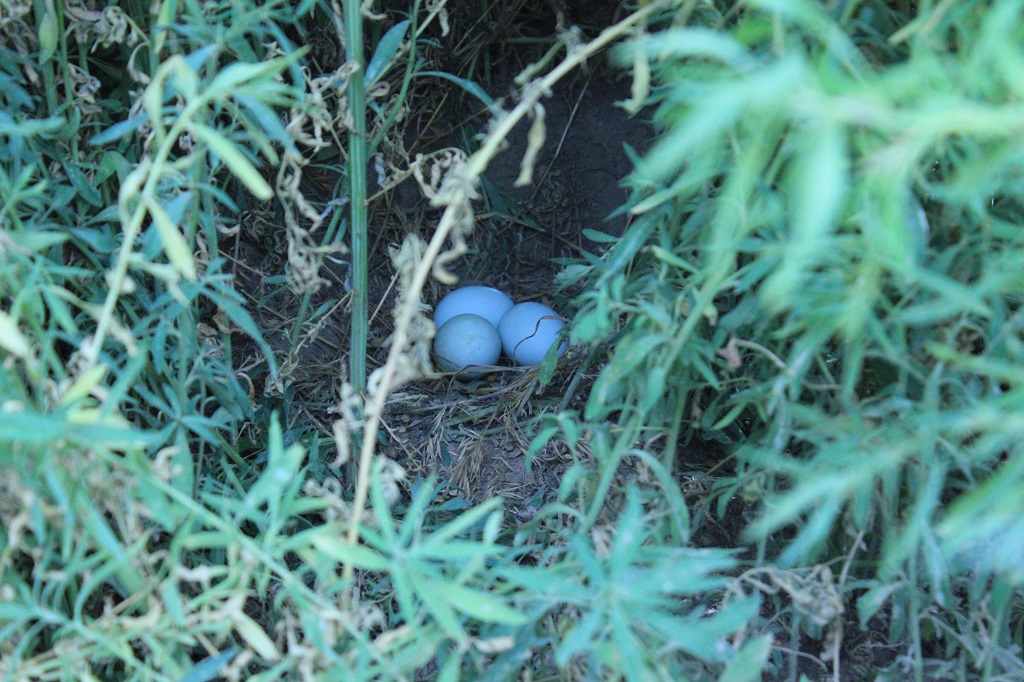
Are you pissed at your cute chubby hens because of their annoying habits? Relax, that is normal for the poultry dwellers. My 10 years experience has lead me to conclude, you may not agree with it but my opinion remains the same – hens love laying eggs everywhere except for the place where they should. When I bought hens for the first time, I went mad almost – they use to lay eggs all over the farm but not their next boxes. It was bothering because most of the eggs used to get wasted as I was not able to locate them or other animals used to break eggs.
Are you going through the phase when the hen laid eggs in the garden, trees, hay bales but not their boxes? You cannot do anything about it other than training them. Don’t lose hope because chickens have a very annoying habit of sticking to what I being restricted – I shall share my experience of training my fellows, you can take perks from the foolproof tips through which you can easily obtain fresh and clean eggs;
1:Place nest boxes in quantity:
You must have at least 4 to 5 boxes for a flock of 20 hens – in this way hens would feel comfortable laying eggs in the boxes because of ease. This would also help you in collecting eggs easily.
2: Alluring nest boxes:
The nesting boxes must have something that the hen would not to eat or maybe play with.
3: Placement of the box:
Always keep the boxes in the areas of the coop that are dark – hens adore peaceful and dark places and would happily lay eggs in the boxes.
4: Create a scenario – play with them:
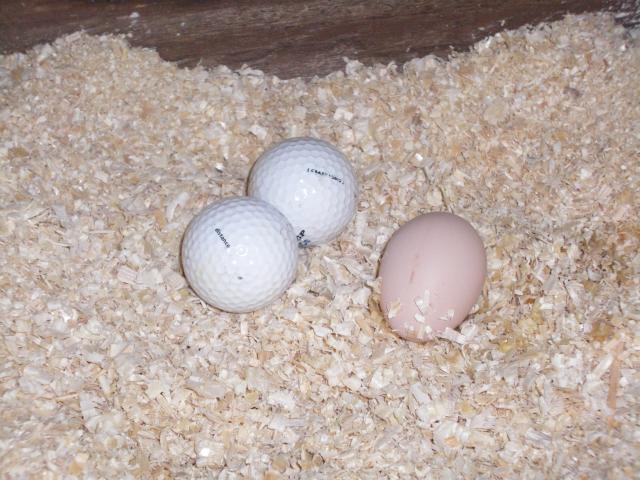
You can use golf ball or ceramic eggs and design a scenario to create an impact on the hen’s mind that the right place for the egg is the next box.
5: Limit their movement:
You must know the time when your hens lay eggs usually – for example, if it is the mid morning time, you can close the coop door. In this way, hens would have no option other than laying eggs in the nest boxes.
6: Make the boxes cozy and comfortable:
You must have a clean and fluffy nest box so that he feels cozy in it – untidy and boxes with depleted shavings (floorings) are disliked so hens lay eggs in other locations.
7: keep the boxes free:
Once the chicken is done with laying eggs in the box, make sure you clean it and leave it for another hen.
8: Notice the hen behavior:
Make sure you guard the hens in the morning, if they are trying to escape from the eyes or searching for darker location, send her to the coop where the clean box is placed.
9: Timings:
You can place food and water bowls near the boxes – the hens would eat and play, and before that lay the egg in the safe secure area, which would be nest only.
10: Keep the nest box a few inches above the ground because hens like it that way – make sure you place fresh flooring each morning so that it motivates the hen to carry on with the behavior.
Each of the united state regions is now broiling – wonder why the heat wave seems to have adored this place. Humans have ample amount of ways to counter this igneous heat but what about the animals around? I am being specific about our backyards fellows and other feathered creatures because they are absolutely innocent and rely on us for shelter when the temperature is torturing. One of the researches says that birds like turkeys, guinea fowl, ducks, chickens and pea fowls cannot stand against the temperature of 90 degrees – they can even die cause of sun stroke/ heat stroke if exposed to soaring temperature than this.
Don’t worry, there are ample ways through which you can protect your little fellows and keep your flocks happier even if the shiny sun is in the mood to annoy them. This excerpt now highlights simple, affordable and quick ways through which you can keep chicken cool during the hot season. Raising backyard chicken is interesting but caring chicken is responsibility.
Identify the heat stress symptoms:
You must be wondering how to identify symptoms regarding heat stress in poultry? Well, their behavior would depict lots of things;
Hyperventilation or panting: this refers to quick and short breaths by birds
Laziness – they lie down on the ground with fully stretched wings
Eating disorder – appetite shrinks
They stop responding to stimuli
How to keep chicken cool in summer?
Here are the most inquired tips:
1: Choose the bird breed sensibly:
Indeed, you would never want to have a sick or lazy flock in the backyard – a healthy and active flock is something that each rasier would look up to. If that’s your goal, always select the bird breed wisely. What do I mean by this? See, there are a few heat tolerant breeds; similarly, you would come across cold tolerant breeds, and a few which cannot bear any extreme temperature. If you would build your flocks based on factors like beauty, rareness or egg laying ability only, you may face trouble. Before filling your coop clearly make a note of their habitats and abilities.
2: Chicken coop design should be considered:
Always inquire vendor about the coop designs; for example, the slanted roof has a greater tendency to absorb heat as well as the humidity. Similarly, all sides closed coop would also lead to suffocation; you must have a coop which allows fresh air to pass easily while providing enough shade inside the coop for birds.
3: Make sure enough shade is provided:
During summers specially, you must have shades and shelter at different places so that chickens and other birds can seek shelter there. What you can do is grow more shrubs, trees and porches – if you don’t have enough space, you can use man-made options for making shady areas.
4: Make water available:
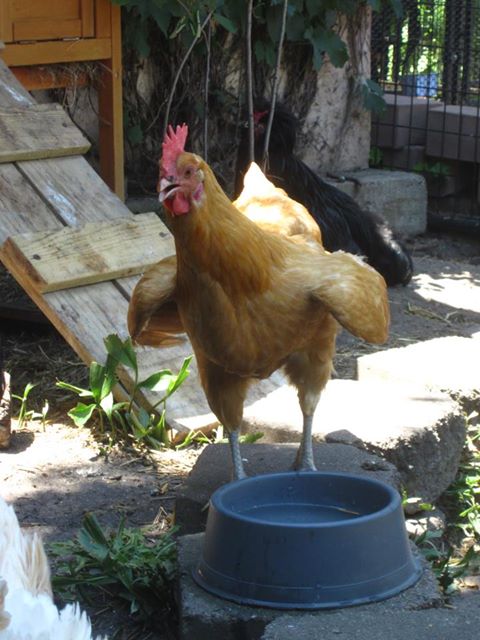
You must place cold water for birds in their residency – try to change the water after 2 hours during peak summers. If that’s not possible for you, at the base of water containers place ice in plastic bags – this would help water retain coolness.
5: Use small ice air conditioners:
What you can do is, freeze water in small some containers and place them in the resting place of the birds. They would get an idea that while they are near the containers they feel relaxed and cold. It’s a good way to keep them away from heat strokes.
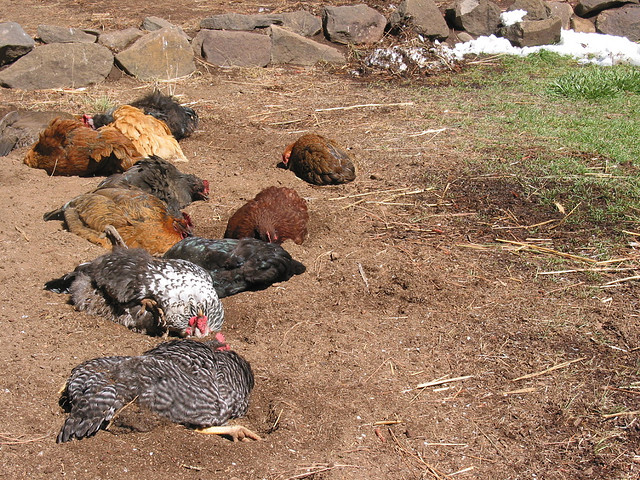
6: Provide dust bathing place:
By doing so you would reduce the chances of getting parasite as well as heat. When the temperature is ferocious, chickens make small holes in the dirt and would sit where they find cooler regions.
7: Use of electrolyte:
All you have to do is buy a powdered electrolyte from the store and mix it in the cold water as per the instruction on the packet.
8: Pay attention to nest Box area:
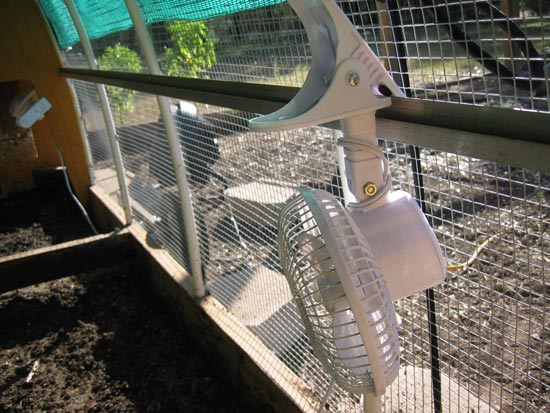
Smaller chicken coops face this type of a problem widely – as the day passes temperature inside the coop soars. You have to make sure that there is proper ventilation and air circulation where nest boxes are placed. You can use a fan or place freezers (ice air conditioners). In fact you must have nest boxes outside somewhere in shady regions for summers.
9: Change in diet:
Stop giving your chickens scratch and corn – they provide the body with extra heat and require longer time for digestion. Replace them items with fresh fruits and juicy vegetables.
10: Use Frozen foods:
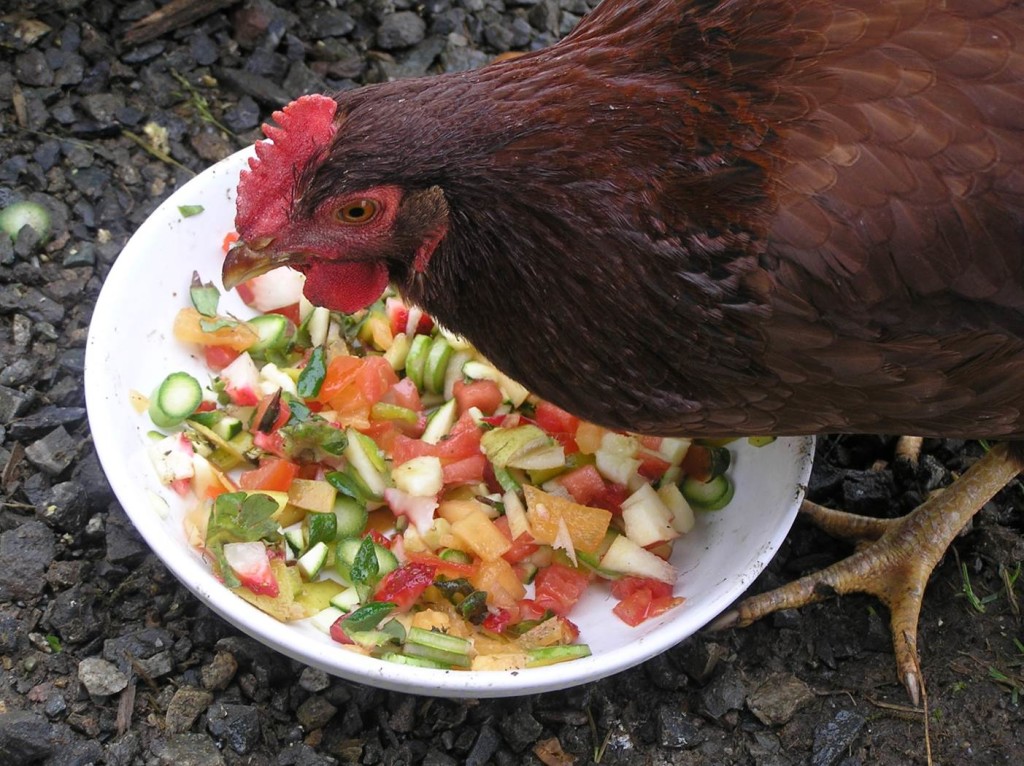
Take out fresh and juicy fruits and vegetables and chop them into smaller pieces. Go to your flocks and let them enjoy this meal twice a day. This would help them retain energy and coolness. You can try;
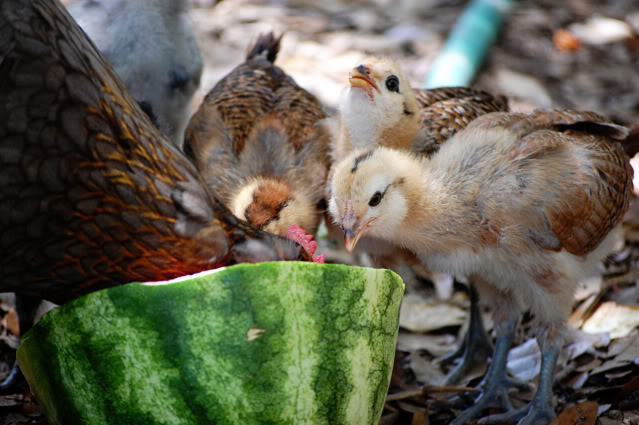
Watermelon
Cucumber
Oranges
Berries
Apples
Pineapple
11: Water your coop:
If you have plants at the top, that means you have a green roof chicken coop, you must keep on watering it. Also, you can create a cold water pool inside the coop.
12: Decrease the litter in the coop:
You must decrease the deep coop bedding – by doing so you would be able to keep the coop cool and clean. This would increase the air circulation and decrease suffocation.
13: Give birds freedom:
Your goal is to lower the chickens stress so try giving them a place to play and walk around. This would help keep away their stress.
The trends of taste among people have been changing quite drastically. In older days, people use to give priority to vegetables more as compared to meat food. But now it’s the opposite. And in this, the usage of chicken has been in the top of the list. The increase in the consumption of chicken by people belonging to different countries has led to the proper farming of chicken in order to fulfill the daily needs. But this farming has also raised some medical issues in respect of chicken health due to not handling them properly. Un-controlled and un-healthy environment creates parasites in chickens that not only affects the health of that chicken but also affects the health of other chickens. Therefore, remedy for this problem is using herbs. It is not necessary that these herbs can only be used for chicken farming on large scale. Even if you have small pack of chickens at the backyard of your house, you can also use these herbs to keep your chicken healthy. So below are some of the uses of herbs that are beneficial for the health of the chicken.
Herbs for chicken
As we all are well aware that chickens eat green plants for their survival. If green plants are the food than why not provide with such green plants that does not only satisfy their basic need, that is food, but also keeps them healthy and reduces the chances of getting any worms in chicken. In order to provide them with useful herbs, you need to make some good room for the chickens. Chickens can be more happy and healthy when they have plenty of room to walk, spread their wings and find their food themselves. Keeping them in fence cannot fulfill this purpose that accurately as this is practiced for the convenience of humans and keeping chickens away from predators. The important herbs that are useful for the health of chicken and also so that they could lay healthy eggs are comfrey, garlic, chickweed, elder, hyssop, feverfew, nasturtium, tansy, lavender, kale, Gotu Kola, and nettle.
Some Herbs and their benefits
The herbs that are mentioned above have separate benefits for chicken. These are described below.
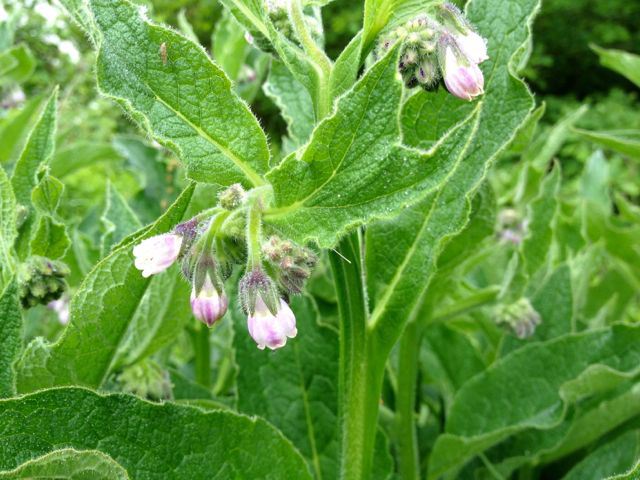
Comfrey:
this herb is filled with tonic food and protein and has a high level of calcium and potassium in it. This herb is also beneficial in providing amino acid. Feeding this herb daily to chickens will not only help them in being healthy but they will lay eggs with golden yolk as well.
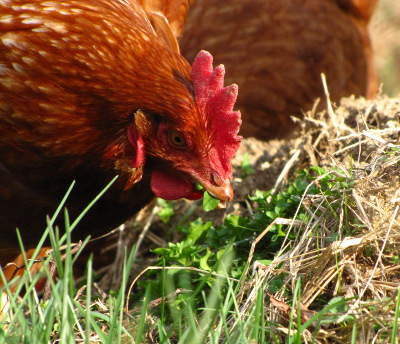
Chickweed:
This herb is very common and it grows in the cooler months. This herb is on the top of the list that is liked by chickens.
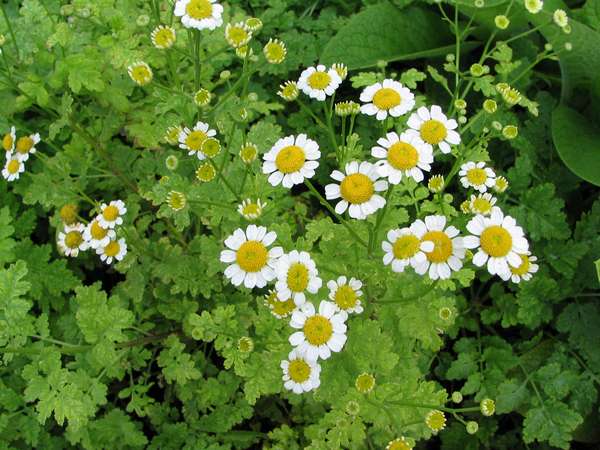
Feverfew:
This herb is effective in controlling mites and lice that possesses some serious threats to the health of chickens. This herb produces self seeds and ample of flowers. These flowers and leaves can be converted in to a tea and then sprayed to control mites and lice.
Gotu Kola:
This herb grows in areas that are partially shaded. The leaves of this herb are very useful tonic for chickens and this herb can also be used for some of external skin conditions.
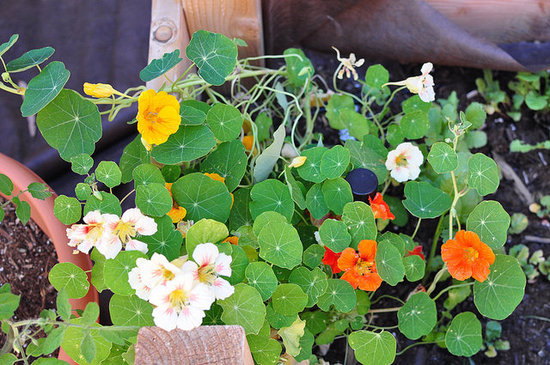
Nasturtium:
This herb has antibiotic and antiseptic characteristics and helps in repelling the insects away from the chicken.
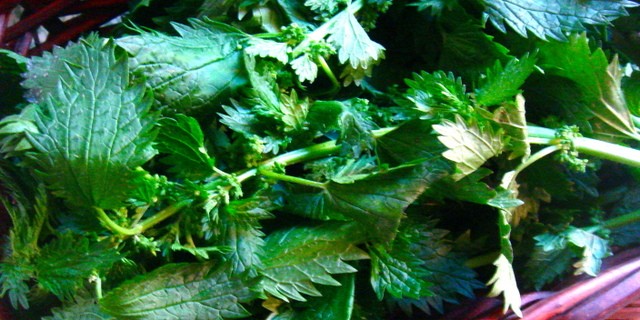
Nettle:
This herb not only is rich in minerals and vitamins but also it prevents chicken against worms. This herb can be added with comfrey after drying it so as to give a boost for laying eggs.
Herbs and chickens health
Some of you may have experienced that the chickens which you have been keeping in your backyard or on your farm are getting less active and are often seen in unhealthy shape. This may lead to death of some chickens as well. If you are providing them with proper food, water and shelter and wonder why still this is happening, so the reason is their declining immune system. The reason in the declining of chicken’s immune system is unhealthy diet. You may have been providing proper feed for hen but sometimes that is just not enough. Giving them proper diet which includes useful herbs is also very important. These herbs have the necessary proteins and vitamins that do not only strengthen the immune system of chicken but also helps them in fighting with any parasites in chickens. The stronger the immune system is, the healthier is the chicken and will also lay healthy eggs. The immune system not only helps the chickens to fight with parasites but also to counter lice and mites diseases that may not only affect the health of one chicken, but may also affect other chicken as well. Besides the fact that these herbs help in maintaining the immune system of chickens, there is one also additional benefit received from these herbs. These herbs not only make the immune system of chickens more defensive but also provide the necessary calcium and proteins that helps in the nourishment of these chickens. As healthy the chicken will be, there are greater chances that the egg laid by the egg laying chickens will also be rich in protein and calcium. And when these eggs will be used as a source of food by the people, they will also have a better and healthy life.
Above are some of the benefits discussed of using various herbs for the proper nourishment of chickens and why they are essential for the immune system of chickens as well. So if you think that the food which you are providing to your chickens is enough, than think again. This information will help you to keep your chickens more healthy and active and the herbs mentioned will help the chickens in fighting various diseases as well.
Here is more information on types of herbs,their benefits and how to use them