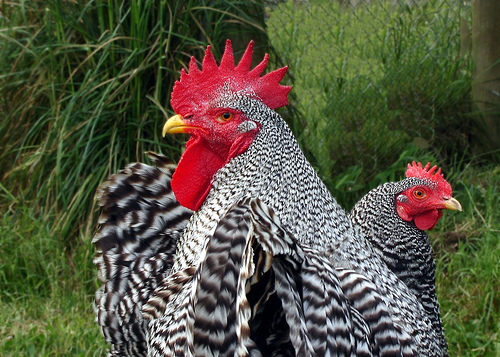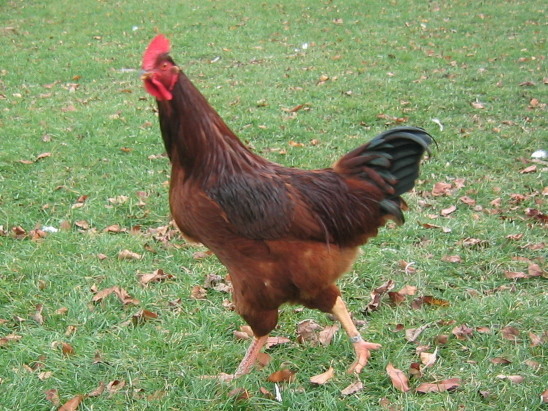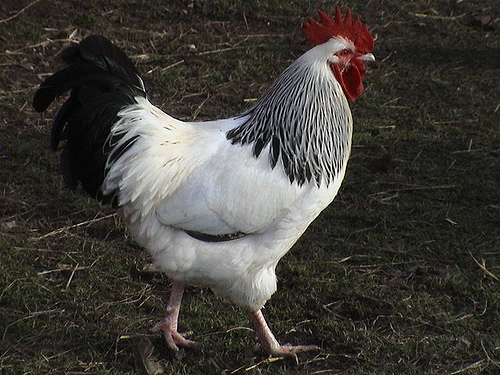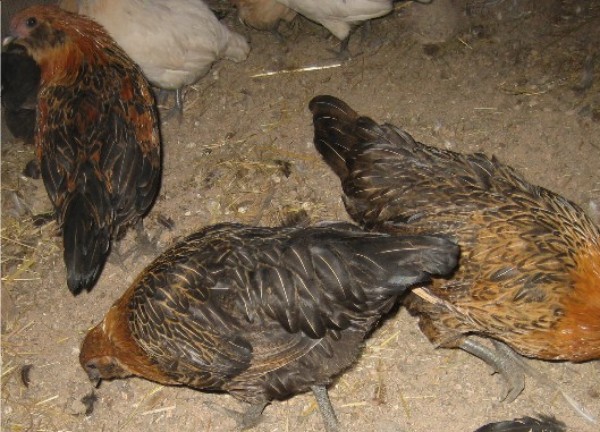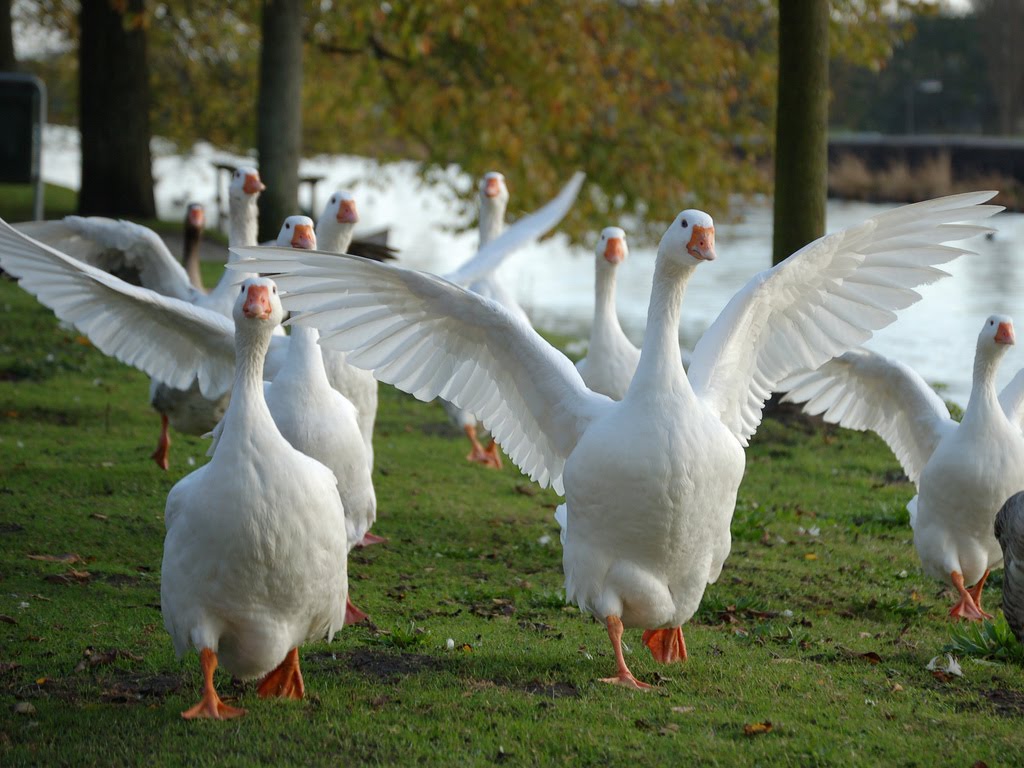
Category Archives: Breeding Guide

Top 20 Black And White Chicken Breeds For Backyard

Black and white chicken breeds are very striking in their appearance. Their solid white or solid black feathers, or combination of black and white, make for a stunning display in your backyard.

Interestingly, some chicken breeds with black feathers have white meat while certain breeds with white feathers have black meat. The blackest of the black have black bone and almost black blood.

Some of these stunning chicken breeds are raised for show purposes only, while others are raised for egg production or dual purpose both egg and meat production.

If you’re looking for attractive chickens to raise in your backyard for show, meat and/or egg production, consider some of these 20 black and white chicken breeds from out list.

Pure Black Chicken Breeds

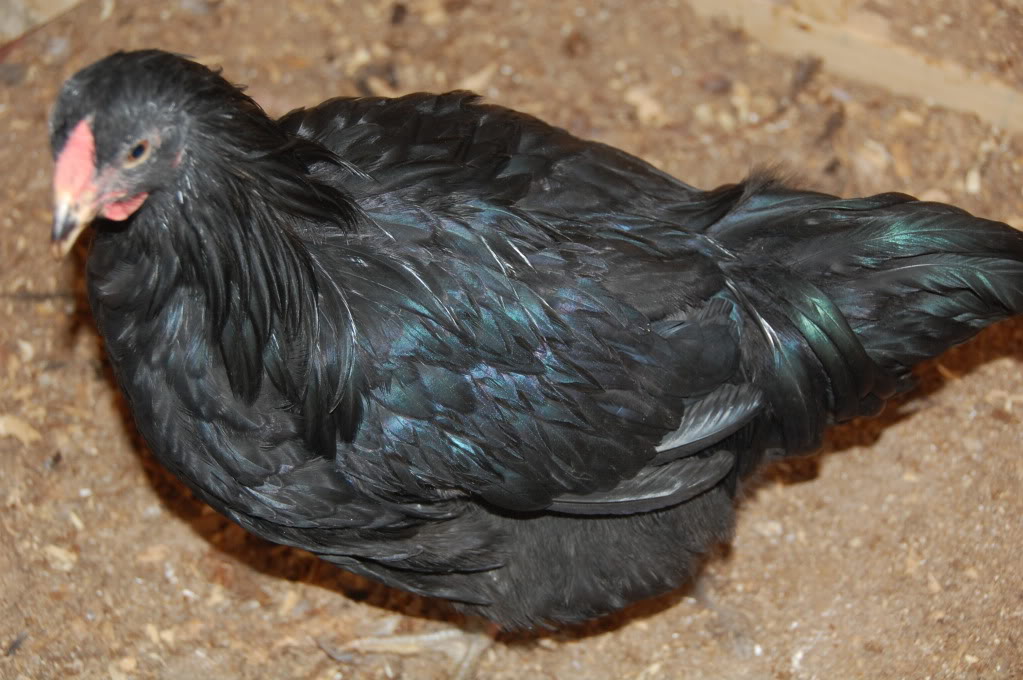
Australorp

The first one we are going to discuss is Australorp Originating in Australia. Australorps have black feathers that have a green and purple sheen to them. This breed is prized for both egg production and meat. Hens produce around 250 light brown egg per year. They will go broody a couple times each year. Living to around 8-10 years of age, one Australorp hen can provide you with 2,500 eggs in her life time. This breed holds the record for most eggs  produced in one year. The record holding hen laid 364 eggs in one year.

Adults weigh between 7-8 pounds and will adapt to living in either confined spaces or free range. Australorps are shy until they get to know their owner, then they will happily follow their owner around like a puppy.
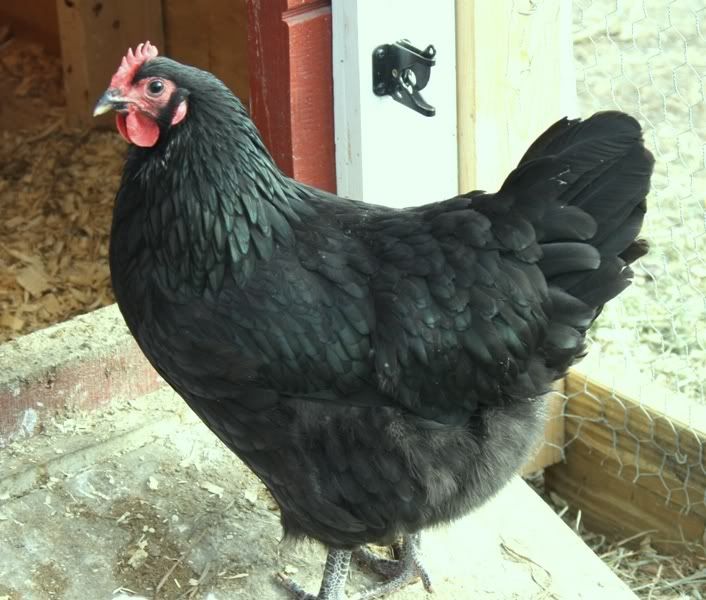
Australorp Chicken Breeds
Australorp Chicken Breeds, produce around 250 light brown egg per year, live around 8 to 10 years

Ayam Cemani

Native to Indonesia, the Ayam Cemani chicken is the blackest of all breeds. A genetic condition  of hyperpigmentation causes this breed to have black feathers, skin, beaks, claws, and meat. Even the blood from this chicken is almost black. The perfect black ones have a very high value in Indonesia, because it is believed that they possess mystical powers.

The eggs of the Ayam Cemani are white, however, they are not big egg producers and will have times when they stop laying eggs. Expect about 80 eggs per year from this black chicken breed.

Adult hens are small and weigh about 4-6 pounds. They have long, featherless legs and sharp spurs.
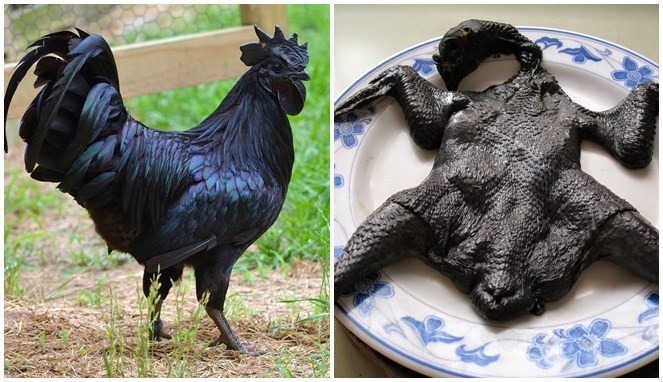
Ayam Cemani Chicken
Originated in Indonesia,weigh about 4-6 pounds, lay 80 eggs per year

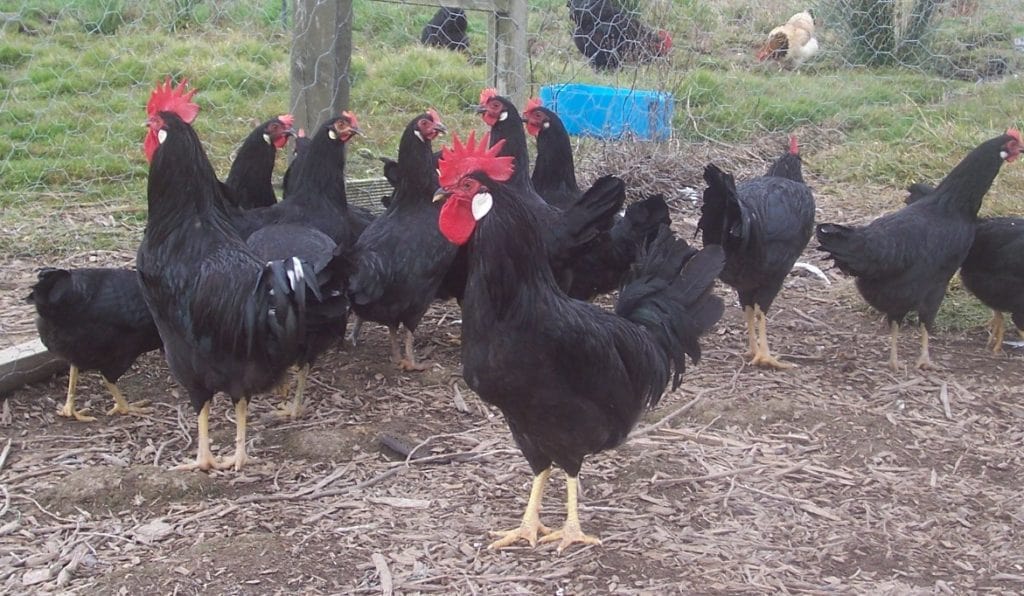
Black Shuman

Black Shumans originated in Bulgaria and are rare chicken breed, with only 350 accounted for worldwide. The deep black feathers have a green sheen and the head is topped off with a very prominent red comb. The meat of this chicken is white.

Adult Black Shumens will weigh between 3-4 pounds. Hens are good layers and will produce around 150 large white eggs per year. They rarely go broody.

Hens mature early and begin laying large, grayish eggs at the rate of 170 per year. Black Shumans weigh between 4-6 pounds when mature.
Black Shuman Chicken
Black Shuman Chicken originated in Bulgaria,weigh between 3-4 pounds, lay  170 eggs  per year.

4. Kadaknath

Here we have another black chicken breed that has black feathers, black comb, black eyes, black meat and even black bones. The appearance of the cooked meat from this black meat chicken might take some getting used too, but the nutritional value exceeds all other white meat chicken breeds.

This solid black chicken is highly prized for its nutritious meat. High in protein and low in fat and cholesterol, this black meat chicken is raised in backyards primarily for meat production.

Adult Kadaknath chicken will weigh 4-6 pounds. Hens will lay around 100 white eggs per year. They are poor setters and rarely hatch their own eggs.
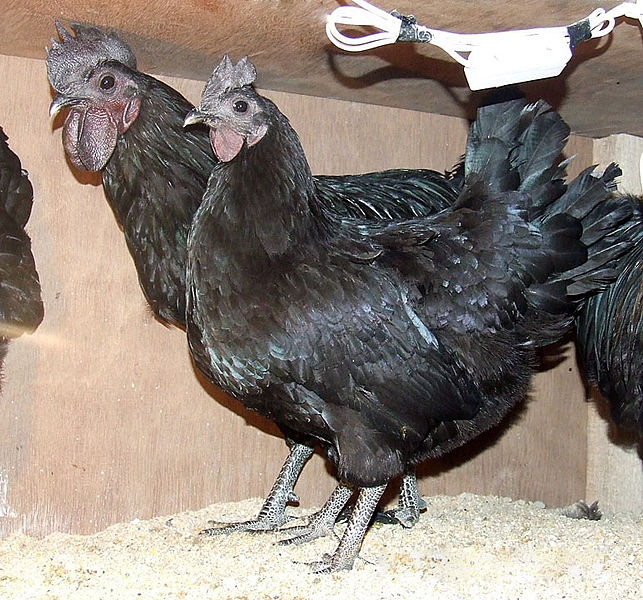
Kadaknath Chicken Breed
Kadaknath Chicken Breed, weigh 4-6 pounds, 100 white eggs per year.

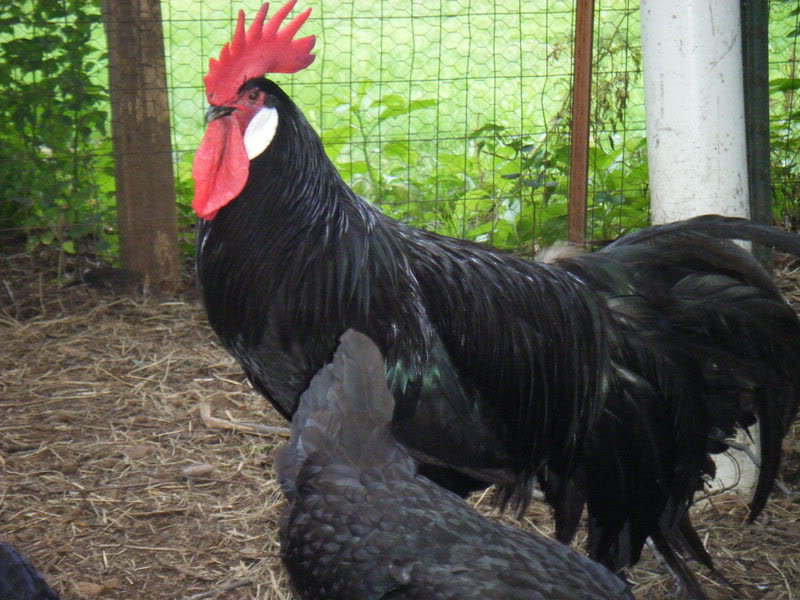
5. Minorca

Originating in Spain, the Minorca is a large chicken breed typically raised as an ornamental breed. However, they are good eggs producers. Minorca hens will lay around 120 large, white eggs per year. The hens start laying eggs at 26 weeks and rarely get broody. Some strains of the Minorca will produce more eggs, up to 230 per year.

Minorcas are a hardy breed that will adapt well to any climate, soil condition and to confinement.

Graceful and energetic, Minorcas are a great addition to a backyard farm for both appearance and egg production, Also known as Red Faced Black Chickens, they have light red faces and the comb of the hens fall forward.
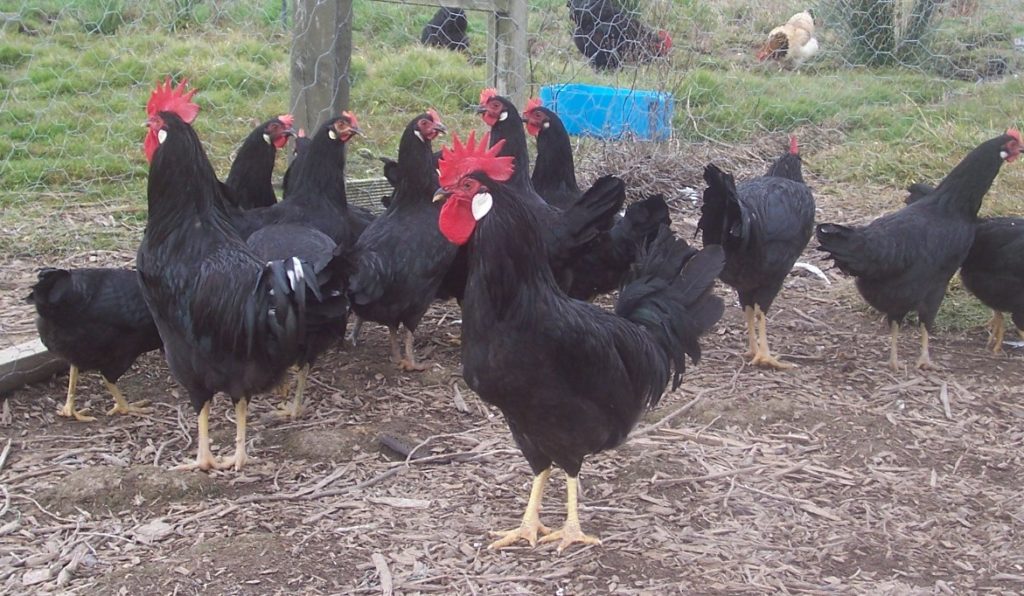
Minorca Chicken Breed
Minorca Chicken Breed Originating in Spain, lay around 120 large eggs per year

Orpington

Originating in England in the 1800s, this black chicken breed has short, fluffy feathers that make the chickens look much large than they really are. The thick, soft, puffy layer of feathers allows this chicken breed to stay warm in cold climates. Underneath the black feathers is a layer of white skin.

Bred for both meat and eggs, Orpingtons lay around 150 large brown eggs per year. Adults weight between 8-10 pounds. Orpingtons do come in other colors, but black is the most striking.
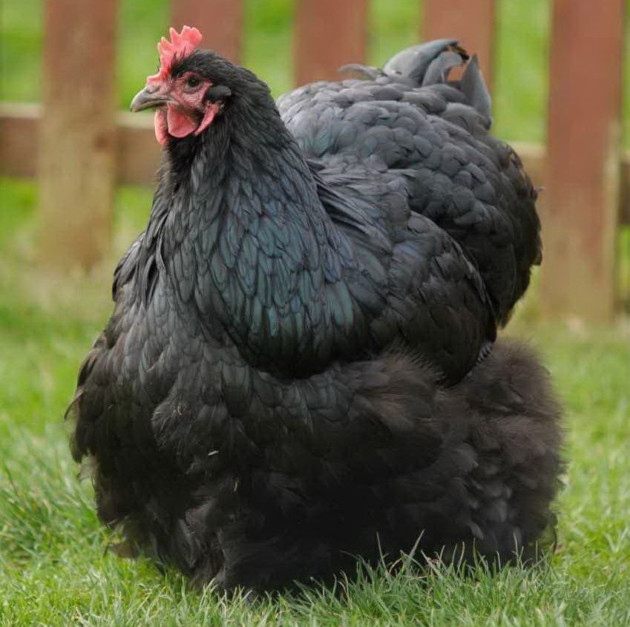
Orpington Chicken Breed
Orpington Chicken Breed, Originating in England, 150 large brown eggs per year,weight between 8-10 pounds

Silkies

This black chicken breed is soft and fluffy, with a gentle nature that makes them excellent pets. Chatty and sweet, Silkies are an excellent pet choice for children or for first time breeders.

Silkies have some very unique characteristics: they are not water proof like other chicken breeds; they have black faces and black skin; they have five toes instead of the usual four and their meat is a dark gray-blue color.

Silkies will lay around 100 white eggs per year and try to hatch every one of them. They are not good layers, but they are excellent mothers and will set on any clutch of eggs and ‘mother’ any little chicks in the chicken coop. You may also like to check out heritage chicken breeds.
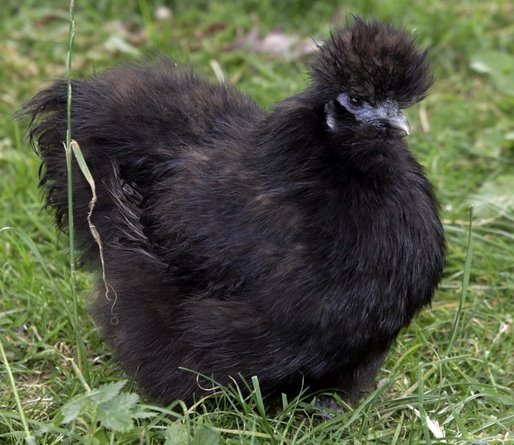
Silkies Chicken Breeds
weight between 8-10 pounds,lay around 100 white eggs per year. We love this chicken breed.

Sumatra

Originating in Sumatra, this black chicken breed is known for its long flowing tail and fighting capability. This breed was once used only for fighting, but is now bred as a show chicken. While the breed has lost much of its fighting capability, it has retained its flying ability and a tall fence will be needed to keep this chicken breed in your backyard.

Sumatra chicken will weigh 3-4 pounds when mature. Hens lay around 100 small white eggs per year.

Sumatras are flighty and skiddish, not a good choice for pets or eggs. The long flowing tail feathers which touch the ground make them best raised as show chickens.
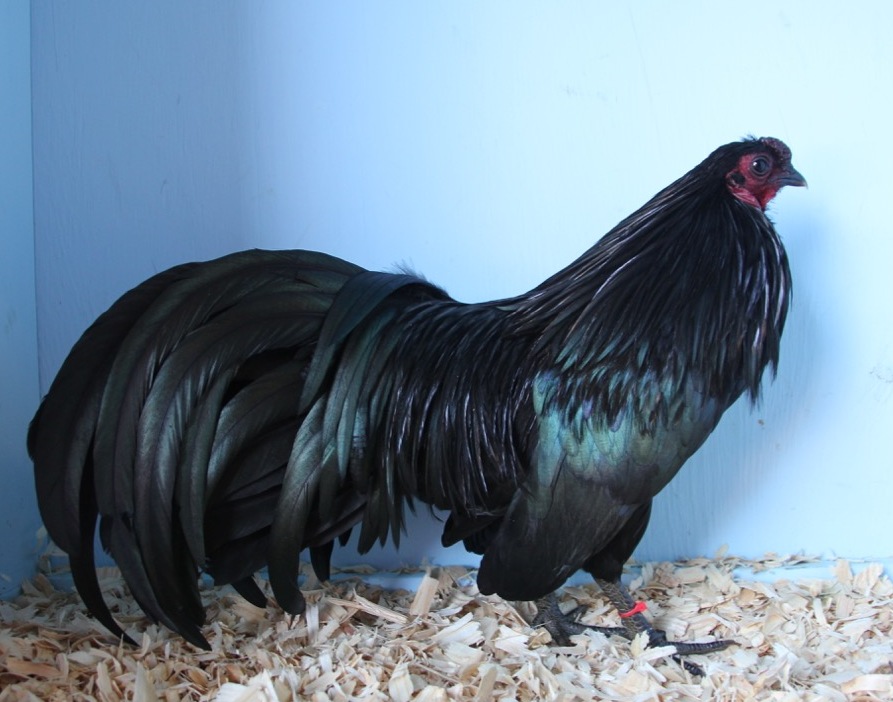
Sumatra Chickens
Sumatra Chickens, Originating in Sumatra, lay around 100 small white eggs per year. weigh 3-4 pounds. This is is of our most favorite chicken breed, we love their long tail.

Swedish Black

This chicken is cross between the Ayam Cemani and local Swedish chickens. It has all the same black pigmentation, including a black tongue, but it’s smaller than the Ayam Cemani. Adult hens will weigh between 5-7 pounds.

These chickens have a calm nature and are good laying hens. Swedish Black hens will produce about 150 cream colored eggs per year.
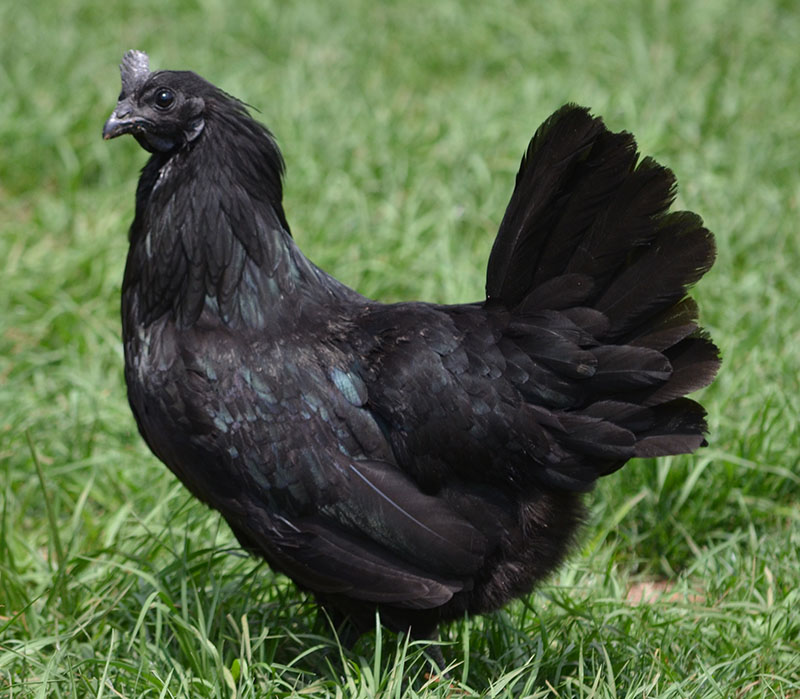
Swedish Black Chickens
Swedish Black Chickens, weigh between 5-7 pounds, 150 cream colored eggs per year.

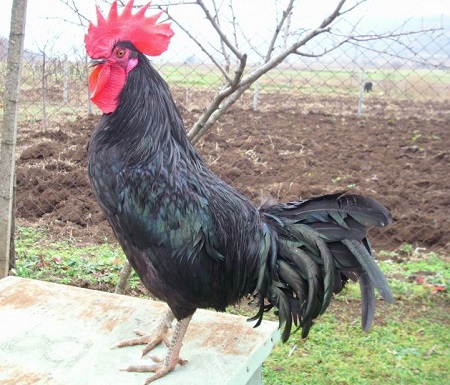
Valdarno

Originating in Italy in the early 1900s, this breed has deep black feathers that have a green sheen. Large bright red comb makes this breed highly noticeable among a flock of hens.

Hardy breed known for its high quality meat and egg production. Adults weigh between 4-5 pounds and hens will produce around 200 white eggs per year when they are five months old.

Valdarnos are strong, rustic chickens that were bred for life outdoors. Ideal breed for large, open backyards where chickens can forage on the free range.
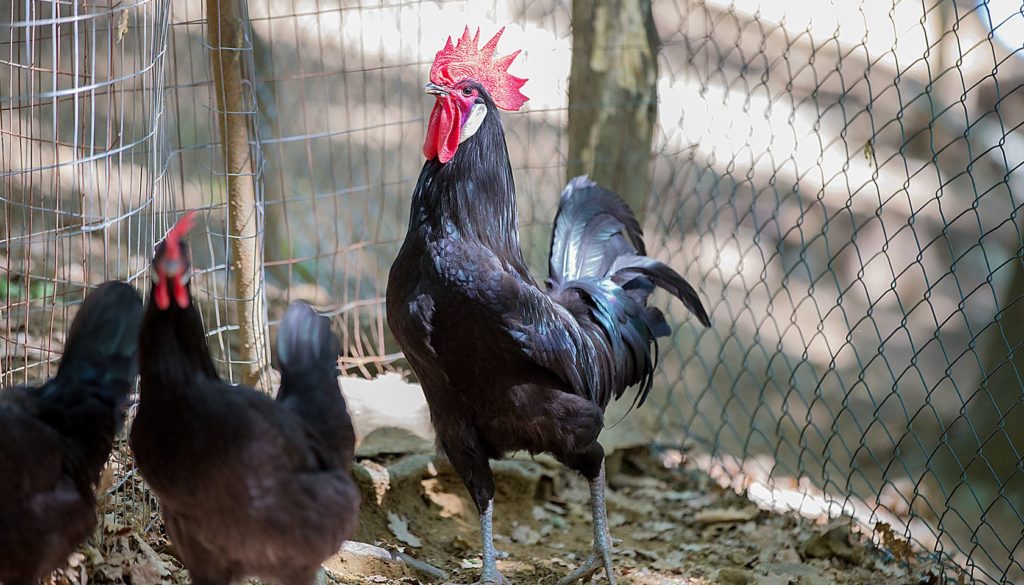
Valdarno Chickens
Valdarno Chickens, weigh between 4-5 pounds, lay 200 white eggs per year

Black and White Chicken Breeds

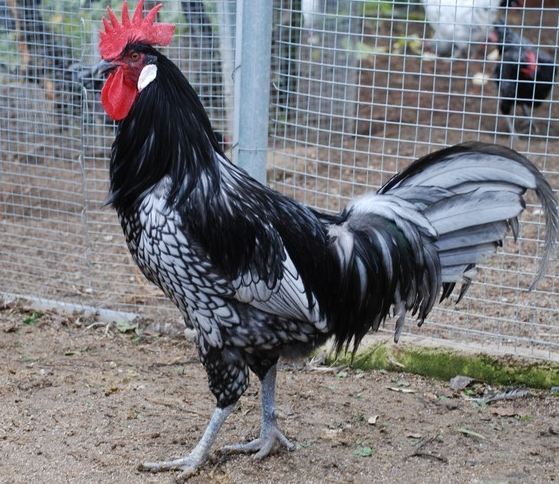
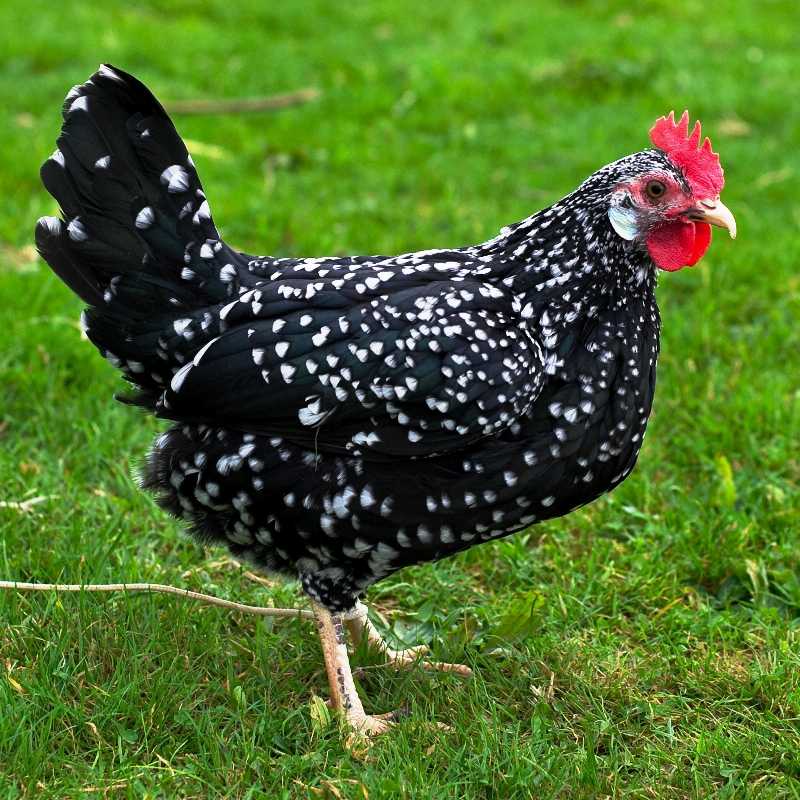
Ancona

An attractive black and white chicken breed that has solid black feathers with white tips. Every fifth feather has a white tip which gives this breed a speckled appearance.

Originating in Italy, Anconas are very popular in the United States and England.

This hardy breed is an excellent egg producer, laying over 200 eggs per year even in cooler winter temperatures. Hens rarely go broody, are excellent foragers and can fly well also.
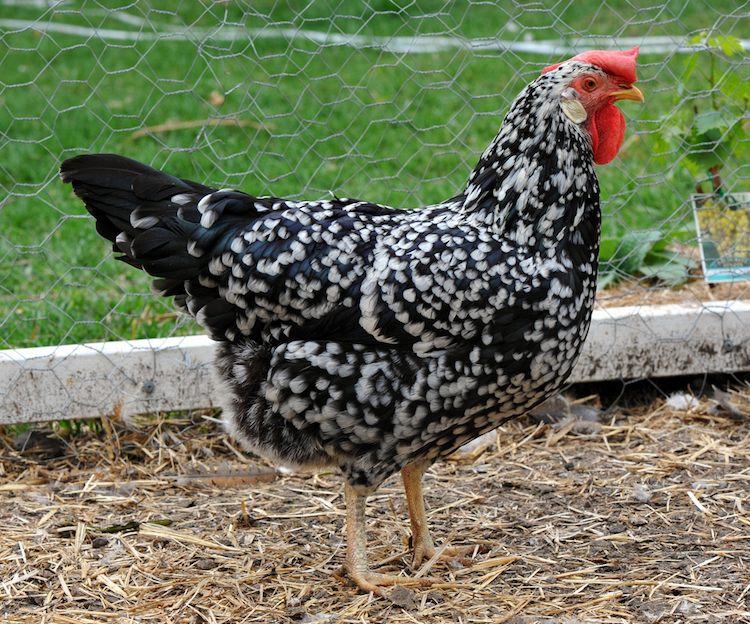
Ancona Chicken Breed
Ancona Chicken Breed,Originating in Italy, laying over 200 eggs per year

Black Cochin

Black feathered body with white head, the Black Cochin originated in China and is noted for its massive appearance. The fluffy underlayer of feathers make this black and white chicken breed look much bigger than it really is.

This breed is hardy and handles cold weather well. Calm and friendly nature, great for children’s pet.

Hens will produce around 200 eggs per year, continuing to lay even during winter. They will go broody a few times per year.
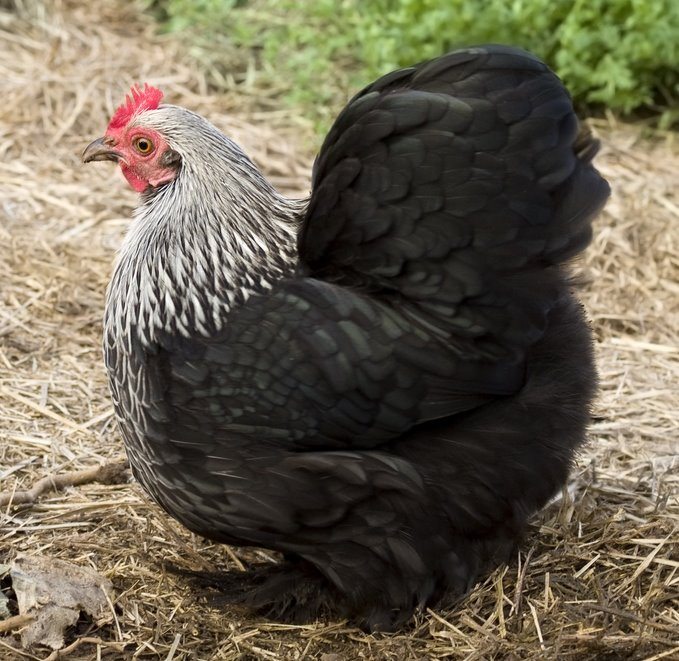
Black Cochin Chicken
Black Cochin Chicken, lay 200 eggs per year

Barred Rock

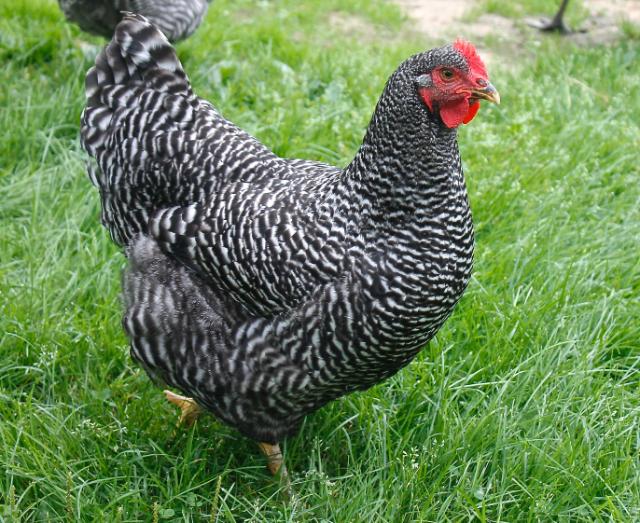
Attractive black and white chicken that appears to have stripes. Originating in Massachusetts, the Barred Rock is a sweet, friendly highly productive egg layer that will produce around. This breed is a dual purpose breed, raised for both eggs and meat.

Calm and friendly nature, this hardy bird will adapt to 300 eggs per year most any situation. Cold hardy and ideal for raising in areas that have harsh winter weather.
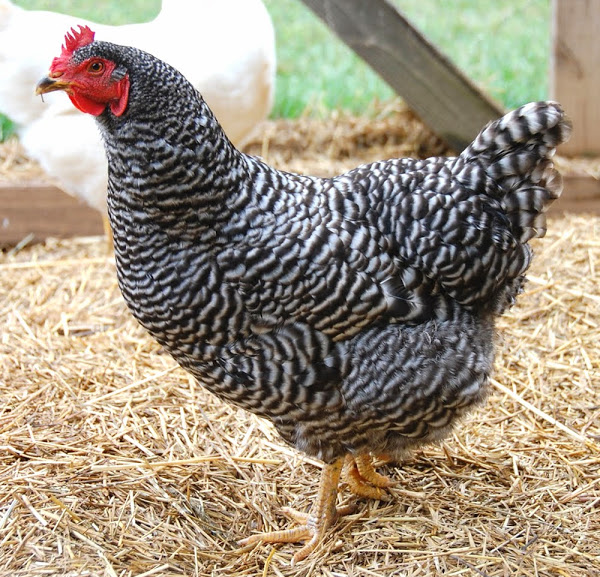
Barred Rock Chicken Breed
Barred Rock Chicken Breed, Originating in Massachusetts, lay 300 eggs per year

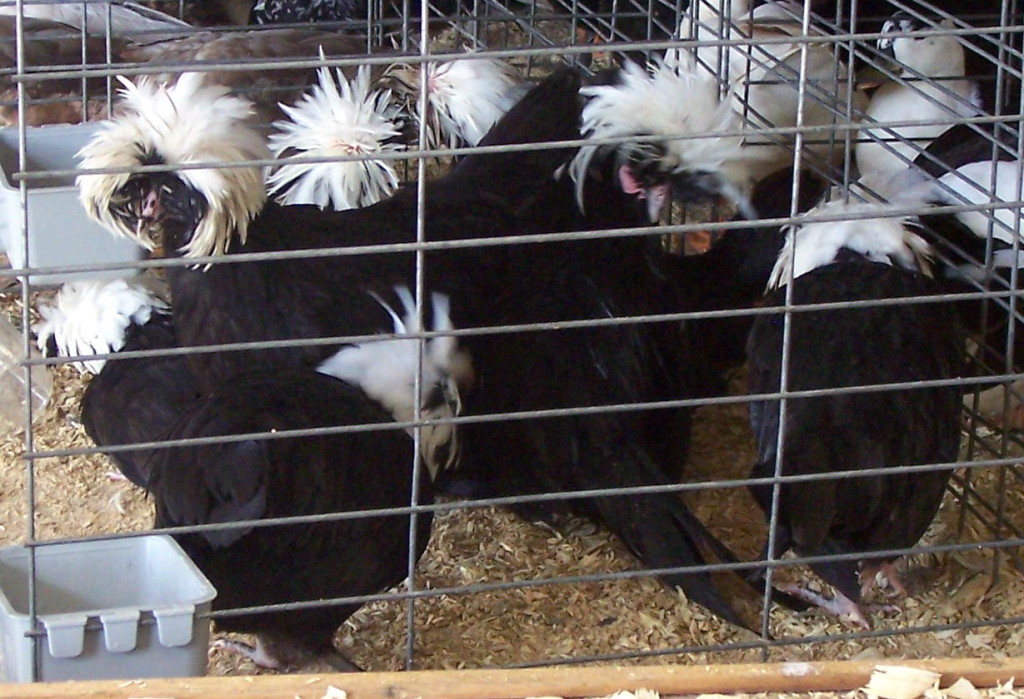
White Crested Black Polish

Attractive show chickens, the White Crested Black Polish is an ornamental breed that originated in Poland.

This breed is gentle and meek, making it ideal for a pet. The attractive white crest on top of its head looks more like hair than feathers, but the crest also impairs its vision.

This unique chicken breed is not known for its egg production, although one hen will provide you with 200 eggs per year. For its safety and happiness, keep White Crested Black Polish chickens in a confined space. Keep this bird dry at all times, especially in winter, to prevent head feathers from freezing.
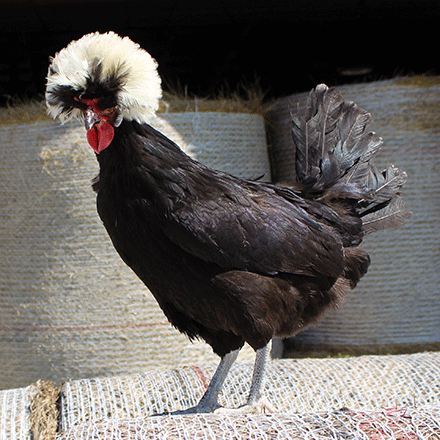
White Crested Black Polish
White Crested Black Polish originated in Poland, lay 200 eggs per year we love white crest on top of their head

Wyandotte

Originating in Wisconsin in the 1800s, the black and white Golden Wyandotte has black lace feathers and black tail, topped off with red comb, ear lobes and wattle.

This breed is calm and docile, excellent for backyard chicken breeding. Hens will lay around 120 brown eggs per year and will occasionally go broody. Golden Wyandottes are happy raised in confinement or free range.
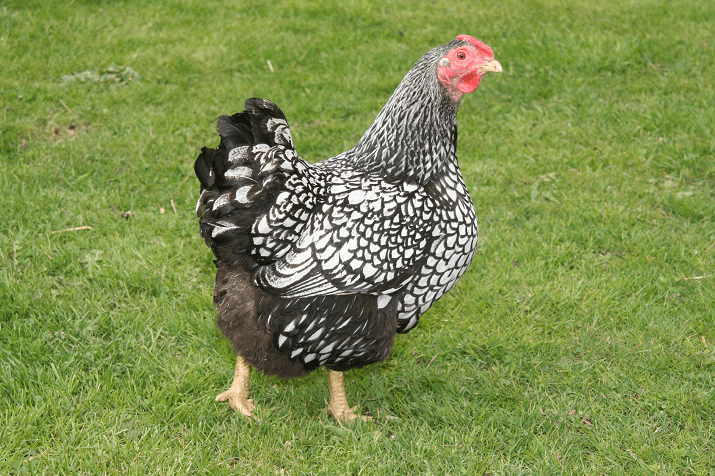
Wyandotte Chicken Breed
Wyandotte Chicken Breed, lay around 120 brown eggs per year

White Chicken Breeds

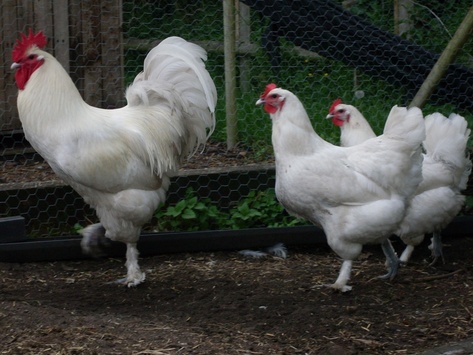
White Leghorns

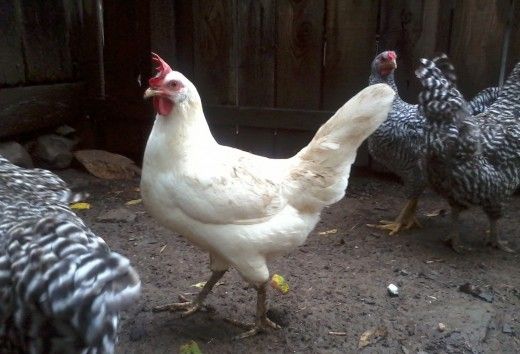
Originally from Italy, White Leghorns are a backyard must-have for egg production. This breed will begin laying eggs at 16 weeks old and provide you with almost 300 eggs per year.

The breed is nervous and flighty, but adapts to a life confined to a fenced area. Adults will weight between 5-7 pounds.
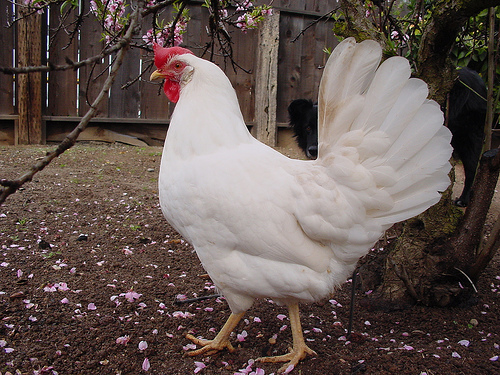
White Leghorns Chicken
White Leghorns Chicken, lay 300 eggs per year,weight between 5-7 pounds

Chantecler

Originating in Canada in the 1900s, a monk named Wilfrid Châtelain, developed a practical chicken that would be suited to Canada’s climate, and be an excellent dual-purpose bird. A few years later, the Chantecler white chicken breed was born.

Large white chicken that will produce 200 eggs per year and has tasty meat. Calm and tame nature, but dislikes confinement. You will need a large roaming space to keep this bird happy.
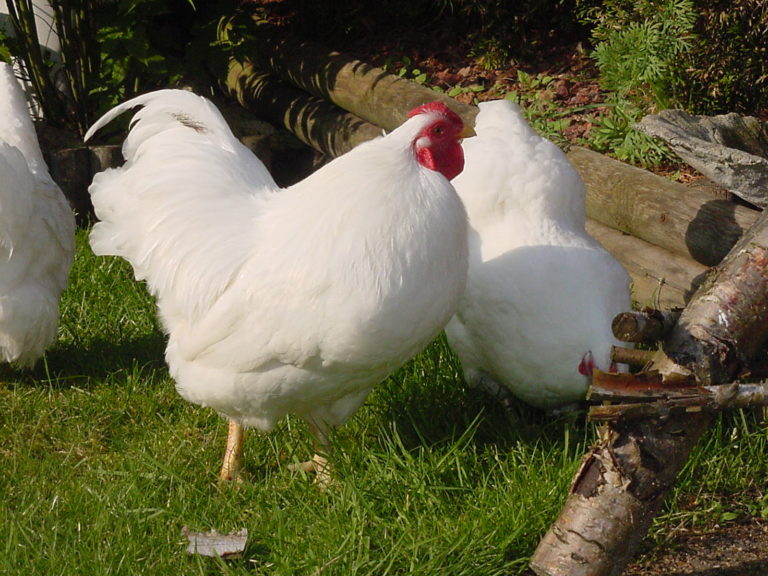
Chantecler Chicken
Chantecler Chicken Originating in Canada, lay 200 eggs per year

Sultans

Native to Turkey, but arrived in England in the mid 1800s. This is a unique looking white chicken breed, with feathered shanks, a V-shaped comb, five toes and large nostrils.

They have a happy disposition, and despite their small size they lay large white eggs. Egg production is minimal, typically one egg per week. Sultans are also good meat birds.

Sultans prefer hot weather and confinement. They don’t fare well in cold climates or as free range birds.
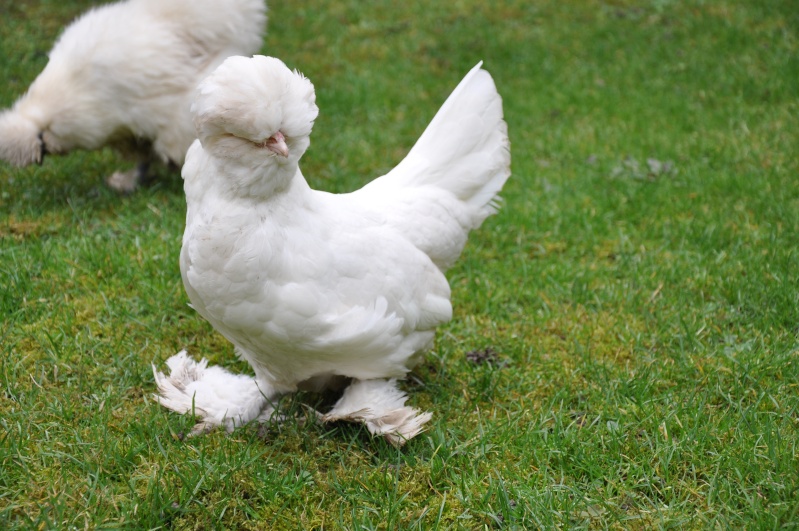
White Sultans Chickens
White Sultans Chickens, 50+ small white eggs a year

Bresse

Native to France and must be raised within the historic region of Bresse, France. This white chicken breed is declared to be the best tasting chicken in the world.

The raising and selling of this chicken breed is strictly controlled by the French government so the high quality can be maintained.

The Bresse is the same color as the French flag – white body, red comb and blue legs. Very attractive, and very costly chicken, with a price tag of over $20 per pound. Birds are raised as free range and legs are banded to denote authenticity.
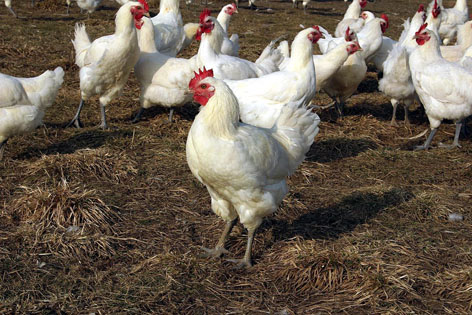
White Bresse Chicken Breed

Delaware

The last one in our list is a young American chicken breed that has only been around since the mid 1900s. A cross between New Hampshire Reds and Barred Plymouth Rocks was made to develop a chicken breed that would be an excellent egg layer and be good for the table.

This relatively new breed is calm, friendly and large, weighing up to 8 pounds when mature. This breed starts laying eggs when only a few weeks old. Eggs will be large and brown.

Delaware chickens enjoy colder climates and do not like hot, tropical climates. Adjusts well to life in confined spaces.
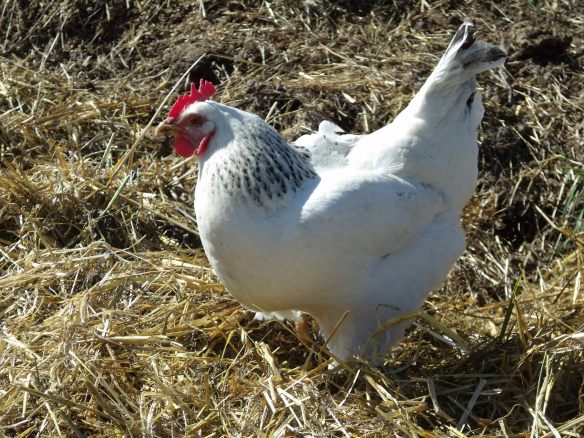
Delaware Chicken Breed
Delaware Chicken Breed, a cross breed between New Hampshire Reds and Barred Plymouth Rocks,  weighing up to 8 pounds

Ending Note

We all know that chicken breeds have different colors but some breeds are purely white or black in their appearance. Apart from this there are certain breeds that have black meat also but these are very rare. You can raise them if you find their meat delicious.
13 Famous Chickens Breeds That Lay Colored Eggs

Chickens that lay colored eggs add another layer of fun and excitement to raising backyard chickens. The eggs have the same flavor as white eggs, but finding the colored eggs make it like hunting Easter eggs every time you go to the hen house.

Chicken egg colors vary from blue, green and brown can range from dark to light shades of the color. The reason behind the colored eggs is unclear, but most agree that chickens that lay colored eggs are doing so in a natural response to their surroundings. If the egg color is camouflaged within the nesting material it will have a better chance of being unseen by predators and reaching maturity.

Chickens That Lay Blue Eggs

  1. Araucana Chickens

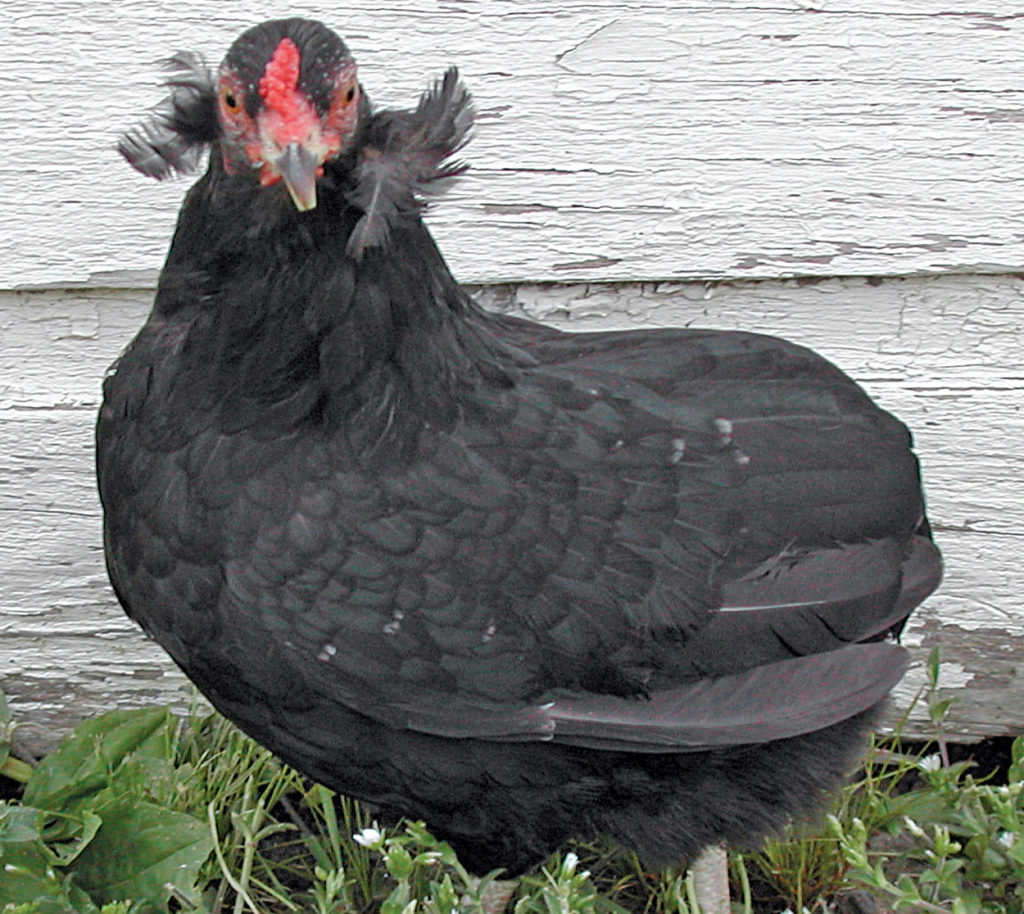
These chickens that lay colored eggs originated in Chile and are quite rare today. They have not only distinguished themselves from other chicken breeds by laying blue eggs, but they are also unique in the fact that they have no tail feathers and ear tufts.

Araucanas are hardy, active, curious and love to explore, making them an ideal free range chicken for a backyard. They can easily keep themselves fed and entertained by scratching for grubs, worms and insects. They also love people and enjoy being picked up, cuddled and handled by children.

Expect around 180 blue eggs each year from this active and fast maturing breed. Unfortunately the gene that sets Araucana chickens apart also causes them to die in the shell. You may like to see other types of chicken breeds such as white and black chicken breeds.

Araucana Chickens
Araucana Chickens that lay color eggs
  1. Ameraucana Chickens

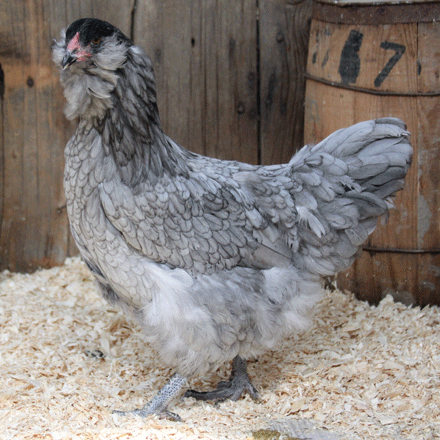
The second chicken breed in our list that lay colored eggs is ameraucana. These chickens have blue legs and lay blue eggs, but their feather color varies greatly. Ameraucana chickens can be black, white, blue, wheaton or any color combination in-between. They all have piercing red eyes that give them the appearance of being fierce and mean. They are just the opposite of that. This breed of chicken that lays colored eggs has a sweet disposition and makes a good pet.

Ameraucana chickens have gray muffs and beards, making them look like an old bearded man or a chipmunk. This hardy breed will reach a mature weight of about 5 pounds and tolerates confinement. You may like to see other types of chicken breeds such as heritage chicken breeds.

Ameraucana Chickens
Ameraucana Chickens
  1. Cream Legbar Chicken

At number three we have chicken that lays blue eggs is a cross between three breeds: Barred Plymouth Rocks, Golden Leghorns and Araucanas. The results is a friendly chicken that forages for most of its food and is easily handled.

The Cream Legbar is a crested chicken that produces chickens which can easily be sexed by the color of their feathers as soon as they hatch. These chickens have firm, muscular bodies and long a long, flat tail.

The eggs are shades of blue that range from sky blue to bluish-green. Mature hens will weigh four pounds, mature rooster will weigh around seven pounds. You may like to see other types of chicken breeds such as rare chicken breeds.

Cream Legbar Chicken
  1. Easter Egger Chicken

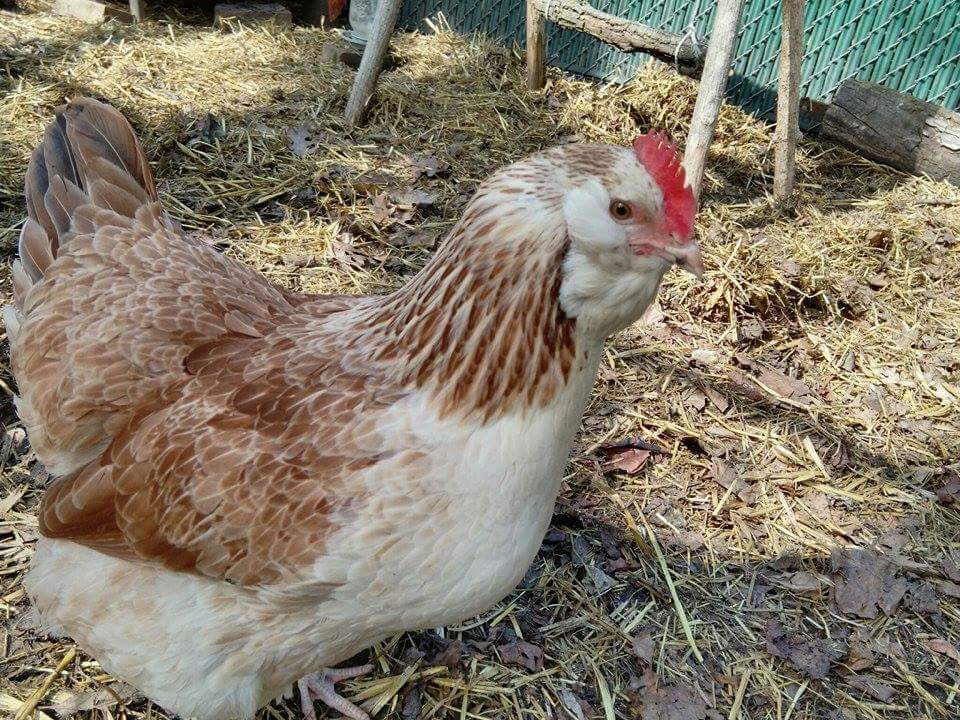
These chickens are friendly, hardy and lay extra large, colorful eggs. The Easter Egger is also an attractive chicken, with tan and white feather and a beard. However, since the Easter Egger is a mixed breed, there is no standard for appearance. It’s possible to a hen house full of Easter Eggers with no two looking alike.

This is a mixed breed chicken that does not fit into any specific breed. It’s often mistake for other blue egg laying chickens, which can be a problem if you’re looking for a show chicken.

The Easter Egger will lay blue eggs, plus rose, brown, green and cream colored eggs. This is an ideal way to create organic, free range colorful egg for Easter with the use of dye or any other type of chemical. Go green this Easter with true colored eggs produced by an Easter Egger hen.

Easter Egger Chicken

Chickens That Lay Green Eggs

  1. Olive Eggers

Happy little chicken that was created by cross breeding a brown egg layer and a blue egg layer. Olive Eggers have a mild temperament and will produce around 200 large green eggs each year. These green egg layers make good pets and get along well with other breeds of chickens.

The temperament, size, skin color, feather color, etc. depends upon the two breeds that were combined to create an Olive Egger.

Olive Eggers are typically a hardy breed that will adjust to most any climate or environment. Create your own Olive Egger with the certain specifications by selecting your favorite breed of brown egg layers and blue egg layers and breeding them together. You’ll get a hen with desired traits that lays green eggs.

Olive Eggers
Olive Eggers
  1. Isbars

Cold hardy chickens that originated in Sweden and lay moss green eggs. Ideal foragers for any free range farm, Isbars will lay around 200 green eggs each year.

This breed enjoys people and are naturally curious. They are always on high alert and on the look out for predators.
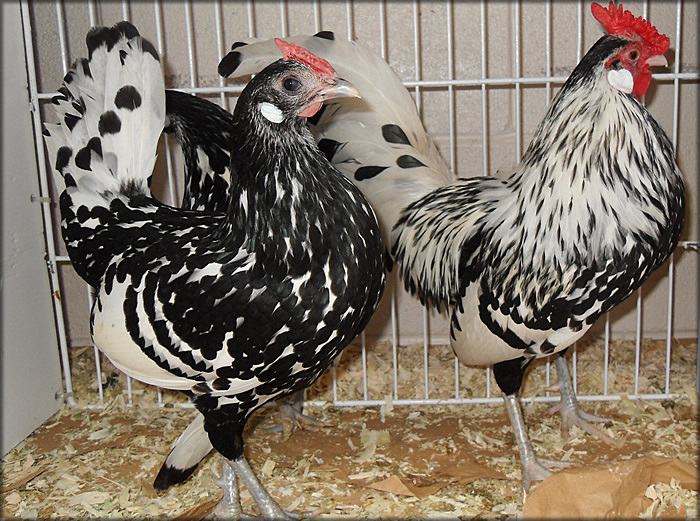
Isbars (pronounced ice-bar) are an attractive breed of hens and roosters that are relatively new, having only been a recognized breed since 1950.

Isbars Hen
Isbars Hen that lay color eggs
  1. Favaucana

A cross between Faverolles and Amerucanas, this chicken that lays colored eggs will fill your basket with sage green eggs. Favaucanas are cold hardy beauties that have excellent egg laying abilities that produce five eggs a week.

This breed does not like heat, but will tolerate confinement in a well ventilate coop.

Favaucanas love to chat, are friendly and curious. Their sweet disposition makes them an ideal family pet that just happens to lay green eggs.
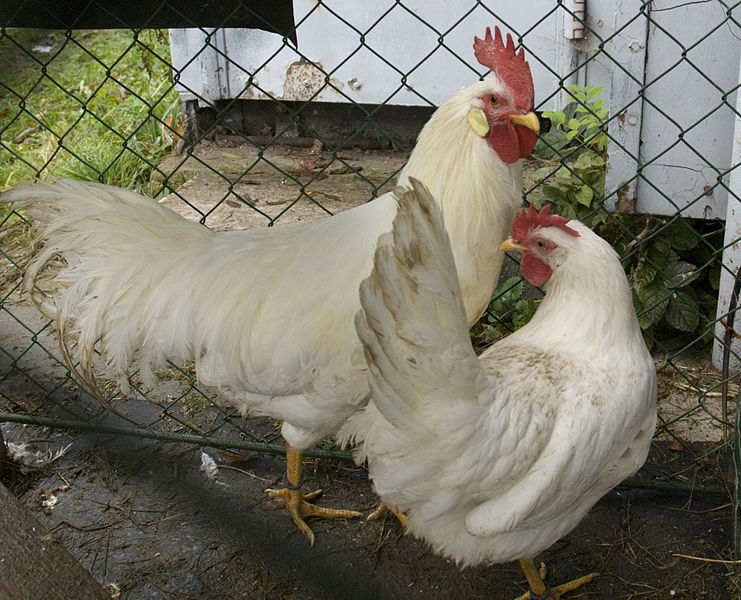
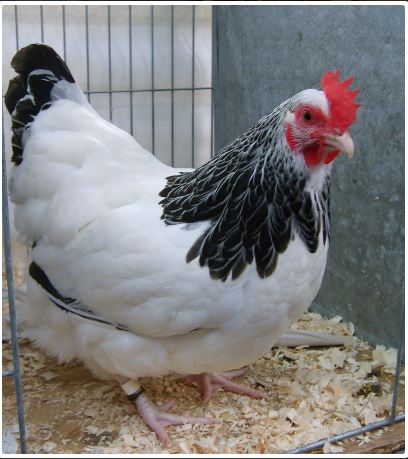
This is a large bird and will weight around eight pounds when full grown. You may like to see egg laying chicken breeds.
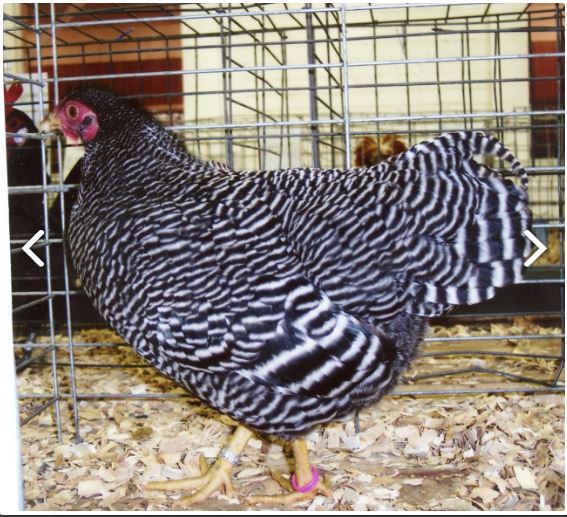
Favaucana Hen

Chickens That Lay Brown Eggs

  1. Marans

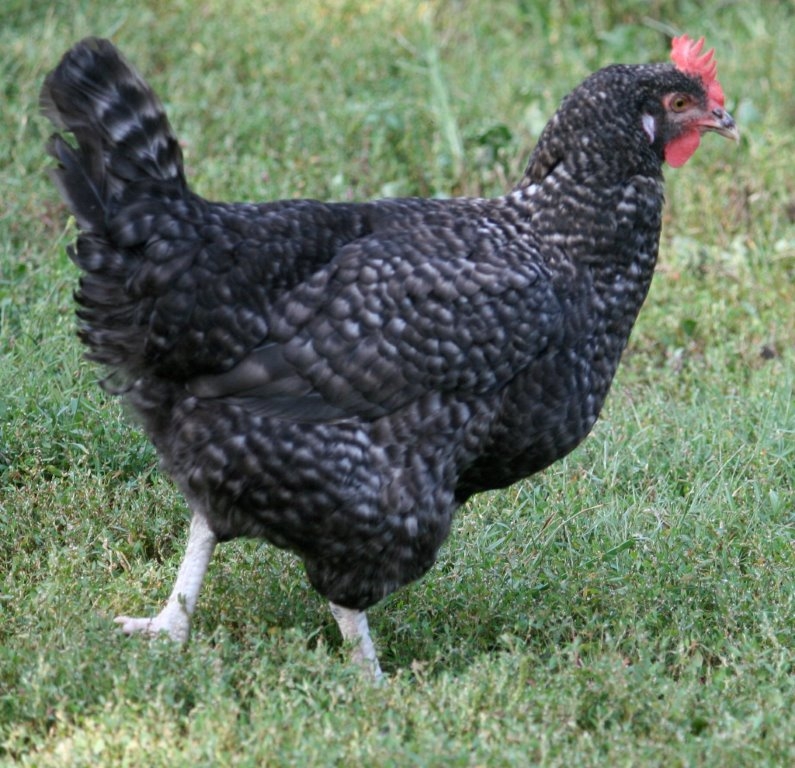
These small black chickens lay deep brown eggs that resemble an oval piece of chocolate. Easy going chicken breed that makes a great addition to a backyard flock of egg layers. Prized for both meat and egg production,

Originating in Marans, France, this breed was developed using the local feral chickens in the mid 1,800s. The breed has been refined over the years until it reached a pinnacle of fame in 2011 when Marans was named as the American Poultry Association’s Standard of Perfection.

Marans Hen
Marans Hen
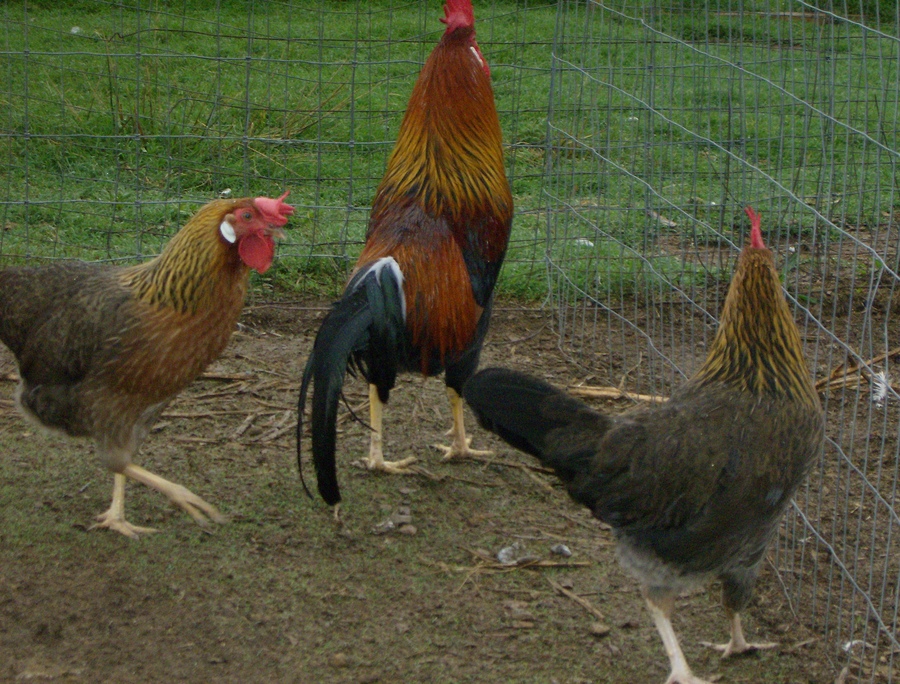
  1. Wellsummer

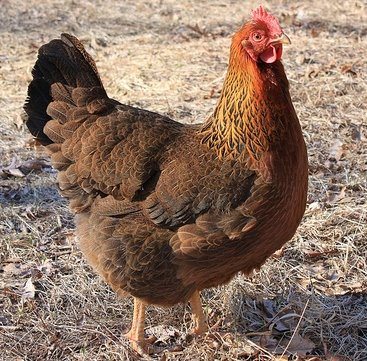
These mild tempered chickens originated in the Dutch town of Wellsum. These are large, active chickens that lay brown eggs with darker brown speckles.

Roosters are coveted for the beautiful plumage that are various shades of red and black. The chestnut brown hackles and saddle feathers are free flowing and contrast perfectly with the beetle-green chest and bottom feathers.

Wellsummer chickens are very popular in the the UK and Australia, but have not garnered a faithful following in other countries yet.

Wellsummer Hen
Wellsummer Hen
  1. Penedesencas Chickens

This breed originated in Spain and is ideal for raising in hot climates. Penedesencas produce the darkest brown eggs of all – all hens lay deep, reddish-brown eggs. They make great egg producers, but not good pets. This breed is wary and skiddish of humans and it will take time for them to get used to you and not run when approached.

Hens are small and weigh around four pounds when mature, males weigh slightly more at maturity. This breed is hardy and alert, and rooster make excellent flock protectors.

Penedesencas Chickens
  1. Golden Comets

The Golden Comet is a new comer in the hybrid chicken breeds. It was bred primarily for abundant egg production, but they serve the dual purpose of  meat and egg production.

These brown egg layers unlike other breeds in our list reach maturity fast and begin to lay extra large brown eggs at an early age, usually around 16 weeks old. Golden Comets will produce over 300 brown eggs per year.

These chicken have small bodies, typically weighing in at four pounds when mature. Their feathers are light-medium reddish brown with a few white feathers mixed in.

They have a mellow disposition and enjoy being picked up and held. They are naturally curious chickens and want to be involved in your outdoor activities. You may like to see small chicken breeds.

Golden Comets
Golden Comets

Chickens That Lay Cream Eggs

  1. Faverolle Chicken

Originating in France, this egg layer is a mix of the best characteristics of several different chicken breeds. Faverolles were developed with meat and egg production in mind, but their fluffy feathered appearance, calm disposition and cream eggs have made them a favorite show chicken and family chicken.

These are medium sized chickens when grown with compact bodies. They have five toes which are covered with feathers, as are their shanks. You can expect between 150-180 cream colored eggs each year from a laying Faverolle hen.

Faverolle Chicken
Faverolle Chicken
  1. Dorking Chickens

Named for a Southern English town called Dorking, this short legged chickens has five toes and a rose-colored comb. This breed is best known for its tender meat, not colored egg production.

These chickens have a heavy body and will weight around eight pounds when grown. Originally raised for meat and eggs, Dorking chickens are a rare breed that are currently only raised for their green egg production.

Dorking chickens are excellent winter layers and gentle foragers. They don’t destroy garden plants and grass as they scratch like other chicken breeds often do.

Adult females will weight seven pounds, adult roosters will weigh nine pounds.

Dorking Chickens
Dorking Chickens

Ending Note

So these are different chicken breeds that lay colored eggs such as green, blue, brown and cream. The average number of eggs laid per year is 180 to 300. You can select any of these breeds you like the most from our list.

15 Most Famous Heritage Chicken Breeds

 Are you planning to have a nice and healthy chicken flock? If that is your plan then you must be having a fair idea about the different breeds. Have you heard about ‘Heritage breed’’? Do not worry if you lack information than this excerpt is more of a guiding light for you. Continue to read for better knowledge:

Heritage Chicken breed:

In simpler words, it is the old-time chicken; in modern terms, it is known as non-hybrid type. Similarly, traditional farmers call this breed as ‘Heirloom’. This breed when born looks exactly like the parents, which is a general natural phenomenon.

Industrial Chicken breed:

The normal chickens that we see in the market these days are known as industrial chicken. In other words, they are the modern breeds and mainly used for their meat and fresh eggs.

There are many things, which require common about heritage and industrial breed like:

  • They need proper ventilation
  • Dry and clean housing
  • Fresh water and food

If you talk about most popular industrial breeds you must be thinking of ‘white Leghorn’ and ‘Cornish’ – they are used for their eggs and meat normally. However, without their friends or outside their farm they are very annoying and wild. This makes them less popular among the humans and they are likely to be the serving of the guests. If not hunt, these hens have the ability to live up to two years easily. You may like to see other types of chicken breeds such as white and black chicken breeds.

Variation in heritage Chicken breeds:

Within the category of heritage breed, there are more than thousands types based on their color and traits. Many would be a good source of food like meat, while there may be some, which are ideal for both eggs and flesh. Similarly, you may find some breeds, which have potential to bear cold temperature while other may be good in warm weather. Therefore, with some research it is good to know what kind of breed you are looking for.

It has been seen that heritage breeds tend to exhibit a better behavior than industrial ones. Interestingly, this type of chicken would be many times used as ‘ornamental purpose’ because of its wonderful natural colors. In addition, these chickens have special traits including big feathers, long tails and crest. You may like to see other types of chicken breeds such as rare chicken breeds.

By now, you must be having good idea and differentiation knowledge of what makes heritage chicken different from hybrid ones. So, have a look at the popular types of heritage chicken breeds from the list we have prepared for you.

List of Heritage Chicken Breeds:

Top ten diversified types of chicken breeds include:

1: Ancona:

If you are looking for a ‘winter breed’, which is energetic, active and playful, you must go for Ancona. This chicken produces a good number and size of ‘white eggs’.

Ancona chicken breed

2: Araucana:

The second breed we have in our list lays blue color eggs. You may find great variation within the araucana types as some may lack long tails while some have weird tufts.

Araucana1

3-Buff Orpington.

It has always been’ favorable chicken breed because of many attributes such as laying good number of eggs, go broody and hatch chicks better than other breeds, has good tasty meat and lays ‘creamy color eggs’. You may like to see other types of chicken breeds such as chicken breeds that lay colored eggs.

Buff orpington chicken breed

4-Barred Plymouth Rock.

Mostly called as simply ‘rocks or barred rocks’, It’s originated in United States, cold hardy, heavy than Rhode Island red ,dual purpose breed that produces ‘brown color eggs’ and also serves as a good roasted chicken.

Barred Plymouth Rock chicken breed

5-Black Australorp.

It’s originated in Australia, very calm, docile, have ‘black plumage’ with some shades of green and purple in sunlight. It lays ‘light brown eggs’ and has very famous among backyard chicken enthusiast.

BLACK AUSTRALORP chicken breed

6: Blue Andalusian:

As the name suggests, this breed has ‘blue feathers’ – also, ‘the large eggs may be white in color’ but the babies might be of white, blue or black color. You may even see some great combinations of hues too.

Blue Andalusian chicken breed

7: Black Minorca:

If you want to know who is the gangster when comes to chickens, have this breed in your flock. They are arrogant, moody and hardly blend up in the flocks. They lay over-sized eggs, which are ‘half-white in color’. You may like to see other types of chicken breeds such as egg laying chicken breeds.

Black Minorca chicken breed

8- Single comb brown leghorn:

You must have heard about ‘leghorn family’ a lot – defiantly, the breed belongs to the leghorn family so share almost every other feature of the cousins. They are big in size, lay ‘bright white eggs’ and remain unfriendly to all in the flock.

Single comb brown leghorn chicken breed

9-RHODE ISLAND RED.

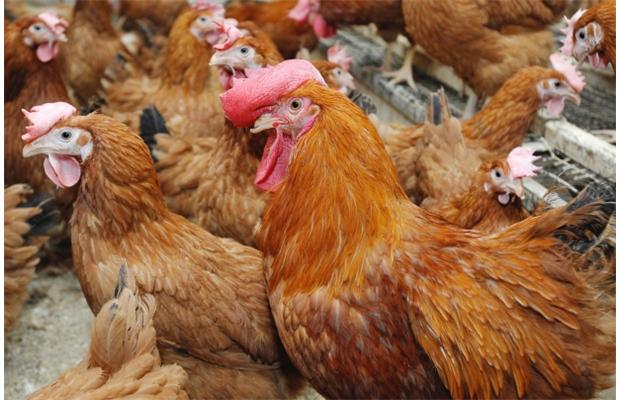
No doubt it’s well popular among various heritage chicken breeds. It is a dual purpose breed that lays ‘brown color eggs‘ and famous as a fine broiler.

Rhode Island Red chicken breed

10-SPECKLED SUSSEX.

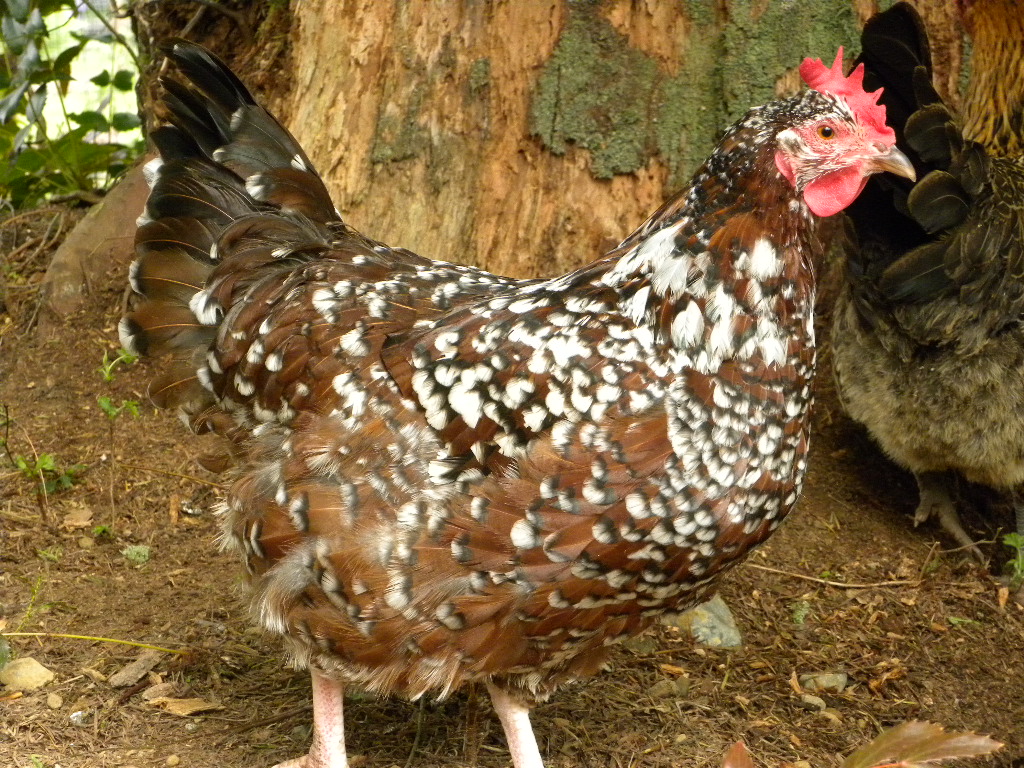
This breed originated from England about 100 years ago. The feather has a mix of ‘mahogany and black with white’ tips. It’s known as good laying breeds produces ‘light brown or tinted eggs’.

 Speckled sussex chicken breed

11: Silver Campine:

Highly adored for its ‘ornamental value’, this breed remains popular for those who want to have a small backyard farm but majorly for decor purpose. It’s lightweight, fully feathered, active and energetic chicken.  However, the biggest benefit of this breed is constant production of ‘white eggs’.

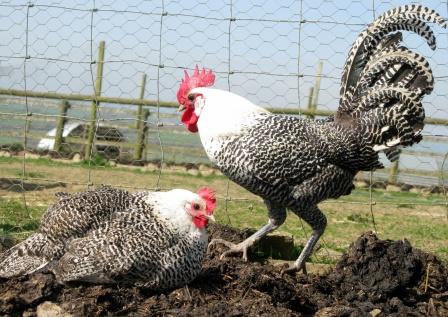
Silver Campine chicken breed

12: New Hampshire:

Looking for a breed which can be used for ‘both barbecue and egg production‘? Tame this breed as you can get quick desired results as you can see this type of chicken gains the weight and feathers quickly and produce ‘large brown eggs‘.

New Hampshire chicken breed

13: White Langshan

This breed is commonly considered polite, because it generally enjoys being with other. In addition, it can be called beautiful because of its big feathers, which cover almost toes too. This breed lays a good number of eggs, which has somewhat ‘dark brown in color’. They offer great nutritional value.

White Langshan chicken breed

14: White Crested black polish:

This breed has somewhat gorgeous color and a very different look than the other types. The sheen of this chicken is worth praising and the color is admirable. With all this, God has gifted the bred with the ability to produce a good amount of eggs, which are ‘white in color’. The fancy breed in every way is practical.

 White Crested black polish chicken breed

15: White laced red Cornish:

This breed would simply test your patience because this bird takes a lot of time to get fully mature. Normally people use this bird for flesh because egg production does not seem to be a very good option here. If you want to enjoy great chicken meal with close friends, or earn money, sell this breed in form of meat. This is the best breed if the goal is to have raising meat chickens. You may like to see other types of chicken breeds such as small chicken breeds.

White laced red Cornish chicken breed

Final Thoughts!

Other than the ones we mentioned above, there are many pure heritage and industrial breeds too. Based on your choice you simply choose between the best egg laying chicken breeds and the heritage meat chicken breeds. Yes, you even have the option of choosing chickens, which are highly adored for their ornament values too. You can have some exhibitions at your place and pet lovers would buy them for good value.

10 Small Chicken Breeds Great For Mini Backyard Area

Small chicken breeds are ideal for raising in small backyards. With many homeowners or renters only having a mini backyard area, scaling back on the size of the animals that live in the backyard will allow you more livestock in a smaller space.

Some small chicken breeds will produce eggs abundantly, some will only lay an occasional egg and some of these tiny fowls will not produce any eggs. Each breed has a unique personality and laying habits, so it’s best to become familiar with the different types before investing time and money into raising them.

Read on to discover the fun facts about 10 of the most popular small chicken breeds we have enlisted for you.

1- Ancona

This attractive chicken originated in Italy but is now popular breed in United States and United Kingdom. It has beetle green feathers tipped with white and will weigh around 3 pound when grown.

This miniature chicken does not make a good pet. They are skittish and have a tendency to fly, so the wings will need to be clipped to keep them from leaving your yard.

Expect around 200 white eggs from the Ancona per year.

Ancona chicken breed

2- Appenzeller

The Appenzeller Spitzhauben is the national breed of Switzerland. It has an unusual forward pointing crest, V-shaped comb and featherless legs. This small chicken breed tolerates both cold and heat, plus it loves to climb and roost in trees.

Appenzellers will provide you 200+ white eggs per year. they weight around 5 pound when grown.

This bantam chicken breed needs plenty of space to roam around in and trees for roosting. Related: Egg laying chicken breeds.

Appenzeller Chicken Breed

3- Barnevelder

Originally from Holland, the Barnevelder is a cross between the Dutch Landrace and Asian jungle fowl.

The glossy black feathers of the bantam breed makes it an attractive addition to the backyard. Non-destructive tendency makes it an ideal garden bird and it will provide you with around 200 medium sized speckled or brown eggs.

Barnevelders are quiet, hardy and don’t mind being in a confined space. Related: rare breeds of chicken.

Barnevelder Bantam Breed

4- Golden Comet

This breed is a hybrid miniature chicken that has been specifically bred to lay large quantities of eggs and only consume small amounts of food. These are the offspring of a White Rock hen and a New Hampshire rooster.

Golden Comets are cheap to keep and will provide you with hundreds of eggs each year.

Laying almost 300 medium-sized brown eggs per year, these hens are perfect for a small outdoor space.

Golden brown feathers with soft white tail feathers makes this an attractive small chicken.

Golden Comets are a hardy breed that are easy to care for and they adapt to most any environment. They are happy chickens and rarely go broody.

Golden Comet Breed

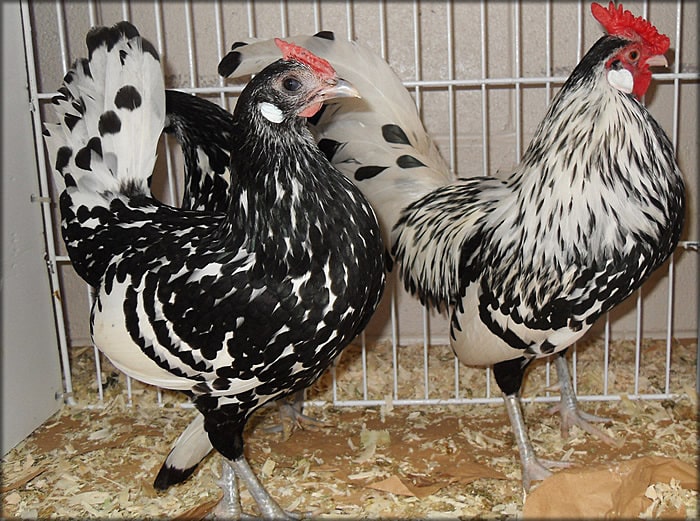
5- Hamburg

Originating in Germany, this miniature chicken shares the same coloration as a Dalmatian dog. The black and white feathers are sometimes tipped with gold color, making it an one of the most attractive breeds. They will provide you with around 200 eggs per year.

This bantam breed does not like to be confined and will become aggressive if not given plenty of space to roam. This small chicken breed is very alert and active and will need a large backyard to move around in. Related: heritage breeds of chickens.

Hamburg Chicken Breed

6- Leghorn

Bright white chickens with a thick red comb. This small chicken breed originated in Italy and was brought to the United States in the 1800s.

If you’re looking for a backyard chicken that will grace your landscape with beauty and table with eggs, this is a good choice. Leghorns will produce around 250 white, medium sized eggs per year.

Leghorns are mild mannered chickens, but will not make good pets. They are shy and hard to tame, typically running away when a human approaches them.

Leghorn Chicken Breed

7- Marans

These miniature chickens originated in France and are known for their shiny, dark brown eggs and exceptional meat flavor.

Adult hens will reach 7-8 pounds and will tolerate cold well, but they don’t fare well in the heat. They also do well in a small confined space and will provide around 150 eggs per year. When selecting Maran eggs to hatch you should only select the darkest brown eggs to hatch.

Typically gray with white flutters, but can be dark colored. Marans are gentle, but don’t make good pets.

These attractive hens have a thick layer of golden yellow feathers that make them appear very plump, but they will only weigh 3 pounds when grown.

Marans Chickens

8- Brabanter

Brabanter breed originated in the historic region of Brabant in the Netherlands and is an attractive miniature chicken with cream colored feathers tipped with black.

This small chicken breed is somewhat shy, but friendly, settles in well to a confined space and will attempt to fly when roaming. It will tolerate all climates and produce 150+ large white eggs per year.

Brabanter Chickens

9- Sussex

This is another dual purpose breed that provides both eggs and meat. Originating in England, the Sussex chicken made its way to the United States in the 1930s and has been a mainstay among breeders ever since.

This small chicken breed will provide around 250 eggs per years, ranging in color from white to brown. The chicken has eight different feather colors, but most often it will have a white body with black neck and tail feathers.

This bantam breed is non-destructive to gardens and flower bed and will make ideal pets.

Sussex Bantam

10- Plymouth Rock

These gray and whited striped bantam chicken breed is ideal for the beginning chicken keeper. Friendly, easy to tame and well suited to a free range life, Plymouth Rock (also called Barred Rock) hens will lay around 200 medium sized brown eggs per year.

These small chickens are also raised for meat and can withstand cold and hot outdoor temperatures. An adult will weigh 7-8 pounds.

Originally from Holland, the Barnevelder is a cross between the Dutch Landrace and Asian jungle fowl.

Golden Comets are a hardy breed that are easy to care for and they adapt to most any environment. They are happy chickens and rarely go broody. This small chicken breed that provides both eggs and meat. Originating in England, the Sussex chicken made its way to the United States in the 1930s and has been a mainstay among breeders ever since.


Plymouth Rock Bantam

Ostrich Products, Characteristics and Breeding

Surely, the ostrich can be classified to be the largest among all the living birds on the face of the earth. The adult males can reach to the height of about 2.4 m together with a weight of about 100 KG. Although they are categorized among the birds, they are unable to fly. The reason for this can be linked to their huge body size due to which they are unable to go for a flight. Other Ostrich Characteristics include a long neck, lengthy legs and their running speed. Their long legs are what that enable the ostrich to run at a speed of about 70 KMPH. Not to forget their strides which are extended up to 8m. Below are some more Ostrich Facts.

Sexual Features and Characteristics

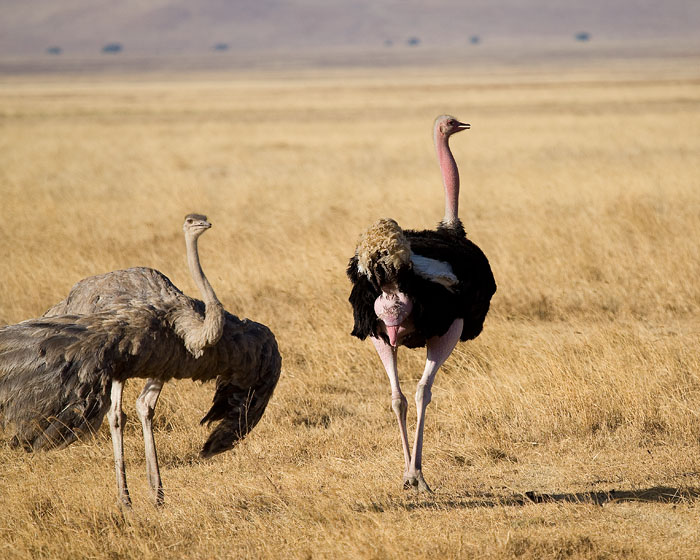
At the age of 4 to 5 years, the wild ostriches are able to engage in the process of reproduction. On the other hand, the domesticated ostriches are able to do the same at the age of 3 to 4 years. The black and white plumage appears on the body of the male ostriches at the times of maturity. For the females, the plumage appears to be of a dull coloring. When the ostrich mating time arrives, the plumage attains a more bright color while the skin transforms its color to bright red.

ostrich characteristics

Soon after the birth, the male and females appear to be quite the same, but can be distinguished through the examination of their sexual organs. It can be quite difficult at that time because the size of the penis in the males is quite small, thus it can be confused with the female’s clitoris. When the birds reach the age of about 7 to 8 months, the gender can be determined on the basis of their urination styles. A complete distinction among them is possible at the age of 2 years. The wing quills among the males turn out to be pure white, while for the females they are marked in terms of the grey and black colored rings. Moreover, the feathers on the tail happen to be white or yellowish brown for the males and mottled light and dark grey for the females.

Mating or Breeding of Ostrich

In terms of the breeding patterns for ostriches, the males are polygamous i.e. they are well able to mate with more than 1 females at the same time. This pattern also holds true for the domesticated Ostrich Farming settings where the ostriches are mated in pairs, duos and trios. At times of the breeding season, the male ostriches make stylized sounds and wing movements in order to attract the females towards them. At the same time, the females place their wings in the horizontal direction, thus signaling the male for the start of the Ostrich Mating process. In order to initiate the process, the female crouches so that the male might be able to allow his penis to enter into her cloaca. The process of consummation continues with the male’s groaning sound while the female shakes her head during the process.

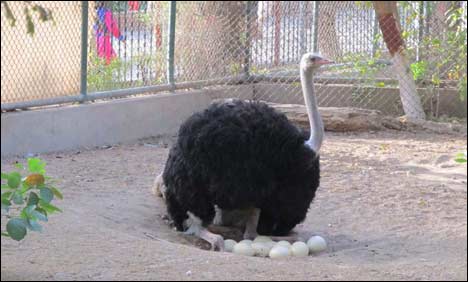
ostrich mating

There are special environmental settings in which the Ostrich Eggs are laid. The female is able to lay the eggs soon after the mating process is complete. The females which are highly fertile are able to lay around 80-100 eggs sequentially while the breeding season progresses. Now if the eggs might not be removed, the female will prefer to incubate the eggs during the day time, while the male would incubate them till dawn for facilitating the Hatching Eggs. So, for the commercial farming, it is imperative that the eggs are removed at least twice a day. Now here, if the female would be allowed to incubate the eggs, she is going to stop the egg laying process for a period until her chicks reach the age of about 4 to 5 weeks, thus leading to an increased financial loss for the farmers.

The Breeding Season

Ostriches are categorized to be seasonal breeders, as they are only able to mate at specific times of the year. On an average pace, the breeding season for the birds last for about 6 to 8 months on a yearly basis. This timing can indeed vary depending upon the factors of latitude and longitude at different locations. In the regions of the Northern Hemisphere, the breeding process starts during the month of March and ends in August/September. For the regions of the Southern Hemisphere, the season commences in Aug/July and lasts till March.

How to Breed Ostriches

Before you plan to invest in the ostrich business, it is better to have an overview of the market saturation and the profits that are linked with it. For the purpose of breeding ostriches successfully, below are some instructions which you would need to follow.

1. Properly allocate a breeding space to the ostriches and replant the paddocks so that the chances for the microbes to infect the eggs might be reduced. Bags.

2. Keep the males and females separately before the breeding season in order to notch up their moods for the mating process.

3. Allow the ostriches to select their partners freely and naturally by allowing to be the grouped with each other.

4. Try to be careful at times of collecting the eggs, as the males can turn out to be aggressive while protecting their eggs.

5. Use a good quality incubator for the process of incubation. Furthermore, the temperature should be maintained around 96 to 99.5 Degrees F.

6. Turn the eggs for 5 to 24 times on a daily basis.

7. 3 to 5 days before the hatching time, you should transfer all the eggs to some separate incubators.

incubating of ostrich eggs

Ostrich Products

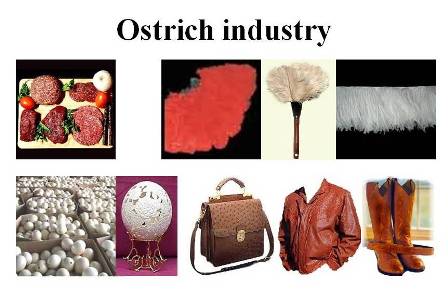
A large variety and classes of ostrich products are now being produced for the Ostrich Markets, due to which they are now being referred to as the Farms of the Future. The reason for which they are preferred these days is due to their meat, feathers, eggs and the hide. The feathers are used for cleaning of machines, equipments and for decoration as well as in fashion industry. The ostrich leather is the most expensive among others and is used for making shoes, jackets and bags. The meat that is produced by them tastes similar to beef and related products. Moreover, the meat also contains lower levels of fat in comparison to other types of meat. The eggs that are laid by the ostriches are the largest in size among all the birds in the world. In addition to their usage for meat and leather, they are also being studied and explored for medical purposes.

ostrich products

4 Basic Types of Chicken Breeds for Your Backyard

There are limitless and infinite reasons for backyard chickens. In addition to making coop arrangements, you also need to consider the type of chicken breeds that will be most suited for you. Today, there are nearly 60 different chicken breeds that are distributed all over the planet. Moreover, the same applies to their variants that have been produced by using the different techniques and procedures of genetic engineering. For your ease, I have also included chicken breeds with pictures.

It is quite corroborated that your decision about selecting the backyard chicken breeds should be based on what you want to have out of them. There are numerous facets because of which people love to buy chicken breeds for themselves. Below I would be sharing with you all about the 4 dominant types of chicken breeds which are going to be helpful whether you plan to keep a chicken breeds for eggs or just some broiler chicken breeds . It is imperative for you to be clear in your head about the prime motive or purpose for keeping the chicken breeds. Without any further ado, here are the 4 basic types of chicken breeds.

You may like to see other types of chicken breeds such as white and black chicken breeds, heritage chicken breeds, rare chicken breeds, egg laying chicken breeds and small chicken breeds.

Egg Laying Breeds

The egg laying chicken breeds can be linked to the Mediterranean class of chickens which lived hundreds of years back. In other words, these egg laying chicken breeds trace their ancestral origins to these specific classes of breeds. Moreover, these chicken breeds are selected in lines to their genetic makeup which makes them the most optimal for the purpose of egg production. At the same time, they have small bodies due to which they are undesirable for meat production purposes. It is also due to the size of their bodies that they are able to direct all the nutriments towards the egg production, which is another reason for their increased egg production. In addition, these breeds are also classified in terms of the color of their eggs. There are those which produce white shelled eggs and the ones which lay brown colored eggs. Now here, the White Leghorns are believed to be the most prolific layers for the white eggs.  The Black and White Minorcas  and the Anconas  also lay white colour eggs.

Egg laying chicken breeds

Meat Production Breeds

The meat chicken breeds are in reality cannot be termed as pure chicken breeds after all. It is due to their hybrid nature, all because they are produced from the combination of different breeds. At the times of pairing the breeds, the genetic engineers and poultry producers prefer to obtain certain meat characteristics. Some of these breeds grow much faster in comparison to others and also come to have a larger body size. For the sake of meat production, there is no other chicken breed that can match the fast and multifaceted growth of the Cornish Cross (Including the White Cornish and Plymouth Rock). Moreover, the breeds are named after the breeding company that processed them or paired them like Peterson, Hubbard or The Arbor Acres. The prime weakness of these breeds is that they are not capable to lay some large number of eggs in comparison to the other different breeds of chicken.

Meat Production Chicken Breeds

Dual Purpose Breeds

The dual purpose chicken breeds include a number of American and English breeds include the Plymouth Rock, Sussex, Wyandottes, New Hampshire etc. In addition to giving a reasonable number of eggs, they are also optimal in terms of their meatiness. Although their meat production capacity is quite low in comparison to the commercial hybrid breeds, still they happen to much better for egg production.

Dual Purpose Chicken Breeds

Cold Weather Breeds

For the areas that are marked for their extremely cold weather, there are certain chicken breeds which should be preferred over all others. Moreover, it is also better to utilize a standard size chicken than the bantam chicken breeds. The breeds that do quite well in the cold weathers include Plymouth Rock, Sussex, Rhode Island Reds and some others. At the same time, you can also consult with a number of local sources and farmers in order to have a better idea about the breeds. Choosing a chicken breed can become a tough job, especially for those who happen to be rookies or novices in the domain of poultry breeding.

Cold Weather Chicken Breeds

Guide to Select a Right Breeds of Chickens For Backyard

At the time of launching a poultry farm you do have a wide array of choices to choose from. Chickens have been kept by humans for thousands of years now for a number of different purposes. Due to this domestication, a number of breeds of chicken have been resulted. In a similar way to animals that come in different types, the chicken breeds differ from one another in terms of their characteristics, about which you should be well aware. In other words, you should know about the specific characteristics of each chicken breed in order to have an idea about which types of chicken breeds would be best suited for your farm.

It is all by doing some research that you would be able to have an idea about the best chicken breeds for eggs and meat. When it comes to selecting the right backyard chicken breeds, the following are the breeds about which you should know.Here are some of the most preferred chicken breeds with pictures.

Plymouth Rock

In terms of the top ten chicken breeds, the first in line is the Plymouth Rock. Many years ago, this chicken breed used to be the most common in America. You can select this breed from a number of different options. One of the most common of them all is the black and barred ones. Moreover, these birds are of a calm and friendly nature, due to which they are best suited to being kept in any setting.

plymouth-rock-chicken

Rhode Island Breed

Next in line we have the Rhode Island Breed which is also very common and preferred among the backyard chicken farmers. They are available in two different types including Rhode Island Red and The Rhode Island White. It is their docile demeanour, which makes them one of the most preferred to farmers. Furthermore, it is also able to adapt very well to all forms of free range as well as combined settings. On a yearly basis, it is also able to lay around 300 eggs which are brown in colour. That’s not all, as it is also known to be the best chicken for laying brown colored eggs. The Rhode Island Breed is indeed one of the most famous egg laying chicken breeds.

rhode island

Light Sussex

 Another top chicken breed is the one known as The Sussex Breed. In addition to being present in a number of different types and colors, they are also quite adaptable to any environment. Moreover, it’s also their unique nature which makes them one of the most preferred among all the farmers. Their capacity to lay eggs on a yearly basis falls around 250, which is indeed quite good in comparison to the other different breeds of chicken that are found all over the world. Many farmers, especially the hobbyists love to keep this chicken breed at their homes for quite obvious reasons.

light sussex

Ameraucana Breed

Now moving on, we have another popular breed which you should also consider at the time of selecting the right chicken breed for your farm house or any other setting. The breed is known by the name of Ameraucana. They have a standard size and are mostly kept being one of the dual purpose chicken breeds. Now here, by dual nature it is meant that they are kept for eggs as well as for meat usage, thus making them quite useful in terms of meat chicken breeds. The eggs laid by these birds get really expensive at the time of the Easter Holidays. The reason for this being the beautiful colour of the eggs these birds lay. They are also quite constant in terms of laying eggs on a set schedule. Mostly, this breed is easy to handle and friendly, but there are some that can get really aggressive at times. The colors in which this breed is found include black, blue or brown red.

Ameraucana breed

Ancient Breeds

For those who plan to keep the breeds that are being used since the ancient times, The Anconas and Hamburgs are the ones to be used. These chicken breeds typically lay white colored eggs, but some of the farmers are of the view that these breeds might not be suited for backyard farming, all because of their changing temperament. Other breeds which are also very famous for egg laying include The Minorca, Campine, Orloff, Penedesenca and other broiler chicken breeds. So, now you know how important is it to have some idea at the time of choosing a chicken breed.

anconas chicken breed

Selecting the most suitable breed of turkeys for your flock

Raising some friendly breeds of turkey is really enjoyable. Moreover, if you bring them up at your home based settings, then you would be able to enjoy a number of flavored meats. At the same time, this strategy is also useful in saving some money. In this regard, you can make use of a number of old as well modern breeds.  Glenn Drowns, a specialist in the domain of heritage poultry, asserts that the White Holland and related breeds are best suited for flocks which are below 20 and that the Bourbon reds are really useful in terms of pest control as well as for foraging. Frank Reese, another specialist in the domain of breeding turkeys, also suggests that the White Holland poultry breeds are quite competitive in terms of meat production and consumption. How to breed turkeys? This is the core question here.

Preference for Broad Breasted Breeds

For those who plan to raise for sales, then the  breeds will come to be the most useful. However, these birds are available on a limited basis, all because of a respiratory disease outbreak that has effectuated thousands of flocks. The reason for which this bird is being recommended lies in the large amount of meat which is present in the areas of its breasts. In comparison to the wild turkey, the bird has 2 to 4 times more meat, due to which it is well suited for meat production purposes. These birds are able to achieve a weight of sixteen to twenty five pounds in a matter of 24 weeks. On the other hand, in order to reach the same weight, the heritage birds would demand nearly 2 years. The importance of this timing period is highly crucial in terms of poultry production, for which most of the poultry producers prefer to make use of this breed of turkeys.

broad-breasted-bronze

Tips for selecting the best breeds for you farms

In terms of selecting the most suited and appropriate breed, you need to be knowledgeable of the various facets including its capacity of natural reproduction, its ability to fly, its pace in terms of reaching the stage of maturity and many other related factors. The thumb rule here is that the most famous breeds might not be necessarily suited for the smaller farms and at the same time, the big size is also not an indicator in terms of the best breeds of domestic turkeys.

Classes of Production Type Turkeys

There are two basic types which will be discussed here including Broad Breasted Whites and The Broad Breasted Bronze. You can easily purchase them from a number of hatcheries in times of the spring season. In addition, the pace of their growth is also quite agile, due to which you would be able to have a massive turkey in the minimal time span. However, there is a single drawback in making use of these breeds of turkey i.e. they aren’t able to produce on a natural basis. The reason for this can be linked to the large sizes of their breasts, which limits their ability to reach out. So, for those who plan to breed some large flocks of turkeys, these two breeds might not be suitable. But if you have no sort of problem with their reproduction limitation, then you should go for them.

production type breed

Heritage Breed of Turkeys

There are a number of farmers and poultry producers who prefer to utilize the heritage turkeys, all because of their well-developed reproduction capabilities. Moreover, they also come in various colors and sizes and are also able to brood a number of eggs. Below are some of the breeds which you might want to consider at the time of selecting the best breeds of turkey for your farms and poultry houses.

heritage type turkeys

Auburn: This heritage breed is believed to be similar to the bronze breeds, but happens to be more reddish in color. The origins of this breed go a few centuries back.

Beltsville Small White: This rare preservation breed is marked for being smaller in size. The breed is also more active in comparison to the other breeds, primarily because of its small size.

Spanish Black: Now here we have another rare breed which was mainly utilized by early settlers. The breed is also medium in size in comparison to other breeds of the same class.

Bronze: This breed is quite large in size and is able to carry out the breeding process in a natural manner. Do remember to distinguish it from the broad breasted ones.

Midget White: The smallest breed of turkeys, Midget White, is really suited for small families. Furthermore, these birds are also quite active and are also able to fly.

Royal Palm Turkeys: Famous for being a show bird, Royal Palm is a small sized heritage turkey. The breed is marked for having black and white colors.

Narragansett Turkeys: Believed to be good foragers, natural calm, medium sized and excellent brooders, Narragansett is the breed which you might want for your small farms. In the past, the breed had come quite close to being extinct, but now it is believed to be more prevalent.


Breeding and Rearing of Geese

Of all forms of the domestic birds, the geese are the ones that can be termed to be the fastest growers. They are quite hardy and can become disease free if kept under constant care. Although a small number of these animals are kept in the poultry settings, there is still a lot of scope for the raising geese industry all over the world. The geese can be grown and brought up successfully on the green pasture, due to which the cost for the production can be lowered down by substantial levels. Keeping in view the feeding and geese breeding, you can expect to start a successful poultry business. Below are some types of geese, which you should know about when planning to raise the waterfowl geese or the water geese.

Famous Breeds of Domestic Geese

Embden

Classified to be a large and an upright bird among the breeds of goose, the Embden is known for its glossy feathers. Its eyes happen to be light blue in color. Initially, the breed had originated from the regions of Germany, but is now well distributed all over the world. For the gander, the weight falls around 8 to 9 kg and for the goose, the weight usually falls around 8 kg.

Embden Geese

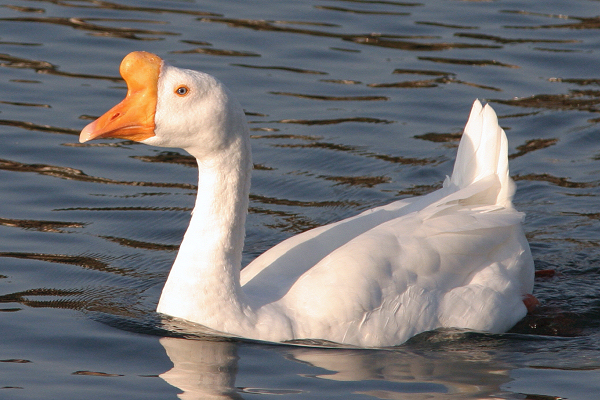
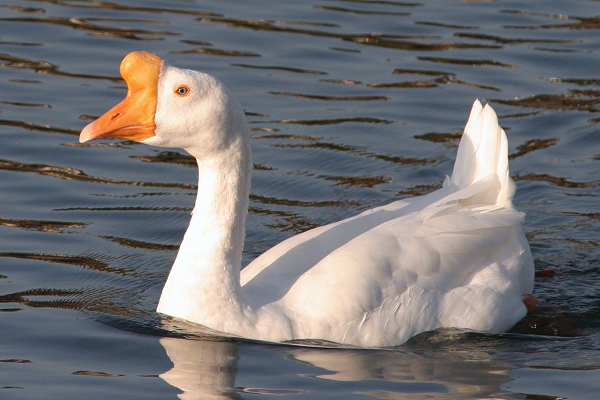
Chinese

The Chinese geese can be divided into two different classes i.e. the white and the brown. This bird is able to stand upright with its arching neck. It also has a very distinct knob on the areas of its bill. The eyes of this breed are brown in color. Moreover, this breed is considered to be the noisiest among all the breeds, due to which their sound can be heard to far of places.

chinese geese

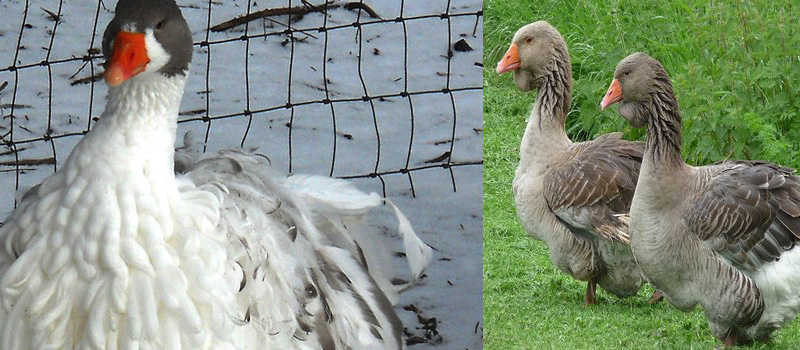
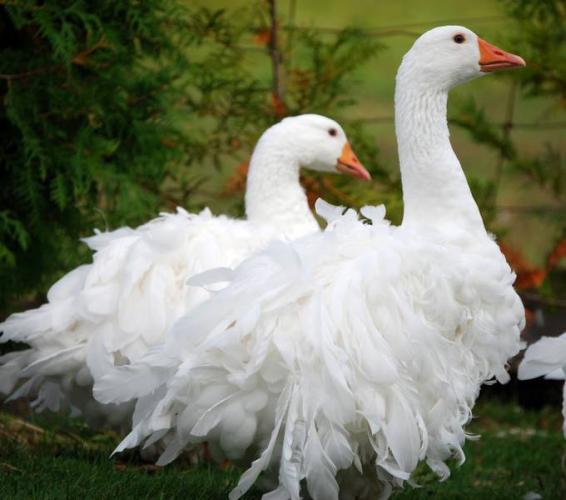
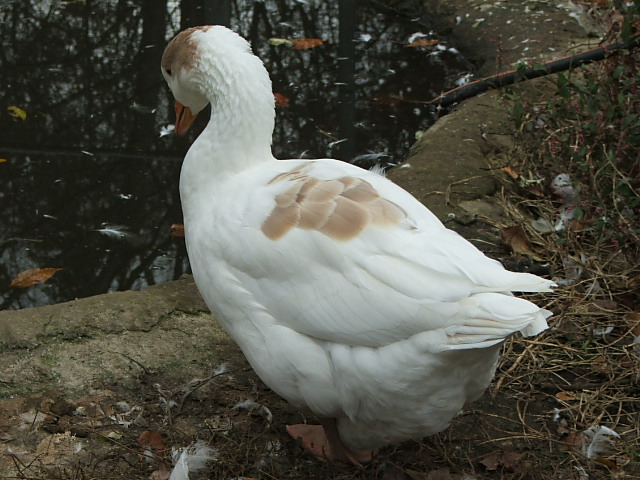
Sebastopol and Toulouse

The Sebastopol breed is identified from its fuzzy and curling feathers due to which the birds that fall under the breed appear to be untidy. Furthermore, this breed is also known to be of having an ornamental nature. At the same time, the body of the breed is also more round in comparison to the other breeds. On the other hand, the Toulouse breed is believed to have originated in France and is quite similar to the Embden. But it is not so popular in relation to the other breeds mentioned here.

Sebastopol and Toulouse

Moreover, the breeds of wild geese include The Barnacle Geese, Bar-Headed Goose, The Red Breasted Geese and many more.

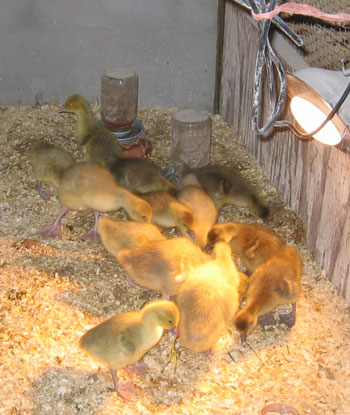
Brooding of Goslings

After the goslings hatching, a lot of care should be taken in terms of handling them. In other words, for the first few days the goslings are quite delicate due to which they should be kept warm. Now for the goslings which are brought up under the supervision of their parents, the occurrence of problems is less likely. You can provide some simple housing arrangements for them for the first few days in order to protect them from the changes in the weather. At the same time, you should also ensure that the floor litter is kept as dry as possible.

brooding of geese

On the other hand, for the goslings which are being brought up in an artificial manner, the need for a warm enclosure is highly crucial. For the purpose of providing the goslings with some heat, you can make use of infrared as well as the carbon heating globes. For example, a 250 watt globe will prove to be enough for nearly 30 goslings. In order to know the optimal temperature for the goslings, you can also observe their movement to get an idea.

Breeding and Mating of Geese

How to breed geese? Well, the geese enjoy their best breeding period from the age of 2 to 8 years. After the age of 10 years, the pace of egg production declines slowly at which you should introduce some new flocks of geese. The process of geese breeding can be run using the free range method. It is best to make use of the healthiest gander for 3 to 4 healthy females. You should also allow the birds to mate for one month at the beginning of the geese breeding season.

mating of geese

Feeding and Nutrition

In addition to the availability of the green pasture, you can use of a supplementary ration which can be in the form of geese food pellets or mashes. The feed should be given to the birds 3 to 4 weeks before the fertile eggs would be hatching. Moreover, also prepare vitamin and mineral based mixes in accordance with the guidelines and directions given by the manufacturers.

The goslings should be given a constant access to the water from the very first day. The water provided should be good in quality and should be subject to quality assurance from time to time. Now here you can make use of some specialized jars and troughs for the purpose.

feeding goslings

Shelter Needs

The need for having a spacious shelter for the geese is quite crucial, especially in times of the winter season. For the optimal levels of comfort for the birds, the shelter should be at least 8′ x 10′. Each bird should be given around 6 square feet. Moreover, the shelter should also be water and predator proof. It is also important not to confine the birds for a long time as they might get restless at times.

Gizzard Worming Issue and Solutions

At times when you find the presence of the gizzard worms on the body of the birds, then it is best to begin with contacting the specialists. Moreover, you should also ensure that a proper heat supply is available to the birds due to which the worms including, acuaria, tapeworm and at all others won’t be able to heavily influence the health of the birds. You can also administer the doses of the medications including Nilverm, Aviverm, Droncit and many more.


10 Popular Domestic Geese Breeds And Their Predators

When it comes to knowing the facts and information about geese, then surely a number of breeds stand out among all others. All of the ancestors of the domestic geese had been derived from the wild species of those times. The European breeds are believed to have originated from the graylag class while the Asian breeds had been obtained from the swan goose.

Although these two classes had quite separate origins, still they were able to inter breed from time to time. The breeds of domestic geese have been classified and stumbled into a number of different classes, the details of which would be shared below. Here are the 10 most popular breeds of domestic geese with pictures.

1. Toulouse

Known to be the largest and one of the most used standard geese breeds, the Toulouse breed is marked for having a weight of about 20 to 26 pounds. The back of this domesticated breed is seen to be dark gray in color. The color starts to transform to light gray color as we move towards the breast regions.

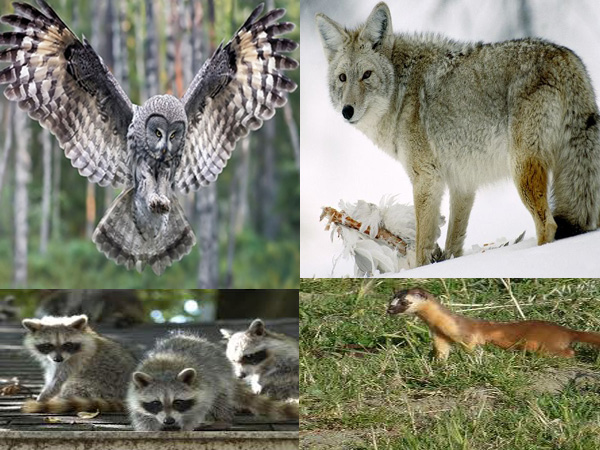
The feet are marked for their deep reddish and orange colors. The bill of the Toulouse breed is pale yellow. In terms of the predators, raccoons, owls, foxes and weasels are in the lead.

Toulouse geese

2. Embden

This geese breed comes from a German city that was famous for exporting them to the regions in England. In comparison to the Toulouse, the embden breed is a bit smaller and white in color. Moreover, it is also a better sitter in comparison to the different breeds of geese.

It is also the most popular and desired market goose in the United States markets. In addition to being a rapid grower, the breed is also quite agile in maturation. The adults can easily reach the weight of about 16 to 26 pounds. In order to wither off the predators, the breed is famous for making use of stylized sounds, hissing and movements.

 embden geese

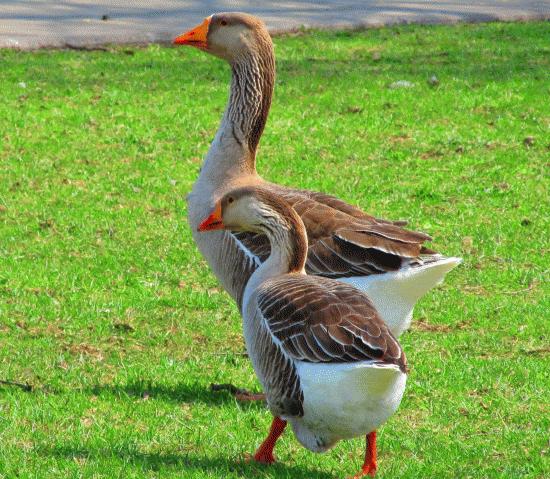
3. African

Marked for having an ashy brown color and dark orange colored legs, The African geese breed had originated in India. But at the same time, it has been erroneously reported that Africa is the region where it had come from. It also has a kind of protuberance on the top regions of its head.

The male members of the breed are really famous for cross breeding into the other breeds. The adults in this breed are able to have a weight of about 14-20 pounds. Its dark beak together with some other features make it less desirable in comparison to the Toulouse and embden.

african geese

4. The American Buff

Being light buff in color and having a white shaded breast, The American Buff is considered to be latest addition into the American market standards. In a matter of no time, the breed has been able to bag a fame and popularity, which is all because of its amazing features and breeding characteristics. The adults in the class of American Geese breed can reach the weight of about 15-18 pounds.

 american buff geese

5. Chinese Geese

Presently, you can find the brown as well as white varieties of the Chinese geese. Being smaller and having a swanlike appearance, this breed of geese is well adopted and suited for consumption at the home based settings. The brown Chinese goose is known to have a brown colored plumage, while the white ones are known for their orange colored bill.

chinese geese

6. Sebastopol Geese

Marked for their twisted, curled and feathery upper regions of the body, the Sebastopol is classified to be an ornamental breed. The weights for the adults can top the 12 to 14 pounds limit, thus also making them suited for non-commercial purposes.

spastopol geese

7. Pilgrim

The pilgrim is more like a fast growing and sturdy geese breed which is desirable for varying reasons and features. It has always been raised for its feathers and for the purpose of its delicious meat. The breed is also different in terms of the plumage color with which the males are separated from the females.

The males happen to have blue colored eyes, while the females are marked for having hazel colored eyes. The optimal weight for the adults reaches to about 12 to 14 pounds.

Pilgrim geese

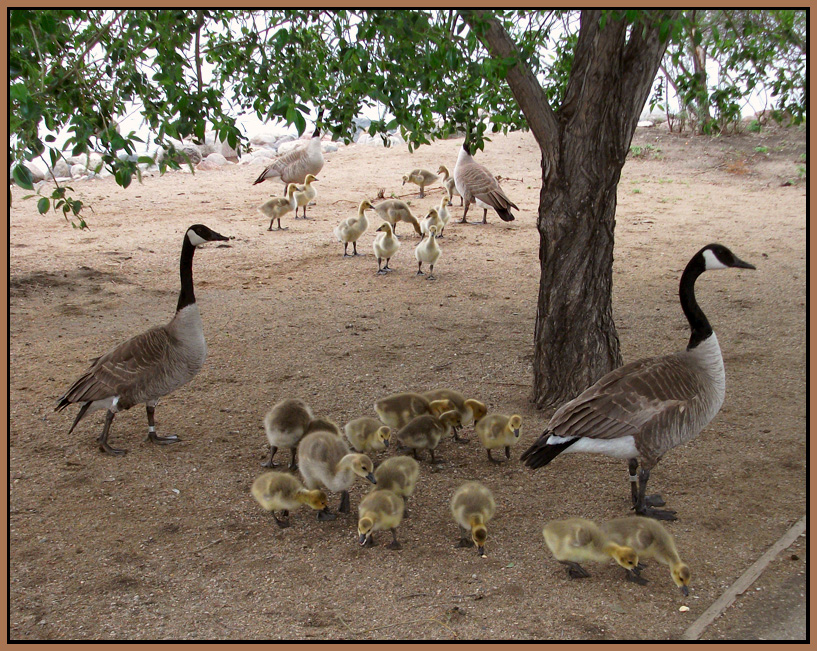
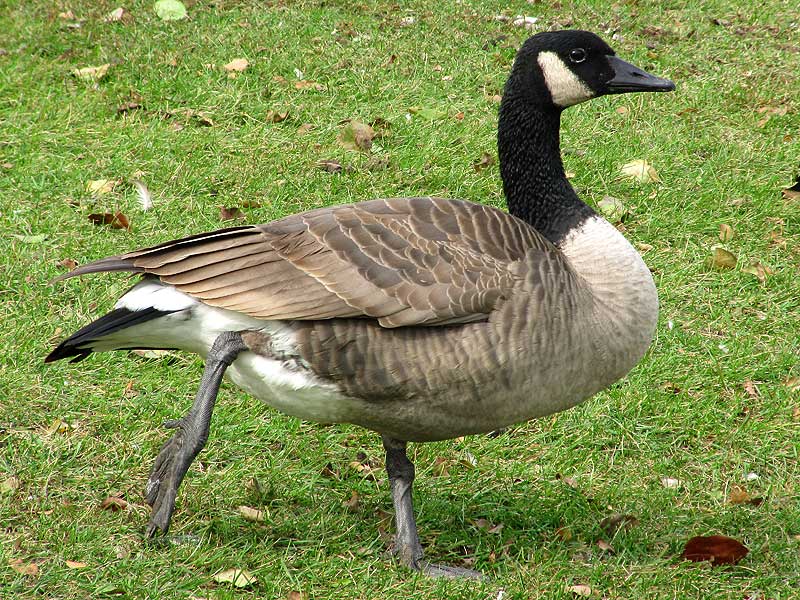
8. The Canada Goose

Mechanisms of close confinement are what that are used for the captivation of this geese breed. Mostly they are used in the public parts and by the hunters to serve the purpose of decoys. Their plumage varies from grey to black colors while the feathers on their breast happen to be light.

The ganders or male members do not breed before the age of 2 years. Moreover, they are famous for the mating process in pairs. But there is one drawback in making use of this breed for commercial reasons i.e. they are not efficient in terms of the reproduction.

Beautiful Canada Goose

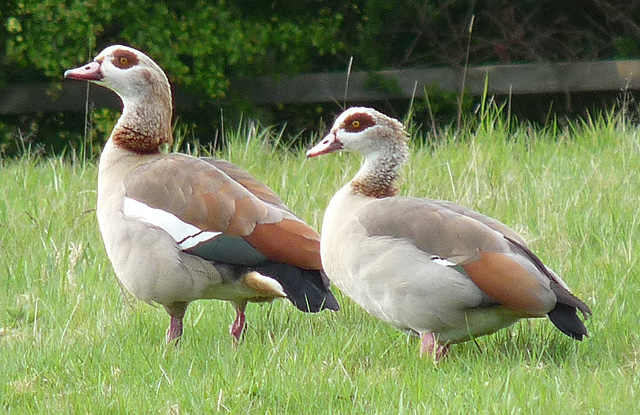
9. Egyptian

Having long legs, but a small sized body appearance, the Egyptian is used for varying ornamental purposes. Surely, the breed is beautiful but has no potential for competing in the commercial markets all over the world.

The only ones who prefer to purchase them are the ones who are obsessed with their beauty. Their weight, which ranges from 4 to 6 pounds, is also what makes them the least desirable.

Egyptian geese

10. The Buff Back Geese

Europe is the place of origin for this geese breed, which can be differentiated in terms of its plumage size, color and a long bodied appearance. It is used for the purpose of meat and eggs together with its broody nature. They can be breed effectively in the form of pairs and trios.

The Buff Back Geese

Protecting Geese From Predators

For the purpose of protecting the breeds from the geese predators, you would need to provide them with some adequate levels of shelter. It is best to allow them to roam in the day time and keeping them confined in protected shelters at night.

Not to forget here that some predators are quite lethal in terms of attacking from under the ground due to which it is recommended to secure the base of the shelter with some strong and durable materials.  It is also preferable to make the use of low intensity electric fences. The common predators for all the breeds of geese include bobcats, dogs, coyotes,

geese predators