Category Archives: Knowledge Centre

An insight of Geese


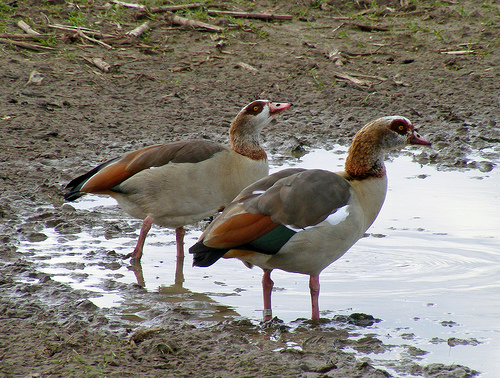
The geese which are used for the poultry related purposes are known as domestic geese. They are used in the poultry industry for the purpose of eggs, meat and for their down feathers. Since the olden days, they have been used for a number of purposes. Some people used to keep as pets while others made use of them for their delicious meat. In the present times, the poultry industry does make use of the meat and eggs derived from this domesticated animal.Below are some facts about geese which will come to be useful for those who are planning to raise them at the farms or as pets

Origins and the Regions of Geese

It is widely accepted that the geese, which belong to the family of Anatidae and to the genus named as Anser, were indeed one of the first animals in the world that were used for the domestication purposes. The domestication had probably started nearly 3000 years ago in Egypt. Some of the researchers are of the view that it all had started much before that, but there is a general consensus among them in terms of Egypt. Despite of their ancient origins, they have never been used on a large commercial scale like the ducks and chickens have been used.

geese origin

Features and Characteristics

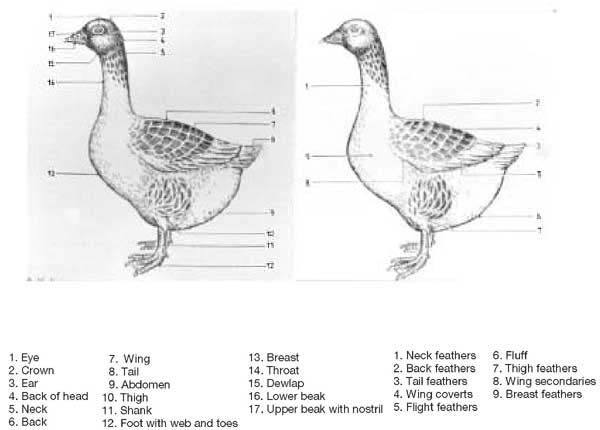
The geese are found all over the world. In terms of their physiological makeup, they are well suited for all seasons. In other words, they are able to adapt themselves to warm as well as cold climates. Moreover, they also come in a number of different colors and sizes. In comparison to their wild ancestors, the domestic geese happen to be quite larger in size. The same applies to their egg laying capacity which is higher in comparison to the other breeds. In addition to having varying levels of feathers on their bodies, the male goose also happens to have a very strong neck. It is also said that these animals are quite hardy i.e. they are immune to a number of diseases due to which they fall sick less often. All the geese have a sharp edged beak in addition to having a pointy tongue. Their digestion mechanisms are also quite agile due to which they are able to digest their food in a matter of 20 to 30 minutes. The domestic geese can be of any color ranging from white to gray. The domestic geese are termed to be the descendants of the wild geese. Moreover, they also happen to have short legs and beaks. The desired features for which they had been bred was to obtain a number of features including heavier weight, white plumage, body posture, more egg laying capacity and much more.There is a lot of other information about geese which you should prefer to have, if you plan to raise them in a more effective manner.

characteristics of geese`

Production and Consumption of Geese

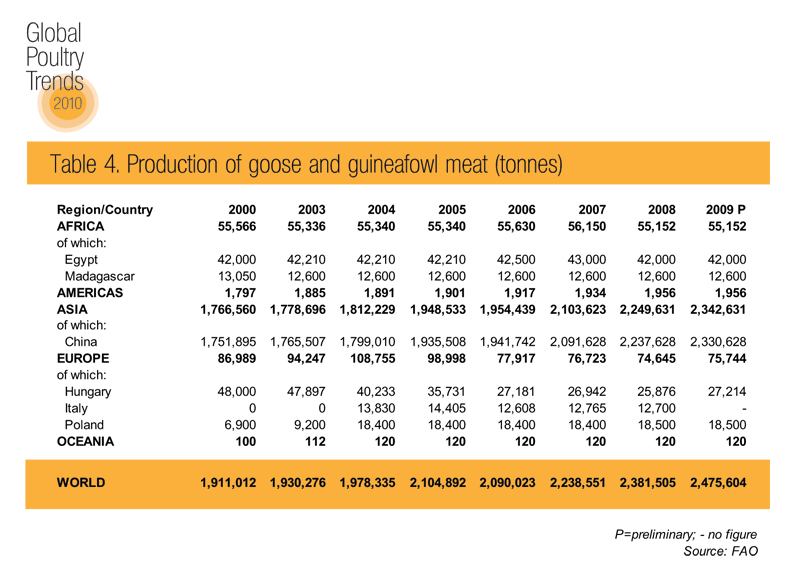
The production and the success in the domain of goose poultry rearing depend largely on the amount of attention that the young birds are given at the time of brooding. A slight decrease has been seen in the geese production since the year 2002. More of the geese are being raised in the major poultry production companies, but few of them are being sold. In the year 2007, nearly 339,000 geese had been raised in USA only. Geese production has also been rapid in Poland, Hungary and Eastern European regions. Moreover, in Asia the goose production is on the rise which makes it the only continent which is in the lead in terms of geese production and consumption. The total goose meat production had been nearly 2.5 million tons in the world as of the year 2010. In terms of the consumption, there is no substantial data which can offer a clear picture, but it is believed that the consumption is about 0.4 KG per person on an annual basis.

goose production

Geese Products and Marketing

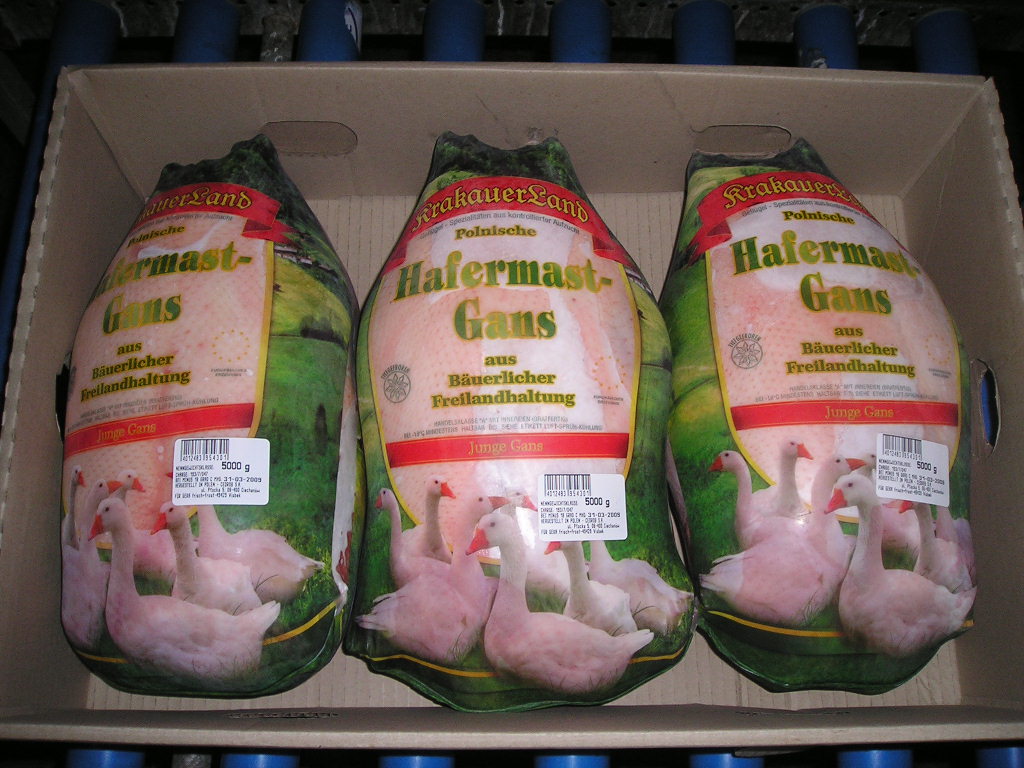
The goose products are available in Europe, Asia, and in the United States. A number of goose products like the ones made from the legs and thighsoffer a complete presentation of the exports.The Geese feathers are one of the first feature which can help distinguish them.Some other special goose products include goose pelts, stripped skin of goose, goose tongue, goose fattened liver and many more. The costs for other poultry products have been increasing, but at the same time, the prices of the goose products have been seen to be showing a regressive tendency. It is a fact that these products have not been marketed on a large scale relative to the marketing of chicken and duck products. The countries which happen to be in the lead in terms of the geese farming and marketing include USA, Hungary, Poland, Canada, China and in many other countries.

 OLYMPUS DIGITAL CAMERA

6 considerations for building chicken coop nesting boxes

One of the nature’s most prime and useful product can be availed from the use of the nesting boxes. When it comes to the process of raising backyard chicken, numerous dimensions and factors might demand your utmost attention. The eggs that are bought from the stores are quite different from the ones you obtain from the home based settings. The difference between two lies in the coloring mechanisms. The color of the yolk for the eggs grown in the home settings would be more in resemblance to the color of the setting sun at the end of clear cool day, while the yolk color for the eggs produced at the factory settings would be more pale yellowish like a smoggy sun in a hot afternoon.

The reason for which you should prefer to make use of the plans for chicken coop lies in the numerous benefits you would be able to avail later onwards. Almost all of the materials you would need for the coops would be readily available in the ready-made form, so it is evident that there is not much which you would be required to do. In terms of making the most functional chicken nesting boxes, below are the steps and guidelines you would need to consider.

The Number

The prime rule of thumb which can be used here lies in the number of hens you are looking to accommodate in a single nest. Normally, 4 hens won’t mind in terms of sharing a single nesting box among them. The egg laying schedules do vary among the hens, which is the reason for which the chances of the hens fighting each other for the process of egg laying would be the minimal. Moreover, you can also prefer to have two birds in a single nesting box if you have more room.

chicken coop nest box

Chicken Nest Box Size

The bigger the size of the livestock might be, the bigger should be the nesting box for them. If you happen to have a number of species which need to be dealt with, then always prefer to keep the size of the largest female bird in mind at times when you would be purchasing all the required materials. This strategy does come in handy for those who want to obtain some consistent and optimal results from the process of domesticating the birds. In terms of the surrounding areas, only a few inches should be left. In other words, the nesting boxes should be about 12 inches square and at the same time, should be 18 inches deep. If you would give them too much space, then there would be a probability that the birds would prefer to spend an extra amount of time in the nest. There are also a number of other chicken nest box ideas which you might love to consider, so it is always conducive to do your homework in this regard beforehand.

size of chicken coop

 Dimention or setting of nest box

The roof should be marked for its steeply slanted nature or configuration. Otherwise, there are chances that the birds might make use of the roof for the process of roosting. This might lead to the accumulation of some large amounts of coop which will pose a great risk to the health of the animals. At the same time, all other chicken nest box dimensions should be given priority, as the animals might engage in some irrational behaviors if they are not given sufficient accommodation facilities. On an ideal basis, the nest box will have a point of entrance for the hens and would also come to have an access to the egg laying regions which lie at the rare end of the box. The front would be open and at the same time, the back door would remain closed. It would be opened at the time of the egg collection which should always be done at regular basis. This is indeed the ideal set up which you might want to use, but there are some people who never mind in terms of making use of the front door. All these facets must be pondered for the purpose of building chicken nest boxes.

chicken coop dimentions
design by:coopsandcages.com.au/
Place

The chickens do love to lay their eggs in the protected regions and spaces. So it is best that the boxes should be hung a few centimeters above the ground, but not too high from the roosting regions. This form of elevation would make it easier for the eggs to be collected.

Bedding Materials

Dried straw and pine shavings might be used for the bedding materials. But here you would need to ensure that the eggs might not be clanged together. It is always conducive to rinse the eggs at regular intervals. The hen nest boxes should also be dealt with utmost care, so that no area might get damaged due to mishandling.

bedding material in nest box

So, now you know how to get the best return on your investment through the use of the most effective chicken nest box design and plan.

10 tips for hatching chicken egg in an incubator

When I was a kid I couldn’t understand the difference between a fertile egg and the non fertile one. It didn’t make any sense to me at that time; I have been brought up in a family which adored poultry the most. With us three siblings, my father had dozen of chickens in the backyard too, and he took care of them as if we all are a family. When I was eight I used to bring a fresh egg from the dad’s farm every day for my breakfast; I always wished to get a chick when I break the shell, but that didn’t happen either. It caused me frustration many times; one fine dawn I looked at my father, he was sorting out the eggs. I could see him packing a box with fresh farm eggs which he was about to send to the grocery store. I inquired about this entire thing and that was the day when I was able to understand the clear difference between a fertile and non fertile egg.

The eggs which we consume are non fertile – this means they cannot be used for incubation. In simpler terms, incubation means egg hatching. In order to obtain fertile eggs farmers need to get them from hatcheries – this means getting the chicks from the eggs under your controlled circumstances.

You don’t need any professional help for incubating chicken eggs; in fact you can do the entire thing on your own. The excerpt would now help to know the ways through which you can hatch hen egg in an incubator.

1: Take equal care of eggs before incubation:

The egg hatchability declines, if proper attention is not paid to the egg before putting it for incubation. A few things to note down here;

  • Practically you may not place the eggs immediately in the incubator, when received.
  • You must not leave the eggs for more than 7 days, after receiving.
  • Make sure the eggs are not prone to changing temperature. Make sure it’s about 50 degree Fahrenheit.
  • The relative humidity level must be between 70 t0 80 percent in a room.
  • Alternatively you can place all the eggs in the vegetable section of the refrigerator – this temperature remains ideal for eggs before they enter into an incubator.(hatchability reduce below 40 degree Fahrenheit. Or 4 C
  • The embryo will start develop when the temperature  reaches at 27 degree Celsius.
2: Placement of incubator:
  • The room must have a temperature of 70 to 75 degree Fahrenheit for better chicken egg hatching.
  • The room where you have placed the incubator must not vary its temperature.
  • Never place the incubator where sun rays have direct access.
3: Organizing incubator for proper working:

You must have a flawless working incubator; otherwise, all your chicken eggs wouldn’t be worthy for you. In order to provide necessary heat inside the incubator, you may place a few small or large size bulbs. Most of the farmers use 40 watt bulbs because they work best. Also, make sure none of the pores are left open otherwise the entire heat would escape.

4: preparing the eggs for hatching:

Turning the eggs inside the incubator is very essential for better hatching. What you can do is, marking alphabets on either side. For example, you can write ‘Z’ on one side and ‘Y’ on the other – this would help you know which side you turned the last and what should you do at the real time.

marking eggs

5: Humidity:

Once the eggs have been placed in the incubator, it tends to lose its moisture during incubation. Therefore, maintain humidity in the egg incubator is very pivotal. Make sure all the time there is a small pan of water inside so that it retains the needed moisture. The changing weather would also affect the humidity inside the incubator, so you would have to adjust it accordingly.

water in egg incubator

The incubation period may be up to 21 days – so what you need to do is maintain the humidity percentage about 55 to 55(83o – 87o F (28 – 31 C). This should be done for first eighteen days, and for the last 3 days it can be near to 65 percent (89o – 90o F (31 – 32 C).

Note: placing a wet sponge inside the incubator can also increase the humidity.

sponge in egg incubator

6: Ventilation:

You need to maintain the flow of air inside the incubator – the shell takes in fresh oxygen to the growing embryo and releases the carbon dioxide. When the egg is about to hatch, the need for getting fresh oxygen increases.

7: Incubation duration:

The incubation period for a chicken egg should not be more than 22 days – usually the chicken egg hatching process ends in 21 days.

8: When to turn the eggs:

You should turn the eggs three times a day – once in the morning, then afternoon and then at night before going to bed. If you won’t do that, the embryo tends to get stuck inside the shell.

9: Eggs candling:

With this procedure you would see the embryo development inside the egg, and remove those which are of no use. However, you must carry this procedure after 8th day or 10th, and not after that. All you have to do is, darken the room, fit a big bulb in a small box and cut it in a manner that you can place one egg over it  if  you see head and eyes of chicks as a dark spot in pinkish color it shows embryo is live and if the color is brownish the embryo is dead.

candling egg

10: Incubation ending process:
  • You must not turn the eggs once they have been in the incubator for more than 16 days.
  • Don’t open the incubator if you don’t have anything important to place inside.
  • The chick obtained beyond 22 days are usually unhealthy.

When Hen Starts Laying Egg,Peak Time,Factors Affects Egg Production

When does the hen produces egg?
If you have a group of little champs, I mean hens in your backyard, then you must have the desire to get eggs from them. Truly, its an ideal breakfast mode but more than that, it can help you generate money for extra expenses or may be savings. However, this is frequently inquired question that when would the hen start laying eggs? Especially flock keepers seem to be interested in knowing about the egg production for the pullets (young hens). They also want to know do all hen lay eggs? This excerpt in detail discusses various types of breeds and types of hen’s egg production – continue reading in order to know more:
Age of the hen which lying eggs:
How old chickens have to be to lay? Normally or you can say in most of the cases, the hen lays eggs at the age of 6 months or 25th week of age. This is a generalized statement irrespective of the type of breed (the earlier age may be 18 or 20 weeks).Young and healthy hens are more reliable or heavier egg production(the oprimum or peak production on an average is 2 years) than those, which are at maturity. They tend to develop virus and infections, which ultimately reduce or stops the egg laying capacity.
Best egg laying breeds:

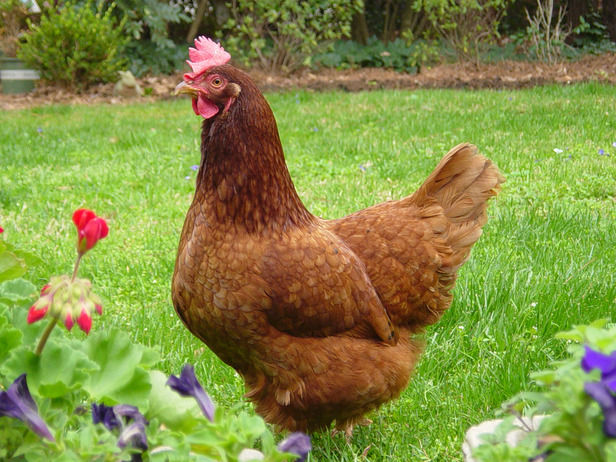
Rhode Island Red:

This type of breed remains popular amongst the small dwellers and lays average amount of eggs. Due to a high tendency to bear both hot and cold temperatures, the hen remain in the best behavior in all types of weather. In fact, this aggressive breed is ideal for both meat and eggs, so if you want to cater this need in the simplest way, make sure you have them in the flock.
rhode island red hen

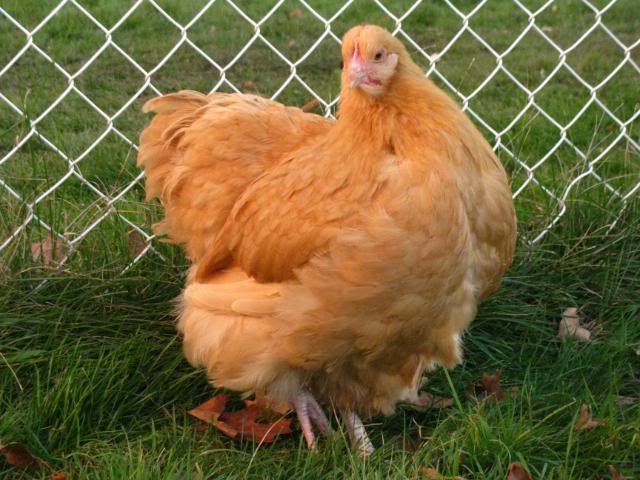
Buff Orpington:

If you want big brown eggs, you must have this breed in your backyard – however, the egg production would be moderate. They are known as excellent chickens because they bear varying temperature conditions. Also, this type of chicken is an amazing brooder as well a great mother.
buff oprington  chicken breed

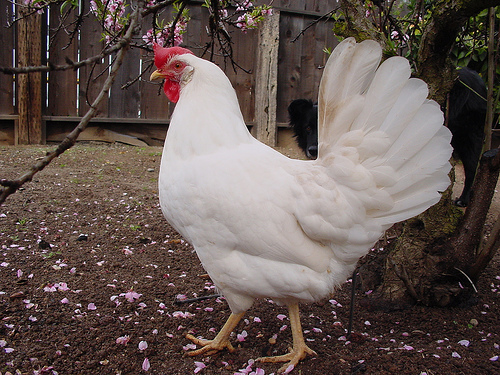
Leghorn:

If you want great white eggs, you must have this breed as necessary – it can produce up to 300 eggs in a year. Not only this but you can use this chicken for meat too.
Leghorn

Ameraucana:

Another name for this breed is  Easter Eggers – they are known to produce alluring eggs in colors of cream, green and blue. The eggs are medium sized and this type of hen produces almost moderate to high eggs in a year. This type of hen is mostly adored in families with kids because they love collection these kind of colorful eggs.
Ameraucana

Black Star:

A hen of this breed starts to lay eggs only at the age of 5 months – it is basically a cross breed of Rhode Island Red roosters and Barred Rock hens. They have a calm nature and tend to produce an average amount of eggs which are medium sized.
Black Star hen
What age does hen start laying eggs?
If you talk about juvenile hens or pullets basically, they start laying eggs at the age of 6 months – however, it may depend upon the type of breed. For example, heavyweight chicken breeds tend to produce eggs a little later – it includes breeds like Orpingtons and Wyandottes. In contrast, lightweight breeds like Black stars, Leghorns and Australops produce eggs quickly, relatively.
How to identify cokerals from pullets?
This is one of the most bothering query because many fail to understand the major difference between a cockerel and a pullet. A cockeral would be slightly taller with a large wattle and a tail. Over the time you would be able to see a comb growing at the top of the head.
cokeral
Factors affecting quality and production of eggs:
Firstly, if the feed is not healthy enough, the egg production would be low, and the quality of the egg would also be affected. The major reasons for fall in egg production may be:
Poor intake of water
Decreased intake of daily feed
Poor calcium intake
Low salt intake
Diseases that effect the egg production include:

Egg drop syndrome – An infection affects the reproductive organs of the healthy chicken.

Moltingmolting in chicken also affects the egg production because it is a killer infection. There are many small farmers who experience that hen’s stop their egg production when they are about to molt and that is during winter or fall specially. However, as soon as the molting stage is over, the egg production is resumed. The best part is that a pullet will not molt until it is one year of age.

Epidemic tremor – it is a kind of viral infection

What conditions chickens like?
There is a lot that must be considered in order to provide a cozy and comfortable environment to the hens so that they produce quality eggs. Firstly, commercial feed is essential for of pullet, which ages between 18 weeks – this is the way through which, it will produce quality eggs; and the rate of production would depend upon the quality feed. The supply of fresh water and organic feed is also very essential. In fact, the homemade complete nutritious feed is an excellent option.
Another important factor is lighting, as it remains an essential factor for egg production. Mostly, the chickens start to lay eggs during 25th week, this is during summers. However, in winters, if 14 hours of lighting is provided, than even egg production remains consistent.
Do hens secretly lay eggs?(what are the signs
 the hen shows when she is ready for laying eggs)
During the hot summer seasons the hens usually lay eggs in the coop or any other place that they usually adore. However, the scenario completely changes when winters are around – people worry about the eggs because they don’t find them in the coop areas. Many times hens don’t use the nest boxes for laying eggs because maybe they just want to bother or tease you. You really need to train pullets to lay an egg in her nesting box because they are very naughty – they lay eggs wherever they feel like, and leave rest to you.
hen hiding egg
The sings that the hen shows before 2 or 3 weeks of egg laying are; they get noisy and their comb really get redish.You must simply use the training technique to teach the pullets regarding the egg laying habits. You can either restrict them into coops only so that they learn to do so, or make the nesting boxes cozy and comfortable so that they simply lay eggs in them. It would reduce your time and energy of finding the eggs in darker backyard corners.

Pre-Feasibility Study Environmentally Controlled Poultry Farm (30,000 Birds) in Pakistan

The poultry farm is one of the most crucial components of the livestock sector. On a daily basis, millions of day old chicks are feed on high diet proteins all over the country. Furthermore, there are a number of reasons for which the white meat is now being preferred over the red meat. In addition to being comparatively cheaper to the red meat, the consumption of this form of meat is also increasing, the prime reason for which can be based on health consciousness in the people. The broiler birds raised on these farms are sold to the whole sellers and retailers all over the country, who sale it on specified rates.

Growing Modes of Opportunity-The Growth Rationale

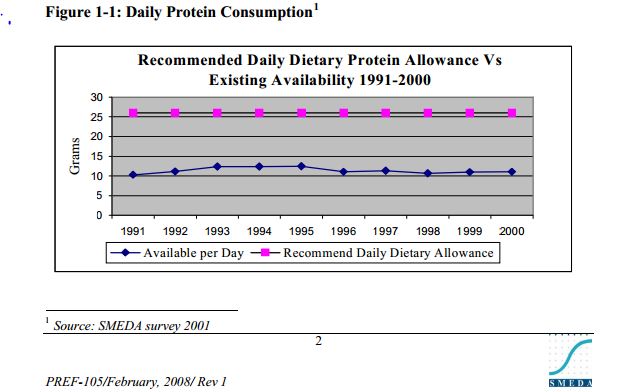
The poultry meat consumption in the country seems to be growing on a rapid pace of 4 % yearly according to the most recent agricultural statistics. But much needs to be done for the development of the sector, so that the people might be able to increase their daily protein consumption patterns which now seem to be much less than the required amounts.

pre feasibility report

Project Cost

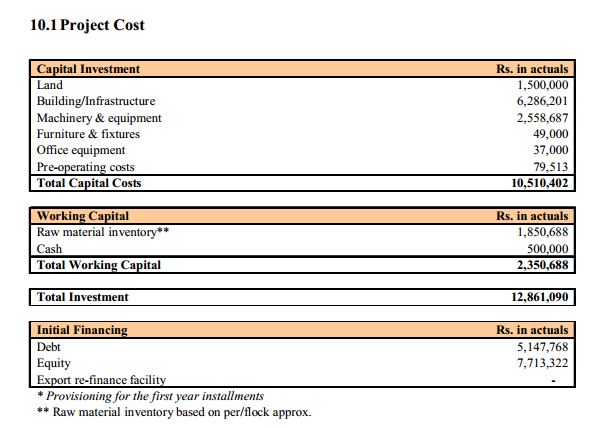
So, when it comes to starting a poultry farm, you might need to get hold of a poultry guide. If not, thenit is best that you make use of this article. For undergoing a poultry shed construction with a capacity of 30,000 birds, you would be required to make use of a number of different strategies and mechanisms. For rearing these large numbers of birds, you would need to make an investment of around 10.5 million PKR including the cost of the machinery and the required pre-requisites.

project cost

Proposed Capacity

All the specified calculations mentioned in this one of a kind feasibility study are based on the flock size of 30,000 birds. Control shed poultry farming in Pakistan can indeed be a profitable business for you if you are able to follow some set guidelines with a great deal of innovation. There are a large numbers of poultry farms in Pakistan that are now able to generate a great deal of revenue, all because of the use of advanced farming measures.

Current Dynamics and Poultry Structure

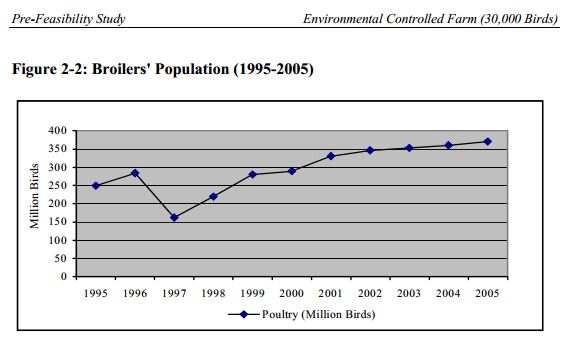
The importance of production and birth line in poultry farming is something you should keep in mind at the time of setting up a control shed in Pakistan. For those who have limited information in this regard, the famers first pursue the hatchers for getting hold on some day old chicks which they would be able to rear. These hatcheries get hold of the eggs from the breeder farms which in return charge them with a set amount. The feed mix mechanism used in poultry farming is determined the poultry feed mills, which also happen to be the key player in the sector. These feeds include a number of ingredients rich in protein and other necessary nutrients like blood meal, soya bean, grains and gluten. Now here, the feed cost accounts for the total production cost.

pre feasibility report broiler population

Contribution to the economy of Pakistan

The poultry sector is now on the second number, especially when it comes to the economy of the country. The investment which has been made in the sector has been estimated to be nearly 70 million PKR. The sector is made up of

  • 280 hatcheries
  • 139 feeding mills
  • 20000 layers, breeding and other broiler farms
  • Millions of chickens and chicks

On an annual basis, the poultry industry is importing more than 100,000 grandparents from countries like Holland, USA, China and Germany. These grandparents in return contribute towards the production 500 million commercial broilers. These broilers in return are providing 450,000 metric tons of the poultry meat. Now this shows the importance of the poultry meat in the provision of animal protein for the whole country. But there are a number of other factors that have undermined its growth. These factors include:

  • Extreme changes in the weather
  • Poor farming and management practices
  • Rise in the mortality rate
  • Economical downfall
  • Lack of investment
  • Various outbreaks that result from time to time

Commercial chicken houses and controlled sheds can provide the solution to this hazardous situation. The commercial poultry houses should also be due attention towards the wellbeing and health of the birds and other domesticated farms. All of the key players in poultry must work in collaboration with each other, so that the current dynamics and changes can be pacified and brought to be more balanced state. The heat stress is one of the most dangerous factors that have put the life of millions of people related to the sector at stake. As Pakistan is a tropical land, so the heat might reach to some intense temperatures in times of summer. The poultry business is effectuated negatively in times of the extreme weather whether summer or winter. With an increased in the mortality rate during these times, a number of other health related changes and exposures are also witnessed in the poultry broiler house.

Comparative Analysis

A comparison between the levels of efficiency of environmentally controlled house (ECH) and the usual Open sided Houses and farms shows the former has an edge over all other modes of farming. It is due to the use of some advanced ventilation and heating systems, that the animals are better able to grow and evolve, leading to the enhancement of the production. Below are some of most appealing advantages of making use of prototype chicken broiler house.

  • By making use of the ECH, the temperature can be maintained from 10 to 15C in comparison to the conventional farms.
  • Managing the temperature fluctuations in a more effective way.
  • Due to the rise in the temperatures the fluctuations might reduce the production of the broiler flocks which are nearly 4 to 5 in the conventional houses. On the other hand, 7 marketed flocks can be produced in making use of the ECH.
  • Mortality rate is also 2 to 3 % lower in comparison to the COH.
  • Usage of advanced feeding, drinking and ventilation systems has provided the solution to all the poor management practices.
  • Consequently, a much more developed and a safer chicken poultry house.
  • The production cost also tends to be around 35 PKR per kg in comparison to 40 PKR which is cost per kg in the conventional farms.

In the end it is recommended that you make use of a suitable land, developed electricity and water supply systems in order to get most out of your investment.

This is an abstract from smeda broiler farm pre feasibility study report for complete report

click here to view online pdf report

Tips for keeping coyote away from your chicken or livestock

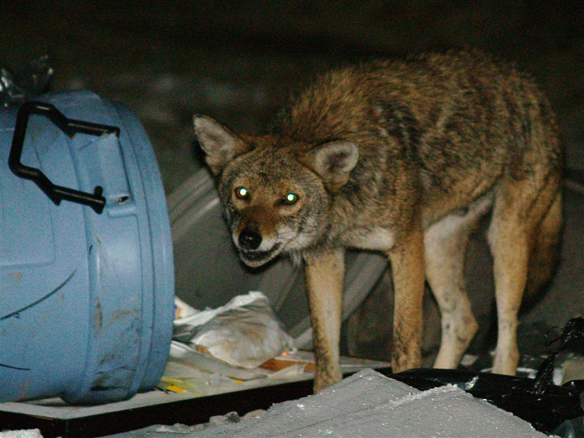
Coyotes belong to a class of animals which are considered to be very smart, innovative and opportunistic. Their smartness can be analyzed from the fact that they can drop the lunch boxes to the school children by chasing them. Number of coyotes are increasing day by day that is why they are becoming brave and courageous. They are also getting used to the human environment now. So in order to save the humans and coyotes from any mishaps, we have to stop them from going to the places where human activities are taking place or retraining them far in the forest. The following article will explain some steps of how to protect chicken from predators  like coyotes or keep coyotes away from your other livestock.

The steps are:

 1)      Fences:

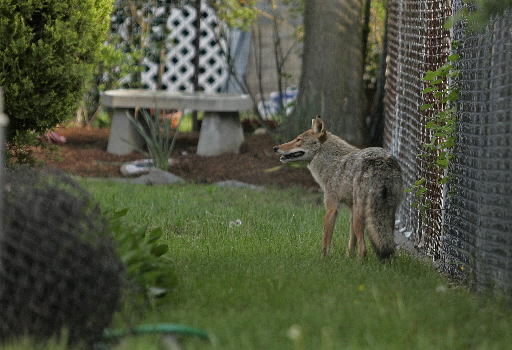
 Usage of fences can really reduce the risk of getting any harm from coyotes.  As the coyotes are wise enough to jump and dig, so the fence should be approximately 1.8 meters (6 ft) high and 30 cm (I ft)under the ground. Moreover the spacing between the fences should be less than 4 inches. These fences should be a necessary part of farms having livestock as a hungry  livestock or chicken predator cannot resist the temptation of food inside the farm. The following steps if taken can also prevent coyotes from digging and jumping.

  • Pointed wire placed at the ground can stop the coyotes from digging.
  • Electric fencing can also serve the purpose especially for saving the livestock.
  • Some guard animals can also be used for the livestock. These guard animals include donkeys and llamas. Choose those donkeys and llamas that do not mingle with other donkeys.

fence for coyotes


2)       Noise:

Noisy sound can affect the harmful activities of stray coyotes. The sounds explained in the following points can surely protect your livestock from any sort of danger by coyotes.

  • If you find any coyote nearby, make noise by yelling and shouting.
  • To scare the coyote who is trying to enter the farm, make noise by banging any sort of tin or can lids.
  • Sensors or activated alarms can also be used. These sensors sense the presence of the danger up to some distance. The alarm sound will not only scare the coyote but will also make you alert.
  • Another important noise maker is the propane exploder.
  • Children’s toys can also be used to make noise such as jingles, bangs and whirrs.
3)       If you come across a coyote, be surprised:

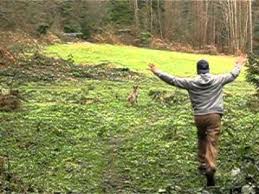
In addition of making noise while encountering a coyote, use some scary tactics as well. Coyotes can easily get scare off the frightening expressions made by humans. So never make an eye contact with them and turn your back towards them and play a chase and attack game by running away. Some other tactics are explained below.

  • Make yourself terrifying through your body movements. Kick the legs and wave the arms. This will give them a feeling to stay away from you.
  • A motion activated light can also prevent coyotes and is rather a good way of how to safe chickens.

hazing coyotes

4)       Remove the food loved by coyotes:

Coyotes are greatly tempted to the food they like and even eat anything which will come in their way. So keep all the favorites’ of coyotes like rodents, flesh food away. Never feed the coyotes for the purpose of taming them. They will never be tamed rather will come back for more food.  Some ways are described in the points below for eradicating the food sources from your yard.

  • Use coyote proof boxes or garbage bins for the purpose of disposing your garbage off.  This will keep the coyotes away as it will be secured and difficult to open.
  • Never leave the wasted food lying around. Always dispose it off properly in a secure container both in homes and at farms.
  • Empty up your tree from the ripe fruits as soon as possible and pick all the fruit lying nearby on the ground.

food liked by coyotes

  5)  No pets:

Keep all of your pets away from the coyotes. Coyotes are tempted to dogs, cats and free range chicken for attacking purpose. So if you are living in an area where there is a risk of encountering coyotes, follow these steps

  • Neuter the pet male dogs and spraying the female pet dog so their urine smell don’t attract coyotes.
  • Make sure that the fish ponds are covered.
  • Pet food should be kept inside.
  • Birdseed should not be scattered around.
   6)  Make your area junk free:

Preys liked by coyotes can live and breed in the junk piles lying around. Moreover, these junk piles can also be used by the coyotes for hiding purpose.

    7) Use wolf urine: 

The odor of wolf’s urine can keep the coyotes away as the population of coyote decreases in the areas where the wolves are more in number.

    8)  Otherwise call a professional:

If the above mentioned solutions do not work, then take help from expertise to avoid predators of chicken, sheep, cats, dogs  or other livestock from harming them.